Distributed Query Processing - System Architecture - Database Management System
TL;DR
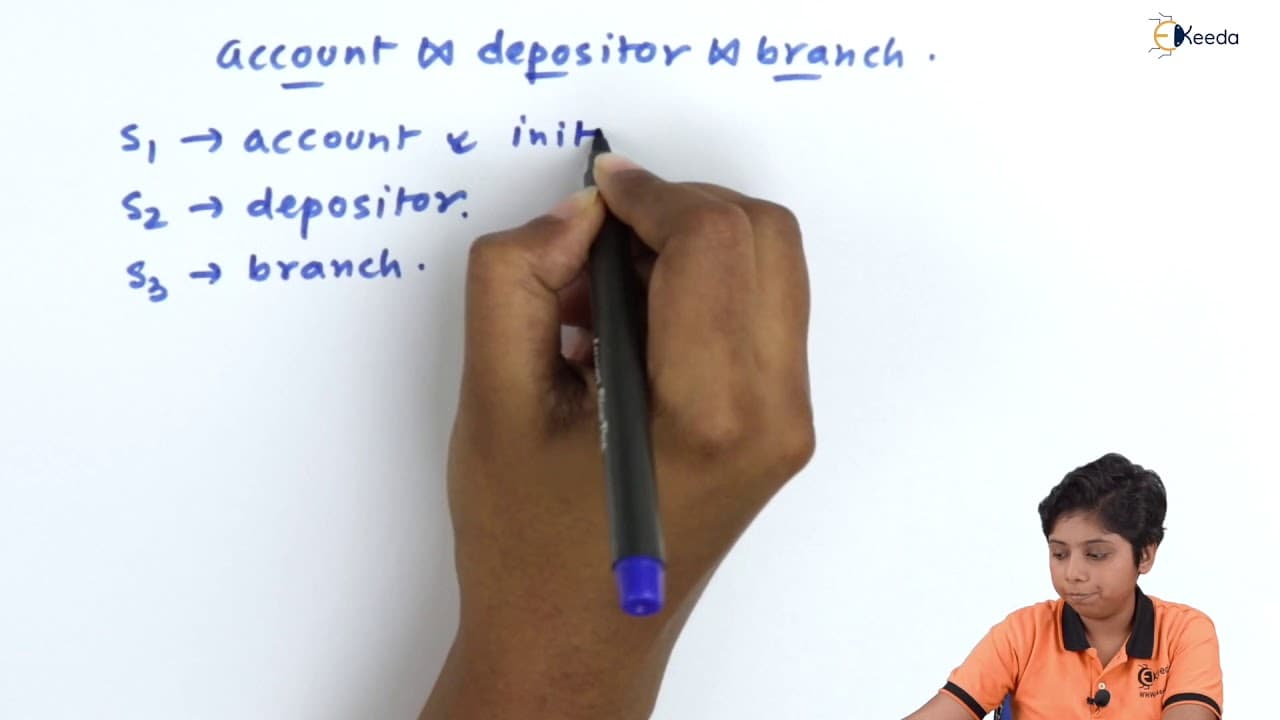
This video discusses distributed query processing and join strategies in a distributed environment, including the transformation of queries and the use of parallelism.
Transcript
click the Bell icon to get latest videos from akira hello friends today we will discuss about distributed query processing that means processing a query in a distributed environment how we can compare the cost of querying and distributed environment how to transform the query join on a simple basis then on a March basis we will discuss about each o... Read More
Key Insights
- 🖐️ Distributed query processing involves processing queries in a distributed environment, where parallelism and query optimization play important roles.
- ❓ Query transformation is necessary to make queries compatible with a distributed database, with partitioning being a common method.
- ♻️ Join strategies, such as simple joins and semi-joins, are used to combine data from multiple relations in a distributed environment.
- ⌛ Parallelism can be achieved through copying data to different sites or using optimized join strategies, reducing response time.
- 🇨🇷 Cost considerations, such as startup cost and performance gain, are essential in distributed query processing.
- ♻️ The database and system architecture of a distributed environment determine how queries are processed and optimized.
- ❓ Replication and fragmentation are common methods used in partitioning data in a distributed database.
Install to Summarize YouTube Videos and Get Transcripts
Explore YouTube Video Summarizer or Get YouTube Transcript Extractor
Questions & Answers
Q: What is distributed query processing?
Distributed query processing involves processing queries in a distributed environment, where queries can be replicated or fragmented and executed in parallel.
Q: How are queries transformed for a distributed environment?
Queries are transformed through partitioning, where data is divided into disks. Partitioning can be done through replication, where each disk has its own copy of the data, or fragmentation, where data is divided based on attributes or couples.
Q: What are the different join strategies used in a distributed environment?
Join strategies include simple joins, where data is joined from multiple relations, and semi-joins, where only the common attributes between relations are joined to reduce overhead.
Q: How does parallelism help in distributed query processing?
Parallelism allows for the parallel execution of multiple queries or operations, reducing response time. It can be achieved by copying data to different sites or using optimized join strategies like semi-joins.
Summary & Key Takeaways
-
Distributed query processing involves processing queries in a distributed environment, where queries can be replicated or fragmented, and executed in parallel.
-
Transforming queries is necessary to make them suitable for a distributed database, with data being divided into disks through partitioning.
-
Join strategies, such as simple joins and semi-joins, are used to combine data from multiple relations in a distributed environment.
Read in Other Languages (beta)
Share This Summary 📚
Summarize YouTube Videos and Get Video Transcripts with 1-Click
Try YouTube Summary with ChatGPT & Claude or YouTube Transcript Generator
Explore More Summaries from Ekeeda 📚





Summarize YouTube Videos and Get Video Transcripts with 1-Click
Try YouTube Summary with ChatGPT & Claude or YouTube Transcript Generator