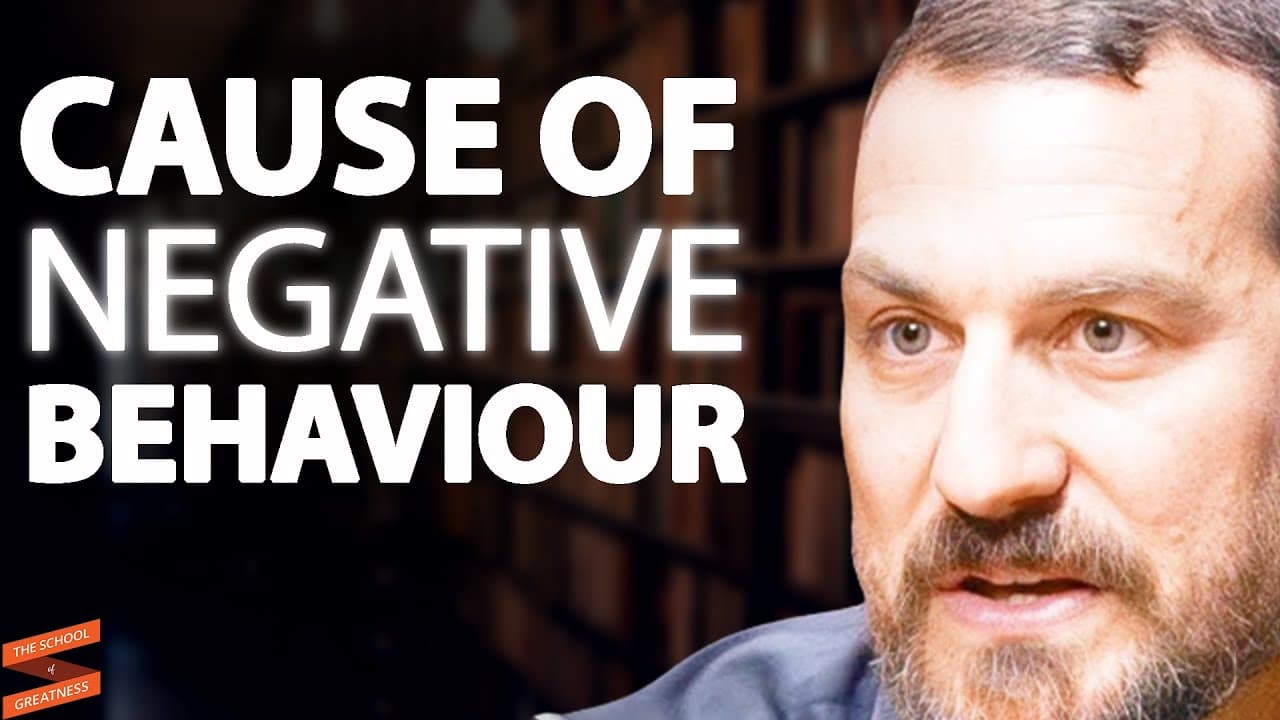
4 SIMPLE STEPS To Hack Your Brain & DESTROY NEGATIVE Thoughts! | Andrew Huberman
TL;DR
Neuroscientist Dr. Andrew Huberman shares advice on how to unlock the power of your brain and maximize its potential.
Transcript
the key is to reward the harder steps not the easier ones and not the ones where you get so if your mind isn't where you want it to be don't start with the mind start with ultimately unless you have electrodes in your head and someone's stimulating them we are in control of our thoughts and behaviors understanding how to unlock the power of your br... Read More
Key Insights
- 😨 Stress is at the core of trauma, anxiety, and fears, making it crucial to understand and manage stress for overall well-being.
- 🧑🚒 There are two types of stress: the fight-or-flight response (hyper-alert stress) and feeling overwhelmed and fatigued (exhaustion-induced stress).
- 👻 Deliberate effort and strain while learning or working triggers neuroplasticity, allowing the brain to change and form new connections.
- 🆘 Serotonin, the reward molecule, helps create a sense of fulfillment and contentment when we feel we have enough resources.
- 😣 Balance between challenge and rest is vital for optimal brain functioning and mental health.
- 🤯 The body has a profound influence on the mind, with the brain, spinal cord, and body forming a connected system.
Install to Summarize YouTube Videos and Get Transcripts
Explore YouTube Video Summarizer or Get YouTube Transcript Extractor
Questions & Answers
Q: What is the difference between trauma and stress?
While trauma is a fear or stress response that lingers from a past experience, stress can come from everyday life challenges. Both can cause discomfort, but trauma is more long-lasting and impacts daily functioning.
Q: How can we combat stress and anxiety?
It is essential to understand the different types of stress and develop strategies accordingly. For example, deep breathing exercises and the physiological sigh technique can help reduce hyper-alert stress, while prioritizing rest and improving sleep can combat exhaustion-induced stress.
Q: Why is it important to reward the harder steps in our goals instead of the easier ones?
By rewarding ourselves for the harder steps, we reinforce the neural pathways associated with effort and perseverance. This helps build resilience and motivation to continue working towards our goals.
Q: How does dopamine play a role in our efforts and learning?
Dopamine is released when we experience reward or anticipate reward. By subjectively rewarding ourselves during challenging tasks, we can learn to associate effort with positive feelings, making the process more enjoyable and motivating.
Summary & Key Takeaways
-
Trauma and anxiety are often rooted in stress, as stress is at the core of these experiences.
-
There are two types of stress: the "fight-or-flight" response that we are familiar with, and the alert stress where we feel overwhelmed and exhausted.
-
To combat stress and trauma, it is important to understand which type of stress you are experiencing and apply specific strategies to manage it.
Read in Other Languages (beta)
Share This Summary 📚
Summarize YouTube Videos and Get Video Transcripts with 1-Click
Try YouTube Summary with ChatGPT & Claude or YouTube Transcript Generator
Explore More Summaries from Lewis Howes 📚






Summarize YouTube Videos and Get Video Transcripts with 1-Click
Try YouTube Summary with ChatGPT & Claude or YouTube Transcript Generator