1 Set to Failure (HIT) VS High Volume for Size & Strength (27 Studies)
TL;DR
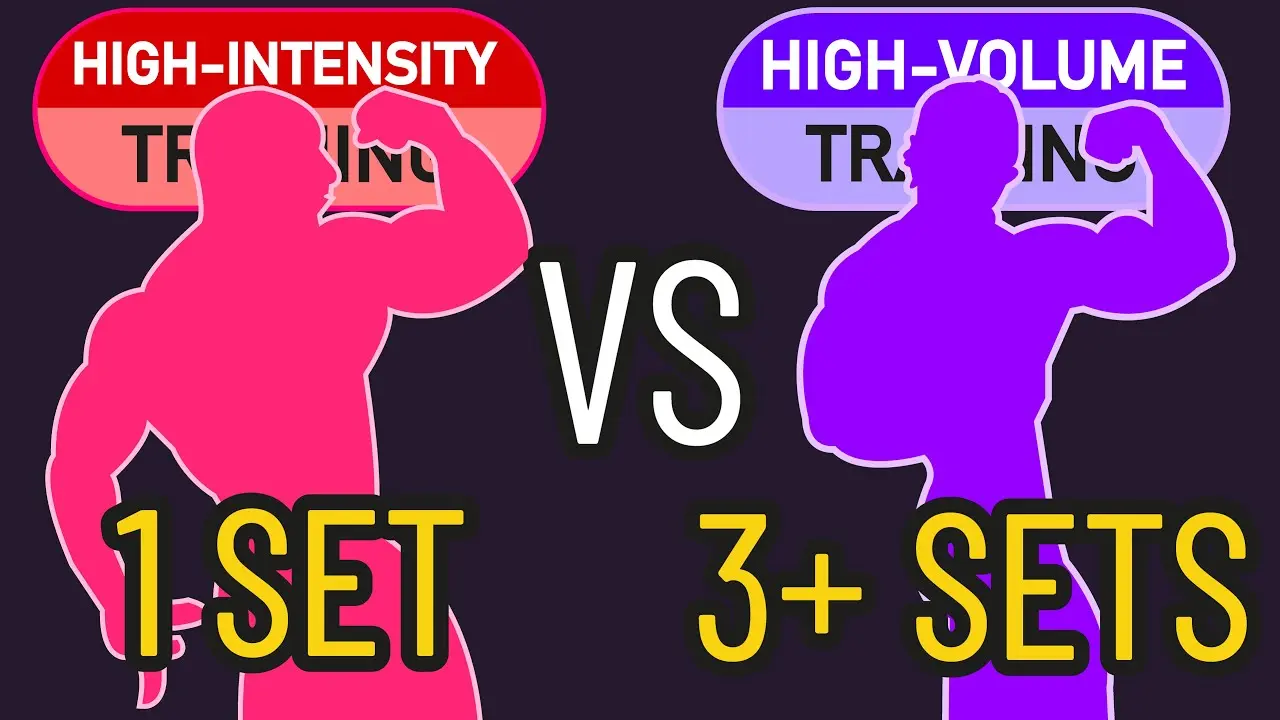
High-intensity training is a style of low-volume, low-frequency training that emphasizes training to failure, but research suggests it may not be superior to higher volume and frequency training for muscle hypertrophy and strength gains.
Transcript
High-intensity training refers to high effort, low volume, and lower frequency training. We'll cover the precise details shortly. But often, high-intensity training is contrasted to high volume and perhaps more frequent training, the training style many iconic figures during the Golden era of bodybuilding, such as Arnold, are known to hav... Read More
Key Insights
- 🏋️ High-intensity training is contrasted with high volume and frequency training, popularized by bodybuilding icons like Arnold Schwarzenegger.
- 🔑 Arthus Jones, the founder of Nautilus, is credited with popularizing high-intensity training in the 1970s.
- 💪 Training to failure is a common theme in high-intensity training, with an emphasis on pushing muscles to their limits.
- 🔁 Low volume, typically only one set per exercise, is another common theme in high-intensity training.
- 🔃 Low frequency of training, often no more than twice a week, is advocated in high-intensity training.
- 📈 Meta-analyses suggest that training to failure is not necessary for muscle growth, and higher volume and frequency training tend to be more effective.
- 💥 The use of higher training frequencies and volumes has been shown to produce greater strength gains compared to low-volume, low-frequency training.
- 📚 Some individuals may experience similar or better gains with lower-volume training, indicating that high-intensity training may be suitable for these individuals.
Install to Summarize YouTube Videos and Get Transcripts
Explore YouTube Video Summarizer or Get YouTube Transcript Extractor
Questions & Answers
Q: Is training to failure necessary for muscle hypertrophy?
Based on a meta-analysis of studies, training to failure is not necessary for maximizing muscle growth. Stopping 3-0 repetitions short of failure seems to be sufficient for hypertrophy. Higher volume training has been shown to be more effective for muscle hypertrophy compared to training to failure.
Q: Does high-intensity training with low volume and frequency lead to optimal muscle gains?
The research suggests that higher volume training tends to be more effective for muscle hypertrophy and strength gains. While high-intensity training can still build muscle and strength, it may not be superior to higher volume and frequency training methods in terms of overall gains.
Q: How does high-intensity training compare to other training methods in terms of muscle growth?
According to research, higher volume training tends to produce greater muscle growth compared to low-volume high-intensity training. However, individual responses may vary, and some individuals may see similar or more gains with low-volume training.
Q: Does training frequency impact muscle growth and strength gains?
Training frequency does not seem to have a significant impact on muscle growth and strength gains, especially with lower volumes of training. Both low and high training frequencies can be effective for achieving gains in muscle size and strength, depending on the individual's preferences and goals.
Q: Can high-intensity training be a time-efficient method for building muscle?
Yes, high-intensity training can be a time-efficient method for building muscle as it typically involves performing only one set per exercise. While higher volume training may offer slightly more gains, some individuals may prefer the efficiency of low-volume high-intensity training if they do not want to invest extra time in their workouts.
Summary & Key Takeaways
-
High-intensity training involves low volume, low frequency, and training to failure.
-
Three common themes of high-intensity training are training to failure, performing a low number of sets per exercise (typically one set), and low training frequency.
-
Research suggests that training to failure is not necessary for maximizing muscle growth and stopping 3-0 reps short of failure is sufficient. Higher volume training tends to be more effective for muscle hypertrophy and strength gains. Training frequency does not seem to have a significant impact on muscle growth and strength gains, especially with lower volumes of training.
Read in Other Languages (beta)
Share This Summary 📚
Summarize YouTube Videos and Get Video Transcripts with 1-Click
Try YouTube Summary with ChatGPT & Claude or YouTube Transcript Generator
Explore More Summaries from House of Hypertrophy 📚

Summarize YouTube Videos and Get Video Transcripts with 1-Click
Try YouTube Summary with ChatGPT & Claude or YouTube Transcript Generator