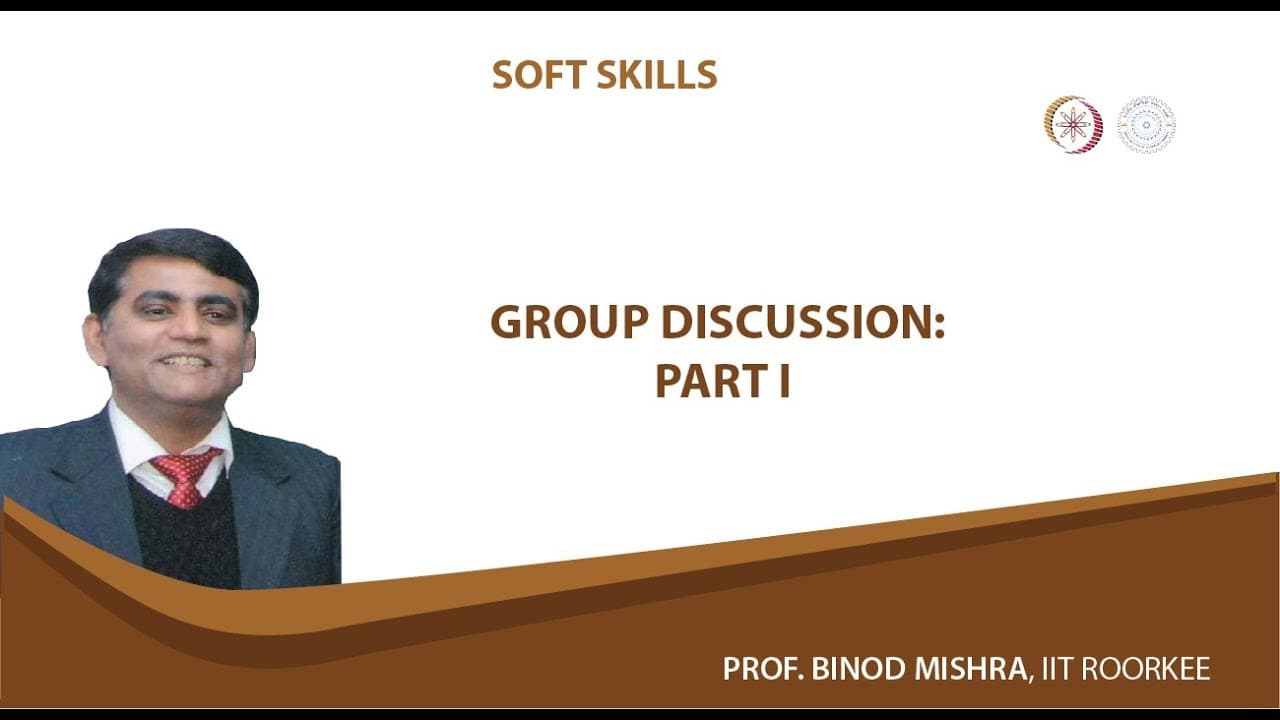
Group Discussion: Part I
TL;DR
Explores the intricacies and importance of group discussions.
Transcript
Read and summarize the transcript of this video on Glasp Reader (beta).
Key Insights
- Group discussions (GD) are a formal exchange of knowledge and experiences, distinct from informal conversations and debates.
- GD is crucial in job recruitment processes, often used to shortlist candidates based on specific traits and skills.
- Unlike structured debates, GDs are unstructured, allowing participants to change their stance based on the discussion.
- Participants must use simple, concise, and appropriate language to ensure effective communication and understanding.
- GD topics may be announced on the spot, requiring participants to quickly think and adapt, showcasing their analytical and reasoning skills.
- Leadership roles in GDs are dynamic, with participants taking turns to lead discussions or resolve conflicts.
- Effective GD participation involves balancing individual contributions with group dynamics, ensuring cohesive and productive discussions.
- GD evaluates various skills such as listening, reasoning, leadership, and the ability to work collaboratively in a group.
Install to Summarize YouTube Videos and Get Transcripts
Explore YouTube Video Summarizer or Get YouTube Transcript Extractor
Questions & Answers
Q: What distinguishes group discussions from debates?
Group discussions differ from debates in their structure and purpose. While debates are structured with participants speaking for or against a motion, GDs are unstructured, allowing participants to exchange views freely. GDs focus on collaborative problem-solving and consensus-building, whereas debates emphasize winning an argument.
Q: Why are group discussions important in job recruitment?
Group discussions are important in job recruitment as they help employers evaluate candidates' communication skills, analytical thinking, teamwork, and leadership abilities. GDs provide insights into how candidates interact in a group setting, handle conflicts, and contribute to reaching a consensus, making them valuable for shortlisting candidates.
Q: How should participants use language in group discussions?
In group discussions, participants should use simple, concise, and appropriate language to ensure clear communication and understanding. Avoiding complex and pompous words helps maintain focus on the discussion's content. The language should be polite and persuasive, enabling participants to express their views effectively and facilitate constructive dialogue.
Q: What are the roles of leadership in group discussions?
Leadership roles in group discussions are dynamic, with participants taking turns to lead, initiate discussions, and resolve conflicts. Effective leaders facilitate dialogue, ensure equal participation, and maintain a cooperative atmosphere. They adapt to changing group dynamics, helping the group stay focused on the topic and reach consensus or solutions.
Q: How are group discussion topics typically presented?
Group discussion topics are often announced on the spot, especially in recruitment settings, requiring participants to think quickly and adapt. This approach tests participants' analytical and reasoning skills, as they must generate ideas and engage in meaningful discussions without prior preparation, showcasing their ability to handle spontaneous situations.
Q: What skills are evaluated in group discussions?
Group discussions evaluate various skills, including communication, listening, reasoning, leadership, and teamwork. Participants' ability to articulate ideas, engage constructively with others, and adapt to group dynamics is assessed. GDs also test participants' analytical thinking, problem-solving abilities, and capacity to contribute to consensus-building in a group setting.
Q: What is the significance of flexibility in group discussions?
Flexibility is crucial in group discussions as it allows participants to adapt their views based on new information and perspectives shared during the discussion. This adaptability fosters a collaborative environment, enabling participants to engage constructively, consider different viewpoints, and contribute to reaching a consensus or finding solutions to problems.
Q: How can conflicts be managed in group discussions?
Conflicts in group discussions can be managed through effective leadership and communication. Participants should focus on constructive dialogue, listening actively, and respecting differing opinions. Leaders play a key role in guiding discussions back on track, ensuring that conflicts are resolved amicably, and maintaining a cooperative atmosphere to achieve the group's objectives.
Summary & Key Takeaways
-
Group discussions are formal exchanges of knowledge and experiences, distinct from informal chats and debates. They are crucial in job recruitments, often used to shortlist candidates based on specific skills and traits. Unlike debates, GDs are unstructured, allowing participants to change their stance during discussions.
-
Participants must use simple, concise, and appropriate language in GDs to ensure effective communication. Topics may be announced on the spot, requiring quick thinking and adaptability, showcasing participants' analytical and reasoning skills. Leadership roles are dynamic, with participants taking turns to lead or resolve conflicts.
-
Effective participation in GDs involves balancing individual contributions with group dynamics, ensuring cohesive discussions. GDs evaluate skills like listening, reasoning, leadership, and collaboration. The process helps in resolving conflicts and reaching agreements or alternatives to given situations.
Read in Other Languages (beta)
Share This Summary 📚
Summarize YouTube Videos and Get Video Transcripts with 1-Click
Try YouTube Summary with ChatGPT & Claude or YouTube Transcript Generator
Explore More Summaries from Soft Skills 📚
Summarize YouTube Videos and Get Video Transcripts with 1-Click
Try YouTube Summary with ChatGPT & Claude or YouTube Transcript Generator