How Does a Wedge-Shaped Film Create Interference Patterns?
TL;DR
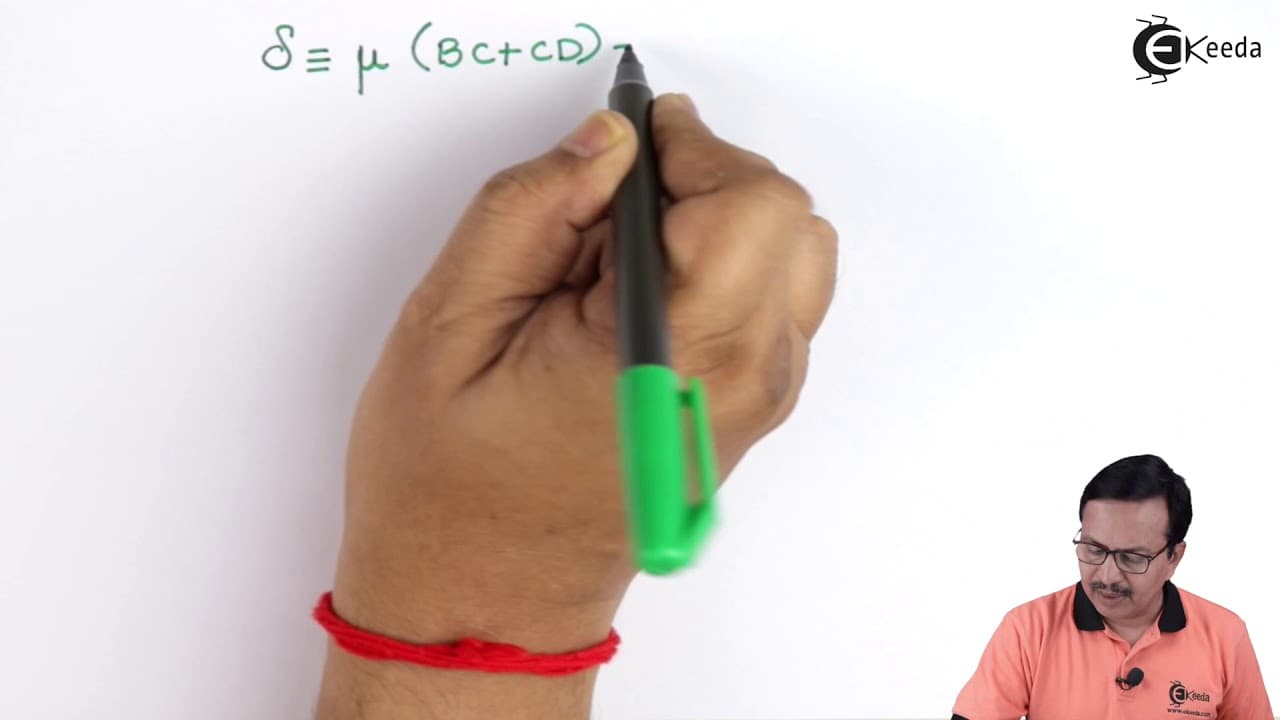
A wedge-shaped film creates interference patterns by reflecting and transmitting light rays from two surfaces, leading to a path difference between the reflected rays. The resulting interference can be constructive when the path difference is an integral multiple of the wavelength and destructive when it is a multiple of half the wavelength. Key factors include the wedge's thickness, angle, and the light's wavelength.
Transcript
click the bell icon to get latest videos from akira hello students so in this video we are going to study interference of light in a wet shade film so what is a wedge wedge is nothing but there are basically there are two reflecting surfaces place something like this so one surface is actually parallel whereas other is actually inclined at an angle... Read More
Key Insights
- 🙂 A wedge consists of two reflecting surfaces, one parallel and one inclined, that create an interference pattern when light passes through it.
- 🥺 The angles of incidence and reflection are equal in a wedge, leading to a path difference between reflected rays.
- 🧀 The path difference can be calculated using the refractive index, wedge thickness, and wedge angle.
- ❓ Constructive interference occurs when the path difference is an integral multiple of the wavelength, while destructive interference occurs when it is a multiple of half the wavelength.
- 👋 The video focuses on the transmitted wave in the interference pattern.
- 🧀 The path difference equation includes the refractive index, wedge thickness, wedge angle, and wavelength.
- 🧀 The video provides a geometric explanation of various angles and lengths in the wedge.
Install to Summarize YouTube Videos and Get Transcripts
Explore YouTube Video Summarizer or Get YouTube Transcript Extractor
Questions & Answers
Q: What is a wedge in the context of light interference?
A wedge refers to an arrangement of two reflecting surfaces, one parallel and one inclined, that produces an interference pattern when light passes through it.
Q: What is the difference between reflection and transmission in a wedge?
At each reflection point in the wedge, both reflection and transmission occur. However, the video focuses on the transmitted wave and its interference with other waves.
Q: How does the angle of incidence and angle of reflection affect the interference pattern?
The angle of incidence and angle of reflection are the same in a wedge. This equality contributes to the interference pattern by determining the path difference between reflected rays.
Q: What parameters determine the path difference in a wedge-shaped film?
The path difference depends on the refractive index of the medium, the thickness of the wedge, and the angle between the reflecting surfaces (wedge angle).
Summary & Key Takeaways
-
The video introduces the concept of a wedge, which consists of two reflecting surfaces, one parallel and one inclined at an angle.
-
It explains the reflection and transmission of light rays in the wedge, including the angles of incidence and refraction.
-
The video discusses the path difference between the reflected rays and derives the expression for the path difference in terms of the wedge's thickness and angle.
Read in Other Languages (beta)
Share This Summary 📚
Summarize YouTube Videos and Get Video Transcripts with 1-Click
Try YouTube Summary with ChatGPT & Claude or YouTube Transcript Generator
Explore More Summaries from Ekeeda 📚





Summarize YouTube Videos and Get Video Transcripts with 1-Click
Try YouTube Summary with ChatGPT & Claude or YouTube Transcript Generator