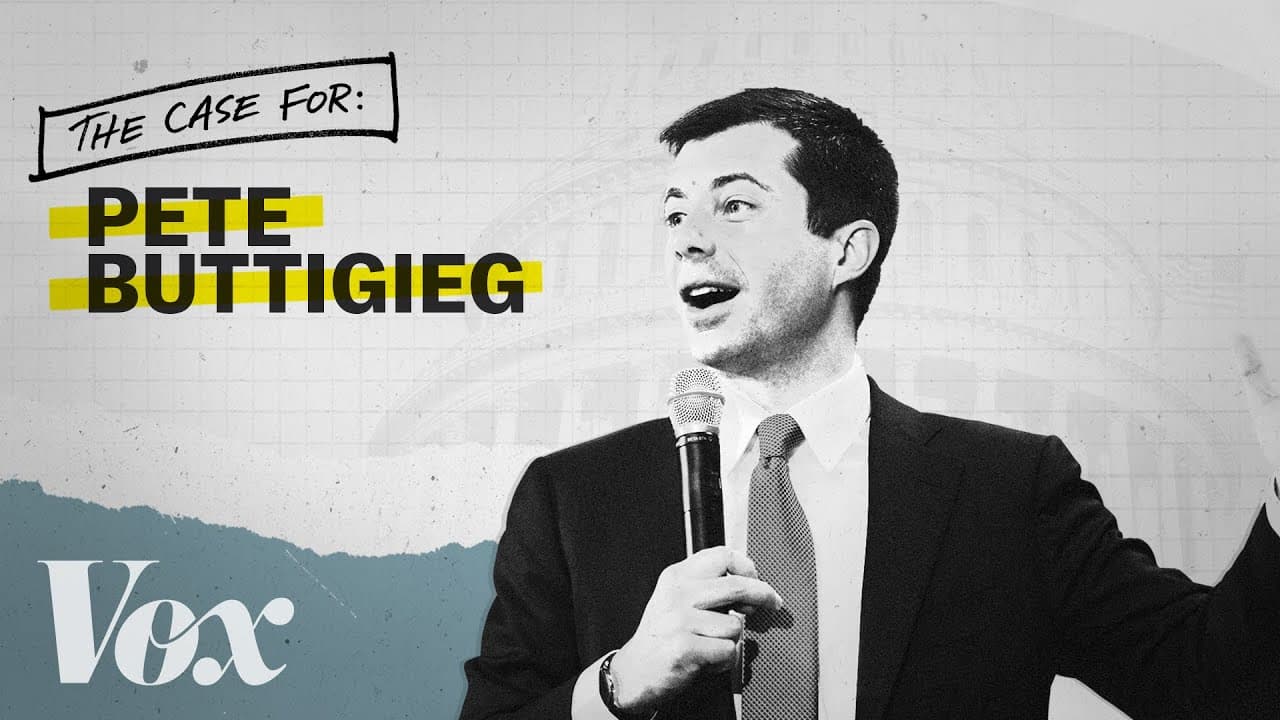
The case for Pete Buttigieg
TL;DR
Pete Buttigieg offers a fresh, centrist approach for Democrats.
Transcript
If Pete Buttigieg wins the 2020 election, he would be the youngest US president ever elected. He’s also the first openly gay candidate to run a major presidential campaign. But other than that, I don’t know that much about him. Maybe you feel the same way. Until recently, his claim to fame was as mayor of Indiana’s fourth-biggest city. My spell che... Read More
Key Insights
- Pete Buttigieg, if elected, would be the youngest and first openly gay U.S. president, marking a significant milestone in American politics.
- Buttigieg's rise in national polls is attributed to his charismatic appeal and ability to connect with both conservative and liberal voters.
- His political strategy mirrors that of past Democratic presidents like Obama and Clinton, focusing on progressive ideas while appealing to a broader audience.
- Buttigieg advocates for significant political reforms, including expanding the Supreme Court and altering the Senate's filibuster rules to facilitate legislative progress.
- He supports progressive policies such as a $15 minimum wage and sectoral bargaining, aiming to strengthen union power significantly.
- Buttigieg is portrayed as a moderate centrist, distinguishing himself by not naming enemies and focusing on common-sense solutions.
- His approach to politics seeks to balance progressive values with pragmatic strategies, potentially avoiding the polarization seen with more extreme candidates.
- Studies suggest that moderate candidates like Buttigieg may have better chances in general elections by not provoking strong opposition turnout.
Install to Summarize YouTube Videos and Get Transcripts
Explore YouTube Video Summarizer or Get YouTube Transcript Extractor
Questions & Answers
Q: What makes Pete Buttigieg a unique candidate in the 2020 election?
Pete Buttigieg stands out as the youngest and first openly gay candidate to run a major presidential campaign. His background as the mayor of a small city in a traditionally conservative state, combined with his Rhodes scholarship and elite education, positions him as a fresh face with a compelling personal narrative.
Q: How does Buttigieg's political strategy compare to past Democratic presidents?
Buttigieg's strategy is reminiscent of past Democratic presidents like Obama and Clinton, who successfully appealed to a broad audience by communicating progressive ideas in a way that resonates with voters who may not identify as liberals. This approach involves focusing on common-sense solutions and avoiding polarizing rhetoric.
Q: What are some of Pete Buttigieg's key policy proposals?
Buttigieg's key policy proposals include raising the minimum wage to $15, implementing sectoral bargaining to enhance union power, and contemplating a carbon tax. He also advocates for significant political reforms, such as expanding the Supreme Court and altering the Senate's filibuster rules to enable legislative progress.
Q: Why is Buttigieg considered a moderate centrist candidate?
Buttigieg is often labeled a moderate centrist due to his focus on pragmatic solutions and his reluctance to name enemies, which contrasts with the more combative approaches of some of his rivals. This positioning allows him to appeal to a wide range of voters, including those uncomfortable with extreme ideological labels.
Q: How might Buttigieg's candidacy affect voter turnout in a general election?
Research suggests that moderate candidates like Buttigieg may avoid the backlash that more ideologically extreme candidates face, potentially leading to lower opposition turnout. His centrist approach might prevent the Republican base from being as aggressively mobilized as it might be against more polarizing figures.
Q: What are Buttigieg's views on political system reforms?
Buttigieg supports significant reforms to the political system, including expanding the Supreme Court and granting statehood to Washington DC and Puerto Rico. He also proposes changing Senate rules, such as eliminating the filibuster, to lower the vote threshold required for passing legislation, thereby facilitating more effective governance.
Q: What challenges does Buttigieg face in positioning himself as a viable candidate?
One of Buttigieg's challenges is overcoming the perception of inexperience, given his background as a small-city mayor. Additionally, he must balance appealing to progressive voters with maintaining a centrist image that can attract a broad coalition without alienating key Democratic constituencies.
Q: How does Buttigieg's rhetoric contribute to his appeal as a candidate?
Buttigieg's rhetorical skills allow him to articulate progressive ideas in a way that is accessible and appealing to a wide audience. His ability to present common-sense solutions and avoid divisive language helps him connect with voters across the ideological spectrum, enhancing his appeal as a unifying candidate.
Summary & Key Takeaways
-
Pete Buttigieg's candidacy represents a historic potential presidency as the youngest and first openly gay leader, bringing both progressive values and a centrist approach to the Democratic platform. His political strategy aligns with past successful Democratic presidents, focusing on appealing to a broad range of voters.
-
Buttigieg's policy proposals include significant political reforms and progressive changes, such as expanding the Supreme Court, removing the filibuster, and advocating for a $15 minimum wage. His approach aims to reconcile liberal ideas with a moderate image to attract diverse voter support.
-
Research indicates that moderate candidates like Buttigieg may have an electoral advantage by avoiding the polarization that can result from more extreme positions. His campaign emphasizes pragmatic solutions and coalition-building, potentially making him a strong contender against Republican opponents.
Read in Other Languages (beta)
Share This Summary 📚
Summarize YouTube Videos and Get Video Transcripts with 1-Click
Try YouTube Summary with ChatGPT & Claude or YouTube Transcript Generator
Explore More Summaries from Vox 📚

Summarize YouTube Videos and Get Video Transcripts with 1-Click
Try YouTube Summary with ChatGPT & Claude or YouTube Transcript Generator