Is it time to worry about bird flu?
TL;DR
Avian flu poses minimal threat to humans but requires vigilance.
Transcript
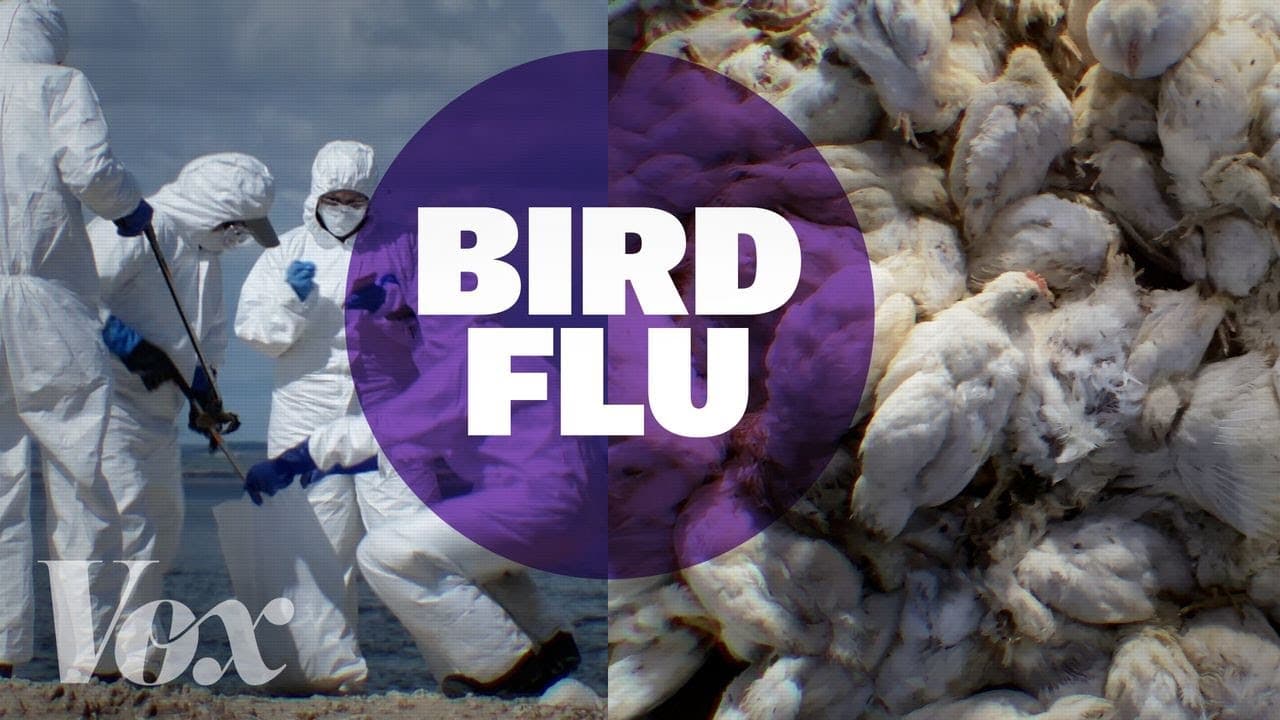
Over 100 million farm raised birds. That's how many chickens, turkeys, and other poultry have died because of avian flu in the United States since 2022. Up until now, most of us have only really seen the effects of this in our grocery bills. But then on January 6th, someone in Louisiana died. It was the first reported human death from avian flu in ... Read More
Key Insights
- Avian flu has caused the death of over 100 million farm-raised birds in the US since 2022, impacting grocery prices.
- The first human death from avian flu in the US was reported in January 2025, but human cases remain rare and mild.
- Avian flu is found in every US state and on every continent except Australia, raising concerns about potential worsening.
- The H5N1 strain is particularly concerning due to its ability to spread across species, affecting a wide range of animals.
- The virus has been detected in nearly 500 bird species and at least 70 mammal species, including dairy cows, which is unusual.
- Reassortment and mutation are two ways the flu virus can change, potentially leading to pandemics if it spreads efficiently among humans.
- Current avian flu strains do not spread efficiently between humans, but monitoring is crucial to prevent a potential pandemic.
- Public health experts emphasize awareness and preparedness as key strategies in managing avian flu risks.
Install to Summarize YouTube Videos and Get Transcripts
Explore YouTube Video Summarizer or Get YouTube Transcript Extractor
Questions & Answers
Q: What is the current impact of avian flu on bird populations?
Avian flu has had a devastating impact on bird populations, particularly in farm-raised species like chickens and turkeys. Over 100 million birds have died in the United States alone since 2022. This has not only affected the poultry industry economically but also led to increased grocery prices due to reduced supply.
Q: How does avian flu affect humans?
While avian flu primarily affects birds, there have been rare human cases. In the United States, there have been 67 reported cases, with infections typically being mild. The first human death was reported in January 2025. Public health experts emphasize that the current strains do not spread efficiently between humans, posing minimal threat.
Q: Why is the H5N1 strain particularly concerning?
The H5N1 strain is concerning because of its ability to spread across species, affecting a wide range of animals, including birds and mammals. It has been detected in nearly 500 bird species and at least 70 mammal species. This cross-species transmission increases the chances of the virus mutating or reassorting, potentially leading to a pandemic.
Q: What are the economic implications of avian flu?
The economic implications of avian flu are significant. Farmers have suffered billions in losses due to the culling of infected birds to prevent further spread. This has also led to increased prices for poultry products, impacting consumers. The virus's impact on wildlife and livestock further complicates economic recovery efforts.
Q: How does avian flu spread among animals?
Avian flu spreads among animals primarily through contact with infected birds. Waterfowl like ducks and geese are natural hosts, often showing no symptoms but spreading the virus through droppings, saliva, or mucus. When these infected birds come into contact with poultry, the virus can spread rapidly, causing outbreaks.
Q: What are the potential risks of avian flu to human health?
The potential risks of avian flu to human health include the possibility of the virus mutating or reassorting to enable efficient human-to-human transmission. While current strains pose minimal threat, a novel strain with these capabilities could lead to a pandemic. Monitoring and preparedness are crucial to mitigate these risks.
Q: What measures can be taken to prevent an avian flu pandemic?
Preventing an avian flu pandemic involves vigilant monitoring of the virus's spread and mutations, especially across species. Public health experts emphasize the importance of preparedness, including developing vaccines and response strategies. Awareness and funding for research and prevention efforts are also critical to managing potential outbreaks.
Q: How does the avian flu virus change and adapt?
The avian flu virus can change and adapt through two main processes: mutation and reassortment. Mutation occurs as the virus replicates, leading to new versions of the virus. Reassortment happens when two different viruses exchange genetic material, potentially creating a new, more transmissible strain. These processes are closely monitored to prevent pandemics.
Summary & Key Takeaways
-
Avian flu has caused significant economic and ecological impacts, killing over 100 million birds and affecting grocery prices. Despite the first US human death, the threat to humans remains low. The H5N1 strain's ability to spread across species is concerning, but it has not yet shown efficient human-to-human transmission.
-
The H5N1 avian flu strain has been detected in a wide variety of animals, including birds and mammals, raising concerns about its potential to cause a pandemic. While the virus can mutate and reassort, it has not yet demonstrated efficient human transmission, making monitoring essential.
-
Public health experts stress the importance of vigilance and preparedness in managing avian flu risks. Although the virus poses minimal threat to humans currently, its widespread presence in animals and potential for reassortment require ongoing attention to prevent future pandemics.
Read in Other Languages (beta)
Share This Summary 📚
Summarize YouTube Videos and Get Video Transcripts with 1-Click
Try YouTube Summary with ChatGPT & Claude or YouTube Transcript Generator
Explore More Summaries from Vox 📚




Summarize YouTube Videos and Get Video Transcripts with 1-Click
Try YouTube Summary with ChatGPT & Claude or YouTube Transcript Generator