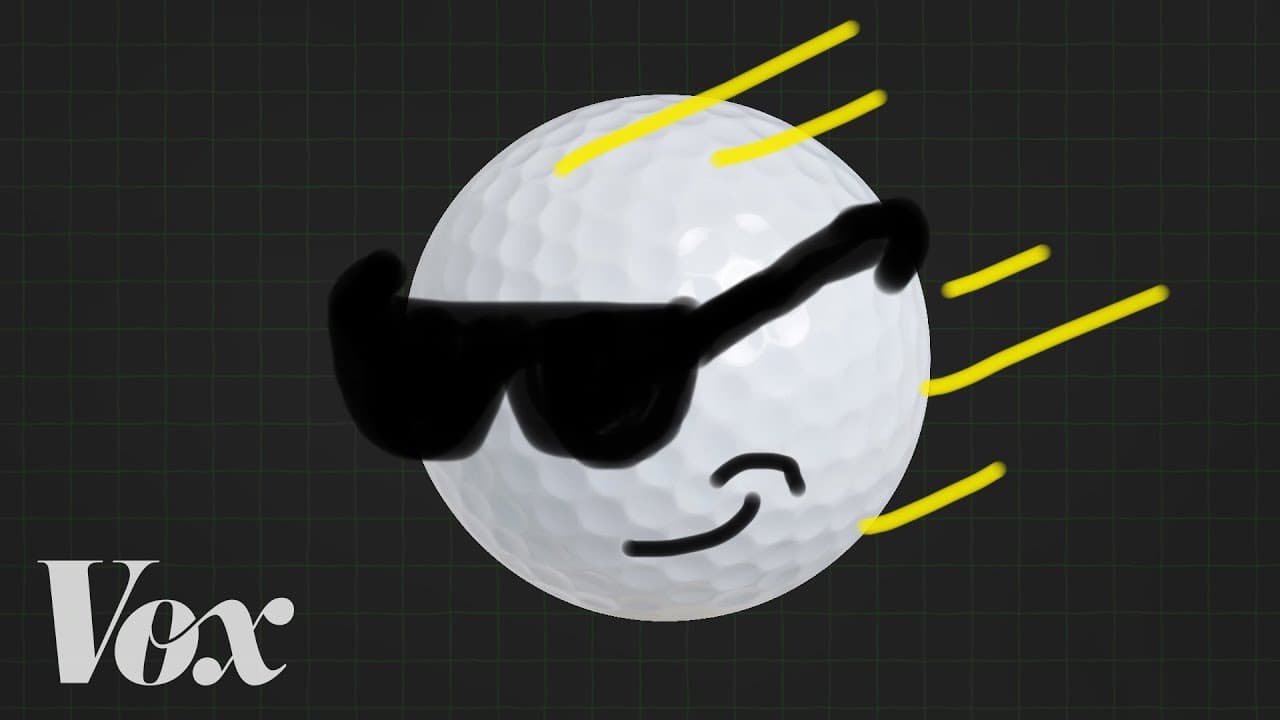
The golf ball that made golfers too good
TL;DR
Modern golf balls are making traditional courses obsolete.
Transcript
This is the 13th hole at Augusta National Golf Club. And to reach it, you have to hit a series of shots around the corner from the tee. One to get down the fairway, and a few more to get around the corner and onto the green. But not if you're Bubba Watson. "Bubba Watson with a driver." At the 2014 Masters Tournament, he did something remarkable. Hi... Read More
Key Insights
- Bubba Watson's remarkable shot at the 2014 Masters highlighted the issue of increased driving distances in golf.
- Since 1980, the average driving distance on the PGA Tour has increased by over 30 yards, raising concerns about the sport's future.
- The evolution of golf balls, from wooden to dimpled designs, has significantly impacted driving distances over the years.
- The Pro V1 golf ball introduced a solid, multi-layered core, revolutionizing the sport by offering both distance and control.
- Professional golfers have largely switched from wound balls to solid-core balls, resulting in a noticeable increase in driving distances.
- The increased driving distances are making older golf courses obsolete, as players can easily bypass obstacles designed to challenge them.
- There is ongoing debate about whether to redesign golf balls to limit distance, but manufacturers resist due to potential costs.
- Despite technological advancements, the golf distance debate has persisted for nearly a century, with no definitive resolution in sight.
Install to Summarize YouTube Videos and Get Transcripts
Explore YouTube Video Summarizer or Get YouTube Transcript Extractor
Questions & Answers
Q: How did Bubba Watson's shot at the 2014 Masters highlight the golf distance issue?
Bubba Watson's shot at the 2014 Masters highlighted the golf distance issue by demonstrating his ability to drive the ball over trees and land near the green, cutting the corner on a difficult hole. This showcased how modern golf balls and players' increased driving distances are making traditional course designs less challenging.
Q: What factors have contributed to the increase in driving distances since 1980?
Since 1980, driving distances have increased due to several factors, including players becoming stronger, advancements in high-tech clubs, and improved course conditions. However, the most significant factor is the evolution of golf balls, particularly the introduction of solid-core, multi-layered balls like the Pro V1, which offer both distance and control.
Q: How did the introduction of the Pro V1 golf ball revolutionize the sport?
The Pro V1 golf ball revolutionized the sport by introducing a solid, multi-layered core that combined the benefits of distance and control. Before the Pro V1, players had to choose between distance-oriented solid-core balls and accuracy-focused wound balls. The Pro V1's design allowed players to achieve both, leading to its widespread adoption among professional golfers.
Q: Why are older golf courses becoming obsolete due to modern golf balls?
Older golf courses are becoming obsolete because modern golf balls enable players to hit the ball much farther, allowing them to bypass obstacles and reach the hole with fewer shots. This diminishes the challenge and strategic elements designed into traditional courses, prompting the need for course modifications to maintain difficulty.
Q: What are the potential solutions to limit golf ball distance, and why are they controversial?
Potential solutions to limit golf ball distance include making balls larger or heavier, adjusting dimpling, or rolling back innovations like layering and materials. These solutions are controversial because they could increase production costs for manufacturers and alter the playing experience, leading to resistance from both manufacturers and players.
Q: How have golf ball manufacturers responded to the distance debate?
Golf ball manufacturers have responded to the distance debate by emphasizing their investment in technology and manufacturing processes. They resist changes that could increase production costs or compromise product performance. Manufacturers highlight their commitment to providing advanced products to end-users, making them reluctant to alter successful designs like the Pro V1.
Q: What historical context exists for the golf distance debate?
The golf distance debate has historical roots dating back nearly a century, with discussions about whether balls go too far occurring as early as 1936. Despite technological advancements and changes in ball design, the debate persists, with no definitive resolution, as the sport continuously adapts to evolving equipment and player capabilities.
Q: How have golf courses adapted to increased driving distances?
Golf courses have adapted to increased driving distances by extending holes or modifying layouts to maintain challenge. For example, Augusta National Golf Club purchased land to extend the 13th hole, making it harder for players to drive over the corner. Such adaptations aim to preserve the strategic elements and difficulty of traditional course designs.
Summary & Key Takeaways
-
Bubba Watson's impressive drive at the 2014 Masters showcased the issue of increased driving distances in golf, as modern balls allow players to reach holes with fewer shots, rendering some courses obsolete.
-
The evolution of golf balls from wooden to dimpled designs has significantly impacted driving distances, with the Pro V1's multi-layered core offering both distance and control, leading to widespread adoption among professional players.
-
The ongoing debate about limiting golf ball distance has persisted for nearly a century, with manufacturers resisting changes due to potential costs, while courses adapt by extending holes to maintain challenge.
Read in Other Languages (beta)
Share This Summary 📚
Summarize YouTube Videos and Get Video Transcripts with 1-Click
Try YouTube Summary with ChatGPT & Claude or YouTube Transcript Generator
Explore More Summaries from Vox 📚

Summarize YouTube Videos and Get Video Transcripts with 1-Click
Try YouTube Summary with ChatGPT & Claude or YouTube Transcript Generator