The U.S. Is Losing the Clean Energy Race—Can Innovation Turn It Around?
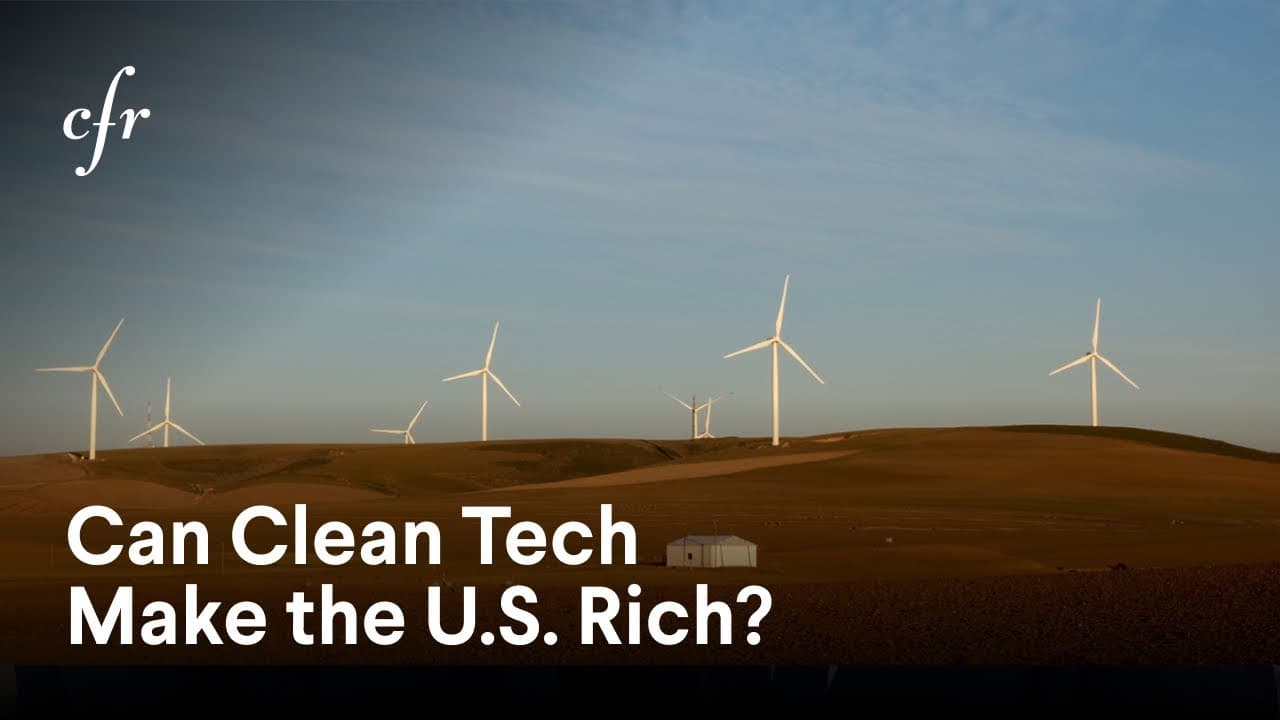
TL;DR
U.S. needs strategic innovation to lead in clean energy.
Transcript
HART: All right. Well, welcome back. Let me thank everybody in the room and online who has stuck around, which is a fantastic feat of endurance already. We have another great panel to go, and then some networking at the end of today. I’m really excited to chair this panel with Neil, and Rachel, and David, and Josh, on the topic of “Accelerating... Read More
Key Insights
- The U.S. must focus on clean technology innovation to maintain global competitiveness and address climate change effectively.
- Innovation in clean energy can create new resources and interests for countries, as seen with China's advancements in solar and electric vehicles.
- The U.S. possesses a robust innovation ecosystem but needs strategic investments and institutional reforms to mobilize effectively.
- Economic growth often conflicts with emissions reduction policies, but technological innovation can align these goals by making clean energy cheaper.
- The U.S. should focus on exporting better, cheaper clean technologies rather than solely reducing domestic emissions to influence global climate outcomes.
- There is a need for bipartisan support and collaboration in clean energy innovation to overcome political and economic challenges.
- The private sector plays a crucial role in advancing clean energy technologies, and there is optimism about the potential for innovation in the U.S.
- Regulatory and infrastructure challenges, such as transmission line construction, need to be addressed to accelerate clean energy deployment.
Install to Summarize YouTube Videos and Get Transcripts
Explore YouTube Video Summarizer or Get YouTube Transcript Extractor
Questions & Answers
Q: What is the main focus of the panel discussion?
The panel focuses on the need for the U.S. to accelerate clean technology innovation to maintain global competitiveness and effectively address climate change. This involves strategic investments, institutional reforms, and leveraging the U.S.'s robust innovation ecosystem.
Q: How is innovation related to national interests according to the panel?
Innovation is seen as a way to create new national interests by developing new resources, as demonstrated by China's advancements in solar and electric vehicles. By innovating in clean energy, countries can create new economic opportunities and strengthen their global influence.
Q: What are some challenges mentioned in aligning economic growth with emissions reduction?
Economic growth often conflicts with emissions reduction policies, as seen in the iron law of climate policy. However, technological innovation can help align these goals by making clean energy cheaper, thereby addressing climate change without compromising economic growth.
Q: Why is the U.S. focusing on exporting clean technologies?
The U.S. aims to focus on exporting better, cheaper clean technologies rather than solely reducing domestic emissions, as this can have a greater influence on global climate outcomes and help the U.S. maintain its economic and geopolitical influence.
Q: What role does bipartisanship play in clean energy innovation?
Bipartisan support and collaboration are crucial for overcoming political and economic challenges in advancing clean energy innovation. This involves finding common ground and working across party lines to implement effective policies and strategies.
Q: What is the private sector's role in clean energy according to the panel?
The private sector is seen as a crucial player in advancing clean energy technologies. There is optimism about the potential for innovation in the U.S., and private companies are expected to drive significant advancements in clean energy solutions.
Q: What infrastructure challenges are highlighted in the panel?
The panel highlights regulatory and infrastructure challenges, such as the difficulty in constructing transmission lines, which are necessary to accelerate clean energy deployment. Addressing these challenges is essential for the U.S. to advance its clean energy goals.
Q: What is the panel's perspective on the role of engineers in energy policy?
The panel suggests re-empowering engineers and technical experts to solve complex energy policy issues. They argue that energy policy should be made less about political and celebrity influence and more about technical solutions developed by knowledgeable experts.
Summary & Key Takeaways
-
The panel discusses the need for the U.S. to accelerate clean technology innovation to maintain competitiveness and address climate change. Innovation is seen as a way to create new interests for countries, as demonstrated by China's investments in solar and electric vehicles.
-
The U.S. has a strong innovation ecosystem but requires strategic investments and institutional reforms to mobilize effectively. Economic growth often conflicts with emissions reduction policies, but technological innovation can align these goals by making clean energy cheaper.
-
The panel emphasizes the importance of exporting better, cheaper clean technologies to influence global climate outcomes. Bipartisan support and collaboration are necessary to overcome political and economic challenges, and the private sector plays a crucial role in advancing clean energy technologies.
Read in Other Languages (beta)
Share This Summary 📚
Summarize YouTube Videos and Get Video Transcripts with 1-Click
Try YouTube Summary with ChatGPT & Claude or YouTube Transcript Generator
Explore More Summaries from Council on Foreign Relations 📚


Summarize YouTube Videos and Get Video Transcripts with 1-Click
Try YouTube Summary with ChatGPT & Claude or YouTube Transcript Generator