That Time the British Pitted a Few Canoeing Commandos against a Fleet of Nazi Ships... And Won
TL;DR
British commandos conducted a daring raid in 1942 using canoes to place limpet mines on German ships in Bordeaux harbor, disrupting German shipping and boosting British morale.
Transcript
this video is brought to you by keeps did you know that two out of every three guys are going to experience some form of male passive borders by the time they're 35 no no idea i mean yes obviously for me it was like 25. i wish keeps been around when i was younger because advancements in science meant that there are now treatments that can... Read More
Key Insights
- 🇩🇪 The creation of the Commandos provided the British Army with a means to strike back against Nazi Germany.
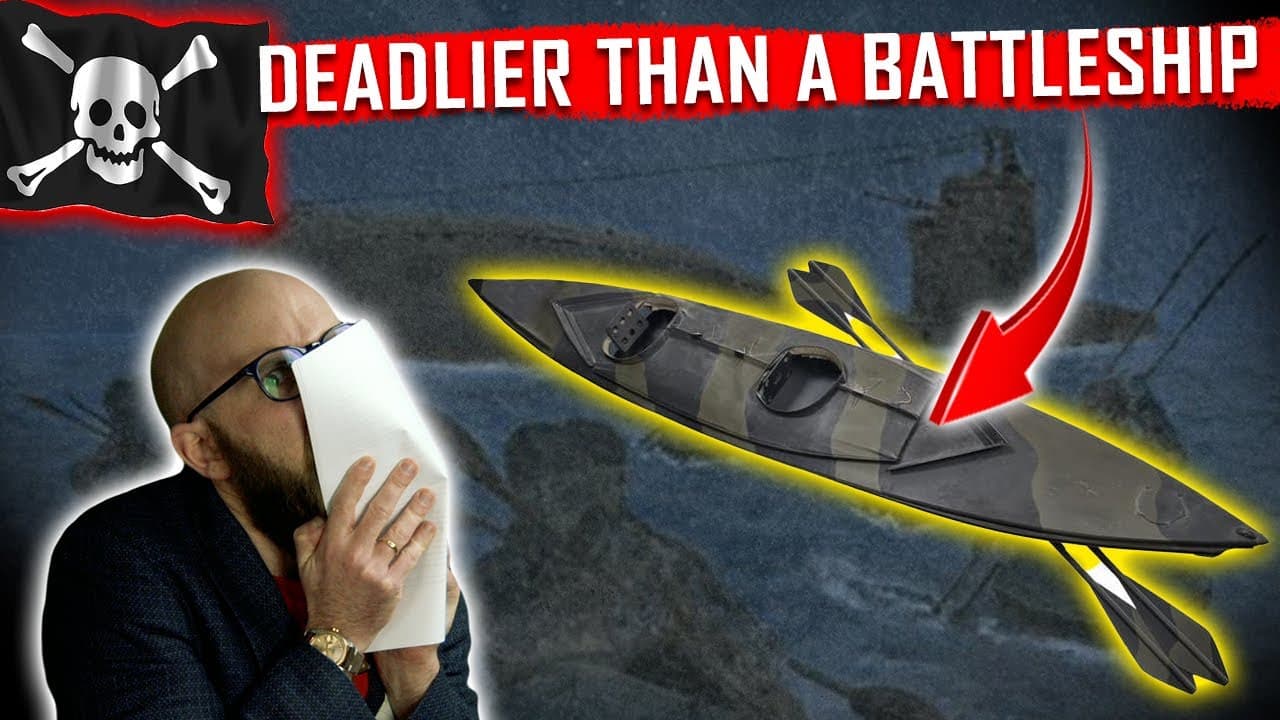
- 🛶 Operation Frankton was a daring raid conducted by British commandos using canoes to disrupt German shipping in Bordeaux harbor.
- 🛩️ The raid demonstrated the effectiveness of small naval raiding forces and boosted British morale.
- ❓ The success of Operation Frankton inspired further similar raids and contributed to the development of the Royal Navy's Special Boat Service (SBS).
Install to Summarize YouTube Videos and Get Transcripts
Explore YouTube Video Summarizer or Get YouTube Transcript Extractor
Questions & Answers
Q: Why were canoes used in Operation Frankton?
Canoes were used because they provided maneuverability and stealth, allowing the raiders to silently navigate the river and harbor, avoiding detection by German forces.
Q: What was the significance of the limpet mines used in the raid?
Limpet mines were waterproof explosive charges fitted with magnets. They could be attached to the bottom of a ship's hull, causing significant damage when detonated. The raiders used these mines to cripple German ships in Bordeaux harbor.
Q: How did Operation Frankton impact the war effort?
Operation Frankton had several impacts. It disrupted German shipping and temporarily halted trade in raw materials between Germany and its ally, Japan. The raid also forced the Germans to allocate resources to guard ports against future raids and boosted British morale, demonstrating their ability to strike back against Nazi Germany.
Q: Did all the raiders survive Operation Frankton?
No, Operation Frankton resulted in casualties. Two raiders died of hypothermia, and four were captured by the Germans and executed under Hitler's commando order. Only two raiders, Major Hasler and Bill Sparks, successfully reached Spain with the help of the French Resistance.
Summary & Key Takeaways
-
In 1940, the British Army lacked means to strike back against Nazi Germany after the evacuation of Dunkirk. The creation of the Commandos in 1940 provided a solution by sending elite soldiers and marines on small-scale raids into occupied territory.
-
Operation Frankton, conducted in 1942, involved a group of 10 Royal Marines using canoes to place limpet mines on German ships in Bordeaux harbor. Despite facing challenges and suffering casualties, the raid was successful in disrupting German shipping and boosting British morale.
-
The raid inspired further similar strikes and contributed to the development of the Royal Navy's Special Boat Service (SBS).
Read in Other Languages (beta)
Share This Summary 📚
Summarize YouTube Videos and Get Video Transcripts with 1-Click
Try YouTube Summary with ChatGPT & Claude or YouTube Transcript Generator
Explore More Summaries from Today I Found Out 📚






Summarize YouTube Videos and Get Video Transcripts with 1-Click
Try YouTube Summary with ChatGPT & Claude or YouTube Transcript Generator