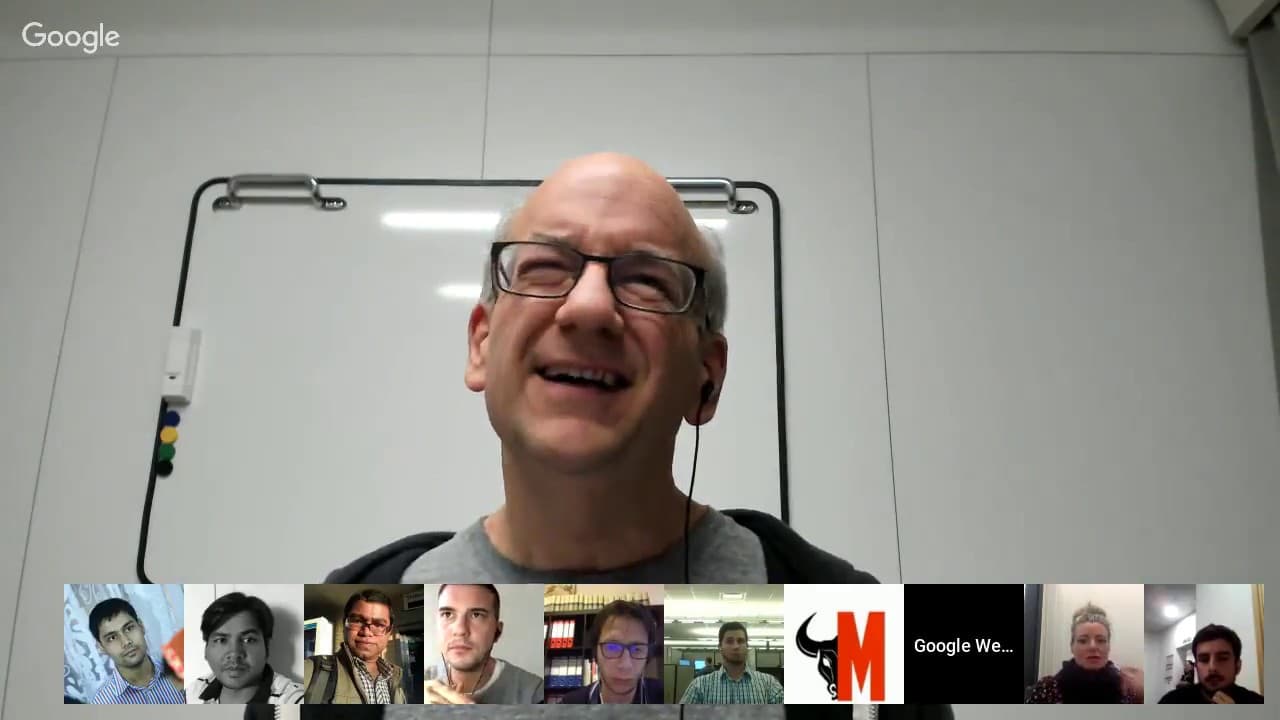
English Google Webmaster Central office-hours hangout
TL;DR
Google's John Mueller discusses SEO, crawling, and indexing.
Transcript
JOHN MUELLER: OK. Welcome, everyone, to today's Google Webmaster Central Office Hours Hangout. My name is John Mueller. I'm a Webmaster Trends Analyst here at Google in Switzerland. And part of what we do are these Webmaster Office Hours Hangouts, where webmasters, and publishers, and SEOs can join in and ask us any kind of web search, website-rela... Read More
Key Insights
- Google's crawl rate is determined by various factors including site quality and server capacity, not just technical limits.
- Setting a high crawl rate in Google Search Console doesn't guarantee increased crawling; it's merely a suggestion.
- Crawling frequency does not directly correlate with higher rankings; Google can rank pages that are rarely crawled.
- Issues like unauthorized URL removal in Google Search Console require re-inclusion requests, which should work unless there's a technical error.
- Hidden text for mobile and desktop versions on the same page is generally not a problem for Google, but should be avoided.
- Meta descriptions can be longer, but Google may still choose to display snippets from the page content based on the search query.
- Disavow files are useful for removing unwanted links from Google's consideration, but maintaining a master disavow file for all sites may be unnecessary.
- Google's algorithms for features like the Top Stories carousel are constantly evolving based on user feedback and quality assessments.
Install to Summarize YouTube Videos and Get Transcripts
Explore YouTube Video Summarizer or Get YouTube Transcript Extractor
Questions & Answers
Q: What factors influence Google's crawl rate?
Google's crawl rate is influenced by a combination of factors, including the quality of the site, server capacity, and what Google deems necessary to index. It's not solely based on technical limits, but rather a comprehensive assessment of the site's characteristics and needs.
Q: Does setting a high crawl rate in Search Console guarantee more crawling?
No, setting a high crawl rate in Google Search Console is merely a suggestion to Google that the site can handle more crawling. It doesn't guarantee that Google will increase its crawling activity, as the decision is based on various other factors.
Q: Is crawling frequency directly related to higher rankings?
Crawling frequency is not directly related to higher rankings. Google can rank pages highly even if they are rarely crawled. The key is the quality and relevance of the content rather than how often it is crawled by Googlebot.
Q: What should be done if a URL is removed from Google Search Console without authorization?
If a URL is removed without authorization, the re-inclusion request in Google Search Console is the correct approach. If there are errors, capturing a screenshot and seeking help in forums or directly from Google support may be necessary to resolve the issue.
Q: Is hidden text for mobile and desktop versions on the same page a problem?
Hidden text for mobile and desktop versions on the same page is generally not a problem for Google as long as it's part of the HTML. However, it's best practice to avoid unnecessary hidden text to ensure clarity and accessibility for users.
Q: Should meta descriptions be longer due to Google's testing of longer snippets?
While Google has been testing longer snippets, meta descriptions have always been flexible. Google may choose to display snippets from the page content based on the search query, so focus on relevance and clarity rather than length.
Q: How should disavow files be managed across multiple sites?
Maintaining a master disavow file for all sites may add unnecessary maintenance. It's better to analyze links specific to each site and disavow those that are known to be spammy, rather than using a generic disavow file for all domains.
Q: Why do visibility changes occur in the Top Stories carousel?
Visibility changes in the Top Stories carousel are due to ongoing adjustments in Google's algorithms, which are based on user feedback and quality assessments. These changes are part of Google's efforts to improve the relevance and quality of search results.
Summary & Key Takeaways
-
John Mueller from Google addresses various webmaster concerns during the office hours hangout, emphasizing that Google's crawl rate is influenced by multiple factors, including site quality and server capacity. He clarifies that setting a high crawl rate does not ensure increased crawling.
-
Mueller explains that crawling frequency is not directly linked to rankings, as Google can rank pages that are rarely crawled. He also advises on handling unauthorized URL removals in Google Search Console and the importance of re-inclusion requests.
-
The discussion covers topics like the impact of hidden text for mobile and desktop versions on the same page, the flexibility in meta description length, and the use of disavow files. Mueller also touches on the evolving nature of Google's Top Stories carousel algorithms.
Read in Other Languages (beta)
Share This Summary 📚
Summarize YouTube Videos and Get Video Transcripts with 1-Click
Try YouTube Summary with ChatGPT & Claude or YouTube Transcript Generator
Explore More Summaries from Google Search Central 📚






Summarize YouTube Videos and Get Video Transcripts with 1-Click
Try YouTube Summary with ChatGPT & Claude or YouTube Transcript Generator