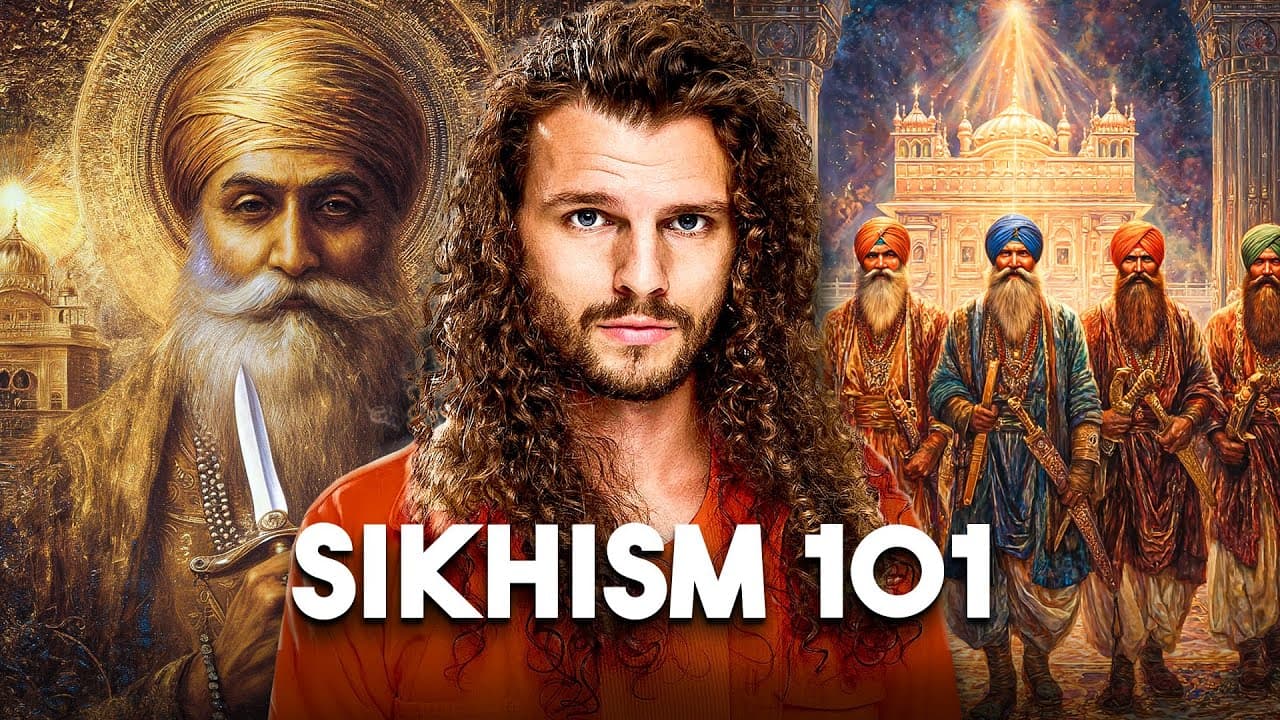
Who REALLY Are The Sikhs? | Sacrifice, Philosophy & Power
TL;DR
Exploring Sikhism's history, beliefs, and cultural impact.
Transcript
Read and summarize the transcript of this video on Glasp Reader (beta).
Key Insights
- Sikhism's foundation is based on the teachings of ten gurus, beginning with Guru Nanak, who emphasized equality and the oneness of God.
- The Golden Temple, or Harimandir Sahib, is the most important Sikh gurdwara, serving free meals to 100,000 people daily, symbolizing equality and community service.
- Sikhism rejects the caste system and promotes gender equality, with women historically playing significant roles in the community.
- Sikhs believe in one God, who is formless and genderless, and emphasize living a life of honesty, hard work, and sharing with others.
- The five thieves—lust, anger, greed, attachment, and pride—are seen as obstacles to spiritual growth, while the three pillars guide Sikhs toward a righteous life.
- The Guru Granth Sahib, the holy scripture, is considered the eternal living guru, containing hymns and writings from Sikh, Hindu, and Muslim saints.
- Sikhs practice selfless service (seva) and community meals (langar) to reinforce the values of equality and service to humanity.
- Sikhism has a global presence, with significant communities in India, Canada, the UK, and the US, maintaining their cultural and religious practices.
Install to Summarize YouTube Videos and Get Transcripts
Explore YouTube Video Summarizer or Get YouTube Transcript Extractor
Questions & Answers
Q: What is the significance of the Golden Temple in Sikhism?
The Golden Temple, or Harimandir Sahib, is the most important Sikh gurdwara located in Amritsar, India. It symbolizes the core Sikh values of equality and community service by serving free meals to about 100,000 people daily through its communal kitchen, known as langar. The temple's architecture, with doors facing all directions, welcomes people from all backgrounds, emphasizing inclusivity and unity.
Q: How does Sikhism view the concept of God?
Sikhism is monotheistic, believing in one God who is formless, genderless, and universal. This belief is represented by the sacred symbol 'Ik Onkar,' meaning 'one God.' Sikhs refer to God as 'Waheguru,' the wondrous Lord, and emphasize that no single religion owns the truth. The divine presence is seen as accessible to all sincere seekers, regardless of their religious background.
Q: What are the three pillars of Sikhism?
The three pillars of Sikhism are Nam Japo, Kirt Karni, and Vand Chakna. Nam Japo involves meditating on God's name and staying mindful of the divine presence. Kirt Karni encourages earning an honest living through integrity and hard work. Vand Chakna emphasizes sharing with others, including feeding the hungry and supporting the community, exemplified by the practice of langar in gurdwaras.
Q: Who was Guru Nanak, and what were his teachings?
Guru Nanak was the founder of Sikhism, born in 1469 in the Punjab region. His teachings emphasized the oneness of God and the equality of all humans, challenging the caste system and religious divisions of his time. He promoted a way of life based on shared labor, communal meals, and devotional singing, laying the foundation for Sikhism's core values of unity and service.
Q: What role did Guru Gobind Singh play in Sikhism?
Guru Gobind Singh, the tenth and final human guru, established the Khalsa in 1699, creating a distinct Sikh identity committed to upholding the faith's values. He introduced the five Ks, including uncut hair and the ceremonial sword, to symbolize Sikh devotion and readiness to defend justice. Before his death, he declared the Guru Granth Sahib as the eternal living guru, guiding Sikhs in spiritual matters.
Q: How does Sikhism address gender equality?
Sikhism promotes gender equality, viewing God as genderless and beyond the binary of male and female. This belief sets the foundation for the equal spiritual status of women, who have historically played significant roles as warriors, religious teachers, and leaders within the Sikh community. The faith's teachings emphasize that all humans are equal, regardless of gender.
Q: What are the five thieves in Sikhism?
The five thieves in Sikhism are lust, anger, greed, attachment, and pride. These are seen as spiritual obstacles that distract individuals from the divine truth and keep them trapped in the cycle of rebirth. Sikhs aim to overcome these thieves through meditation, honest living, and selfless service, moving towards spiritual liberation and unity with God.
Q: What is the significance of the Guru Granth Sahib?
The Guru Granth Sahib is the central religious scripture of Sikhism, considered the eternal living guru. It contains hymns and writings from Sikh gurus and saints from Hindu and Muslim traditions, emphasizing the universality of divine truth. Sikhs treat the Guru Granth Sahib with profound respect, and its teachings guide their spiritual and ethical lives, emphasizing the oneness of God and the equality of all people.
Summary & Key Takeaways
-
Sikhism, founded by Guru Nanak in the Punjab region, emphasizes the oneness of God and equality among all people, rejecting caste and gender discrimination. The religion's core beliefs are encapsulated in the Guru Granth Sahib, the eternal guru.
-
The Golden Temple in Amritsar is a central place of worship, known for its communal meals that serve thousands daily, embodying Sikh values of service and equality. Sikhism's history is marked by the contributions of ten gurus, each adding to the faith's development.
-
Sikhs follow the three pillars of meditation, honest living, and sharing with others, aiming to overcome the five thieves that hinder spiritual growth. The Khalsa, established by Guru Gobind Singh, represents a community committed to upholding Sikh values.
Read in Other Languages (beta)
Share This Summary 📚
Summarize YouTube Videos and Get Video Transcripts with 1-Click
Try YouTube Summary with ChatGPT & Claude or YouTube Transcript Generator
Explore More Summaries from Religion Camp 📚


Summarize YouTube Videos and Get Video Transcripts with 1-Click
Try YouTube Summary with ChatGPT & Claude or YouTube Transcript Generator