The Boy And The Jinn | Full Story
TL;DR
The content explores the Islamic concept of Jinn and their role in religion.
Transcript
the boy and the jin gins aren't just some ancient folklore campfire story thing they're explicitly mentioned in Islam's holiest text the Quran they're an actual species that exists alongside us on this planet like a spiritual species a group of jin who overhear the prophet Muhammad reciting the Quran and they were so moved by the message of the Qur... Read More
Key Insights
- Jinn are spiritual beings mentioned in the Quran, existing alongside humans and possessing free will to choose between good and evil, similar to humans.
- The Islamic belief system includes various types of Jinn, such as the Marid, Ifrit, and Ghoul, each having distinct characteristics and folklore associations.
- Jinn can manifest in the human world and are believed to inhabit places like graveyards and ruins, intersecting with humans occasionally.
- Muslim Jinn are those who follow Islamic teachings and use their supernatural abilities for good, contrasting with the Shayatin, who lead people away from righteousness.
- Iblis, a prominent Jinn, refused to bow to Adam due to pride, leading to his expulsion and becoming a figure akin to Satan in Islamic tradition.
- The phrase 'Bismillah' is used by Muslims as a protective invocation against Jinn, especially when entering spaces believed to be frequented by them.
- Folklore and religious teachings advise Muslims to avoid actions that could provoke Jinn, such as pouring hot water without saying 'Bismillah' or whistling at night.
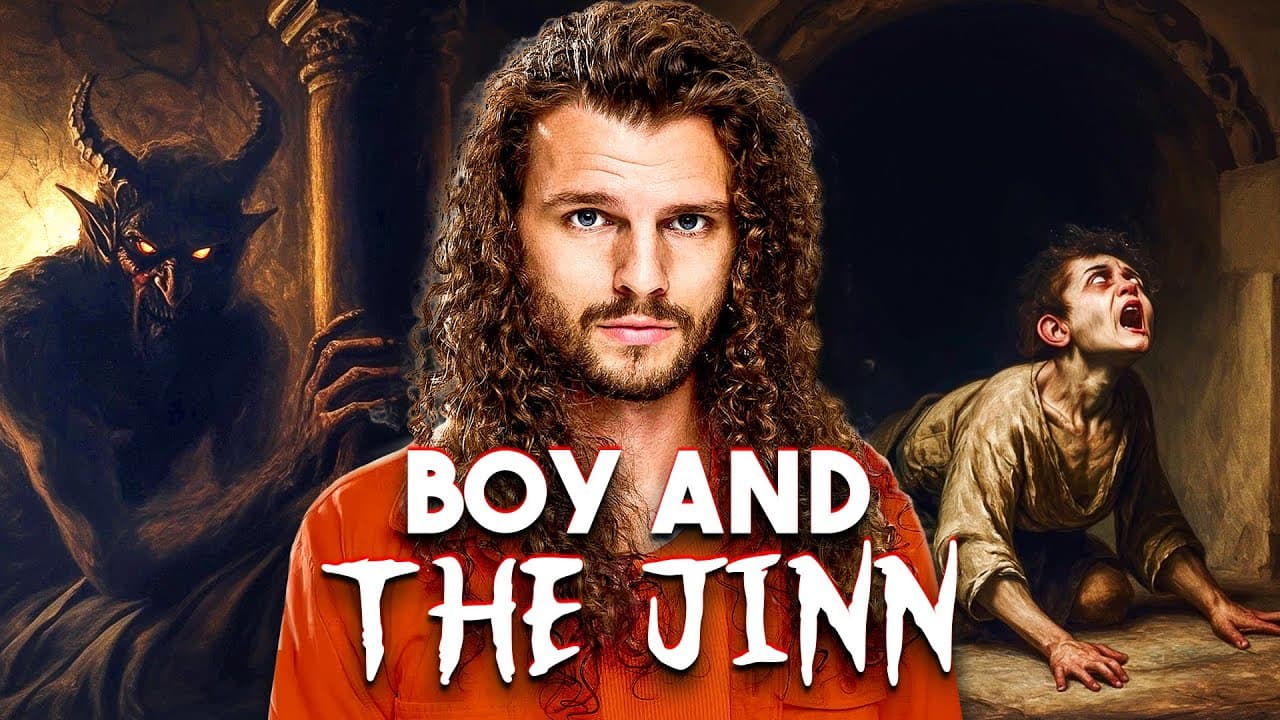
- Stories of Jinn interactions, such as the 'Boy and the Jinn,' highlight the cultural and religious significance of Jinn in Islamic societies.
Install to Summarize YouTube Videos and Get Transcripts
Explore YouTube Video Summarizer or Get YouTube Transcript Extractor
Questions & Answers
Q: What are Jinn according to Islamic belief?
Jinn are spiritual beings mentioned in the Quran, created from smokeless fire. They possess free will, allowing them to choose between good and evil, much like humans. They exist alongside humans on Earth and can manifest in various forms, interacting with the human world occasionally.
Q: How do Jinn differ from demons in Christianity?
Unlike demons in Christianity, which are typically seen as evil, Jinn in Islam can be either good or evil. They possess free will and are held accountable for their actions in the afterlife. Some Jinn are believers in Islam and follow its teachings, while others, like the Shayatin, lead people away from righteousness.
Q: What is the significance of the phrase 'Bismillah' in relation to Jinn?
The phrase 'Bismillah,' meaning 'In the name of Allah,' is used by Muslims as a protective invocation against Jinn. It is recited before entering places believed to be frequented by Jinn, such as bathrooms or abandoned areas, alerting them to a believer's presence and serving as a spiritual barrier.
Q: What is the story of Iblis in Islamic tradition?
Iblis is a prominent Jinn who refused to bow to Adam due to pride, believing himself superior because he was created from fire while Adam was made from clay. His refusal led to his expulsion from Allah's mercy, and he vowed to lead humans and Jinn astray, becoming a figure akin to Satan in Islamic tradition.
Q: How are Jinn believed to interact with humans?
Jinn are believed to inhabit places like graveyards and ruins, occasionally intersecting with humans. They can manifest as animals or humans and are not bound by physical laws. While most Jinn exist without interfering, some, particularly those aligned with evil, seek to mislead and harm people.
Q: What are some protective practices against Jinn in Islamic culture?
Muslims are advised to recite 'Bismillah' before entering spaces believed to be frequented by Jinn. Other practices include avoiding pouring hot water without saying 'Bismillah' and refraining from whistling at night. These practices are rooted in both religious teachings and cultural folklore.
Q: What is the 'Boy and the Jinn' story?
The 'Boy and the Jinn' story involves a 13-year-old boy who, after entering a forbidden area, begins speaking fluent Arabic and reciting the Quran, despite not knowing the language. It is later discovered that a Jinn had attached itself to him, granting him these abilities. The boy returns to normal after staying away for a month.
Q: How are Jinn perceived differently across cultures?
While belief in supernatural beings exists across cultures, the Islamic conception of Jinn as morally responsible beings facing eventual salvation or damnation is distinct. In contrast to Western ghost stories, which often involve spirits of the deceased, Jinn are independent entities with their own societies and free will.
Summary & Key Takeaways
-
The content delves into the Islamic concept of Jinn, exploring their existence, characteristics, and significance in religion and culture. It highlights the differences between Jinn and demons in other religious traditions, emphasizing their free will and accountability.
-
Various types of Jinn, such as Marid, Ifrit, and Ghoul, are discussed, along with their manifestations and interactions with humans. The story of Iblis illustrates the Jinn's role in Islamic theology, drawing parallels with other religious narratives.
-
The content also covers protective practices like saying 'Bismillah' to ward off Jinn and shares cultural beliefs and stories, including the famous 'Boy and the Jinn' tale, showcasing the blend of folklore and religious teachings.
Read in Other Languages (beta)
Share This Summary 📚
Summarize YouTube Videos and Get Video Transcripts with 1-Click
Try YouTube Summary with ChatGPT & Claude or YouTube Transcript Generator
Explore More Summaries from Religion Camp 📚


Summarize YouTube Videos and Get Video Transcripts with 1-Click
Try YouTube Summary with ChatGPT & Claude or YouTube Transcript Generator