Why You Need to Understand Re-rendering in React and useState Hook
TL;DR
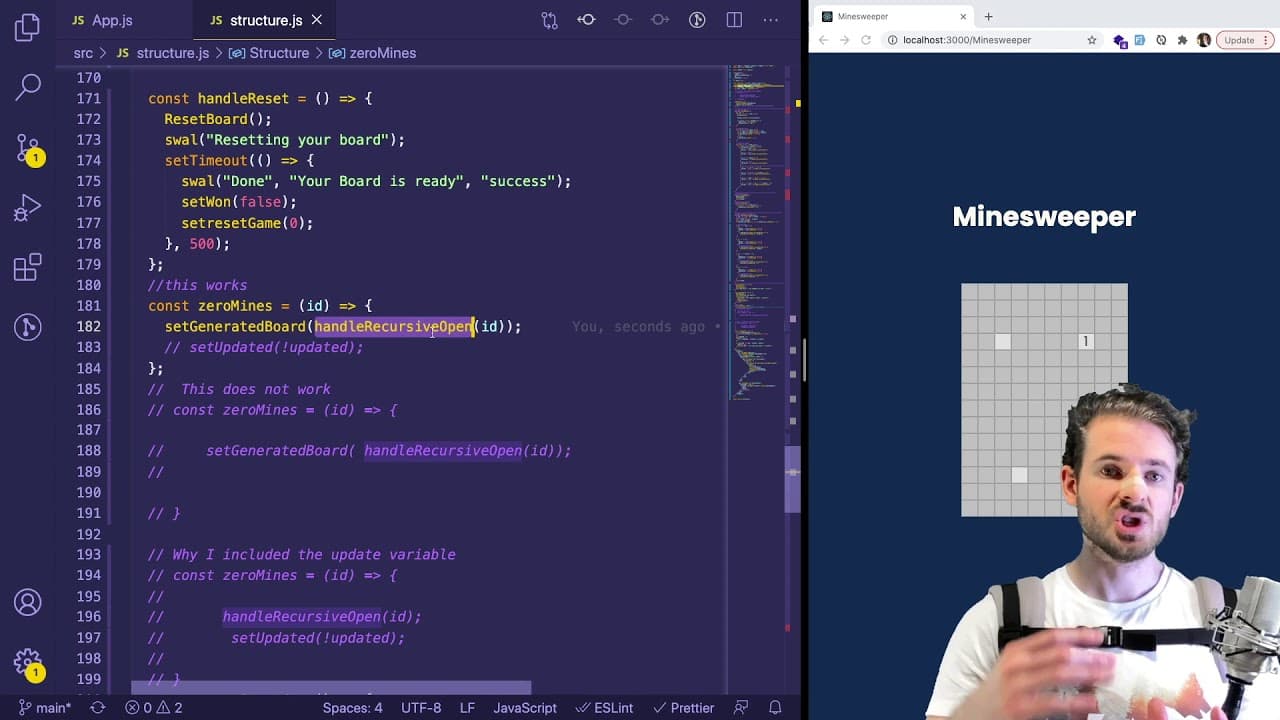
A detailed explanation of how React state updates and component re-rendering works, particularly with arrays and objects.
Transcript
how's it going everyone hope you guys are having a great day welcome back to another web dev junkie video so in this video a person in my discord channel by the way if you are not part of my discord channel i recommend that you join because it's just a good place to kind of ask questions if you're new to programming you want to learn i think the li... Read More
Key Insights
- ❓ Understanding state management in React is crucial for ensuring UI updates occur as expected.
- 🈸 The virtual DOM and diffing process are essential for efficient updates in React applications.
- 👶 Using new references for state updates, particularly for arrays and objects, is a fundamental practice in React development.
- ❓ Familiarity with ES6 features, like the spread operator, is beneficial for effective state manipulation.
- ❓ Reading and comprehending the official React documentation can clarify complex concepts related to rendering and state.
- 🥺 Recognizing when to utilize strategic coding practices, such as immutability, can lead to more predictable and correct component behavior.
- 🈸 Knowledge of component lifecycle events enhances a developer's ability to troubleshoot and optimize React applications.
Install to Summarize YouTube Videos and Get Transcripts
Explore YouTube Video Summarizer or Get YouTube Transcript Extractor
Questions & Answers
Q: Why was the subscriber's Minesweeper game not updating correctly when cells were opened?
The game was not re-rendering because the state update was not creating a new reference for the array being used. React only recognizes changes when a new object or array reference is provided, meaning simply modifying the existing array was insufficient for triggering a re-render.
Q: How does React determine when to re-render a component?
React re-renders components primarily when props change, when state variables change, or when a forced update is invoked. When a change is detected, React performs a diff on its virtual DOM against the real DOM to see what needs to be updated.
Q: What is the role of the spread operator in managing state updates in React?
The spread operator is helpful for creating a new array or object reference when updating state. By spreading the elements into a new array or object, React is able to identify that a change has occurred, triggering a re-render of the component.
Q: What happens if you modify an object or array directly in React?
Modifying an object or array directly without creating a new reference prevents React from recognizing the change, leading to issues like components not re-rendering. React does not perform a deep comparison of state variables; it requires a new reference to detect changes.
Q: What resources can beginners use to understand React component re-rendering better?
Beginners are encouraged to explore the official React documentation for lifecycle events and rendering logic. Specifically, the reconciliation section and lifecycle diagrams can provide a deeper understanding of how components update and render.
Q: What are some common misconceptions about state management in React?
A common misconception is that simply changing properties of existing objects or arrays is enough to trigger updates in the UI. In reality, React relies on new references to objects or arrays to recognize changes and activate re-renders.
Q: What is the recommended practice when handling state updates in React?
It is advisable to always create new instances of objects or arrays when updating state. Use methods like the spread operator to ensure React recognizes the state change and appropriately re-renders components.
Q: What should a developer do if they find themselves adding hacks to make React state work?
If hacks are being utilized to force state updates, developers should take a step back to review React's state management principles. It's important to have a solid understanding of how React's rendering cycle works and to avoid workarounds that may hinder maintainability.
Summary & Key Takeaways
-
The video addresses a subscriber's issue with a Minesweeper game in React regarding state updates not triggering component re-renders.
-
It emphasizes the importance of using new references for arrays and objects when updating state to ensure proper re-rendering in React applications.
-
A brief overview is provided regarding when React components re-render, including changes in props and state, and the need for understanding React's rendering logic.
Read in Other Languages (beta)
Share This Summary 📚
Summarize YouTube Videos and Get Video Transcripts with 1-Click
Try YouTube Summary with ChatGPT & Claude or YouTube Transcript Generator
Explore More Summaries from Web Dev Cody 📚


Summarize YouTube Videos and Get Video Transcripts with 1-Click
Try YouTube Summary with ChatGPT & Claude or YouTube Transcript Generator