Viruses
TL;DR
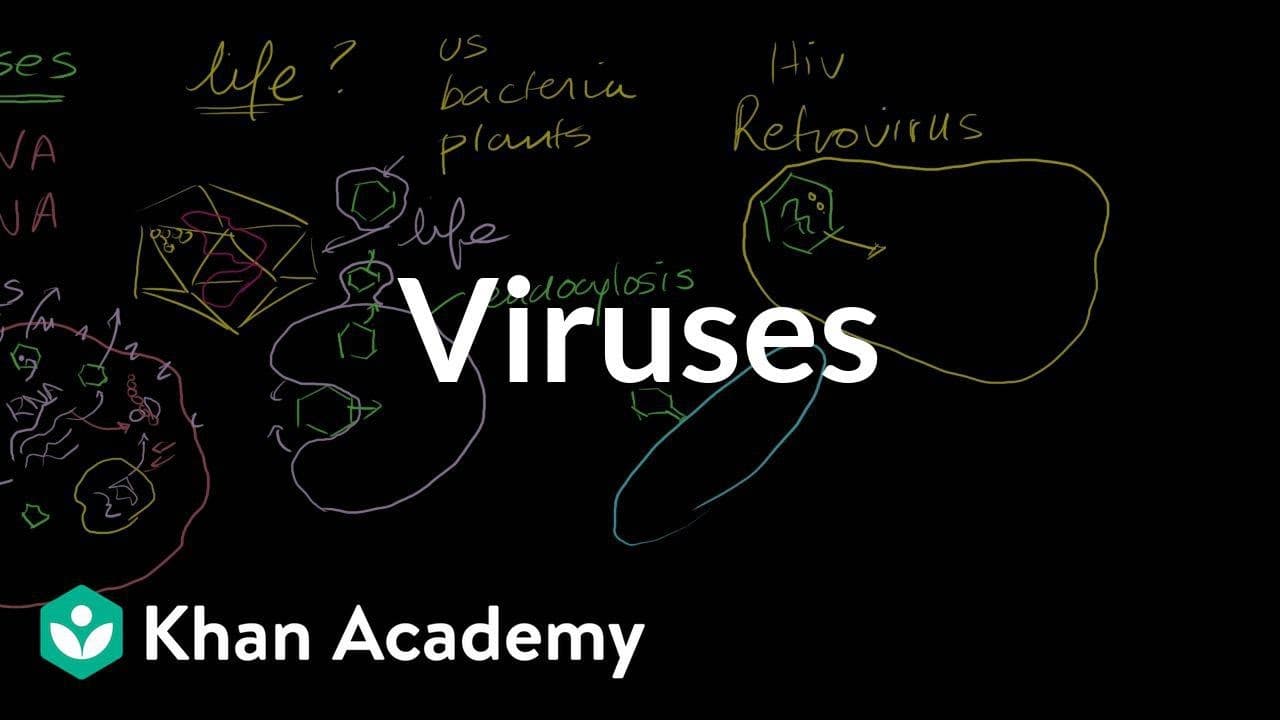
Viruses blur the boundary between life and inanimate objects, as they consist of genetic material within a protein capsule and rely on other organisms to reproduce.
Transcript
Considering that I have a cold right now, I can't imagine a more appropriate topic to make a video on than a virus. And I didn't want to make it that thick. A virus, or viruses. And in my opinion, viruses are, on some level, the most fascinating thing in all of biology. Because they really blur the boundary between what is an inanimate object and w... Read More
Key Insights
- 🫥 Viruses challenge the definition of life, blurring the line between living organisms and inanimate objects.
- ❓ Viruses show remarkable adaptability and diversity in their mechanisms of entering cells and replicating.
- 💄 Viruses can influence an organism's DNA, changing genetic makeup and potentially impacting future generations.
- 🥶 The high prevalence of viruses in nature highlights their role in infections and diseases, ranging from the common cold to more severe conditions like HIV or Ebola.
- ❓ Viruses are a constant presence, as they infect various organisms and rely on them for reproduction.
- 🗨️ The study of viruses is ongoing, with much left to discover about their behaviors and mechanisms.
- 🚥 The genetic material of viruses can jump between different species, contributing to genetic variation and horizontal DNA transfer.
Install to Summarize YouTube Videos and Get Transcripts
Explore YouTube Video Summarizer or Get YouTube Transcript Extractor
Questions & Answers
Q: What defines a virus as a living organism?
Viruses are seen as inanimate objects due to their lack of growth, metabolism, and reproduction outside of a host cell. However, they exhibit characteristics of life when interacting with other organisms.
Q: How do viruses enter cells?
Viruses can enter cells through fusion, endocytosis, or injection. Some viruses have their own membrane, while others trick the cell into consuming them.
Q: What is the significance of viruses incorporating their genetic material into the host DNA?
This incorporation, known as a provirus, allows the viral DNA to be passed on to future generations. It has been estimated that 5-8% of the human genome consists of genetic material from ancient retroviruses.
Q: How do viruses cause infections and diseases?
Viruses replicate inside host cells, using the cell's machinery to produce more viral shells and genetic material. They can damage or kill the host cell during replication, leading to various symptoms and diseases.
Summary & Key Takeaways
-
Viruses are genetic information contained within a protein structure called a capsid, and they can come in different forms.
-
They have different ways of entering cells, such as fusion, endocytosis, or injection.
-
Once inside the cell, viruses hijack the cell's machinery to replicate and produce more viral shells.
Read in Other Languages (beta)
Share This Summary 📚
Summarize YouTube Videos and Get Video Transcripts with 1-Click
Try YouTube Summary with ChatGPT & Claude or YouTube Transcript Generator
Explore More Summaries from Khan Academy 📚



Summarize YouTube Videos and Get Video Transcripts with 1-Click
Try YouTube Summary with ChatGPT & Claude or YouTube Transcript Generator