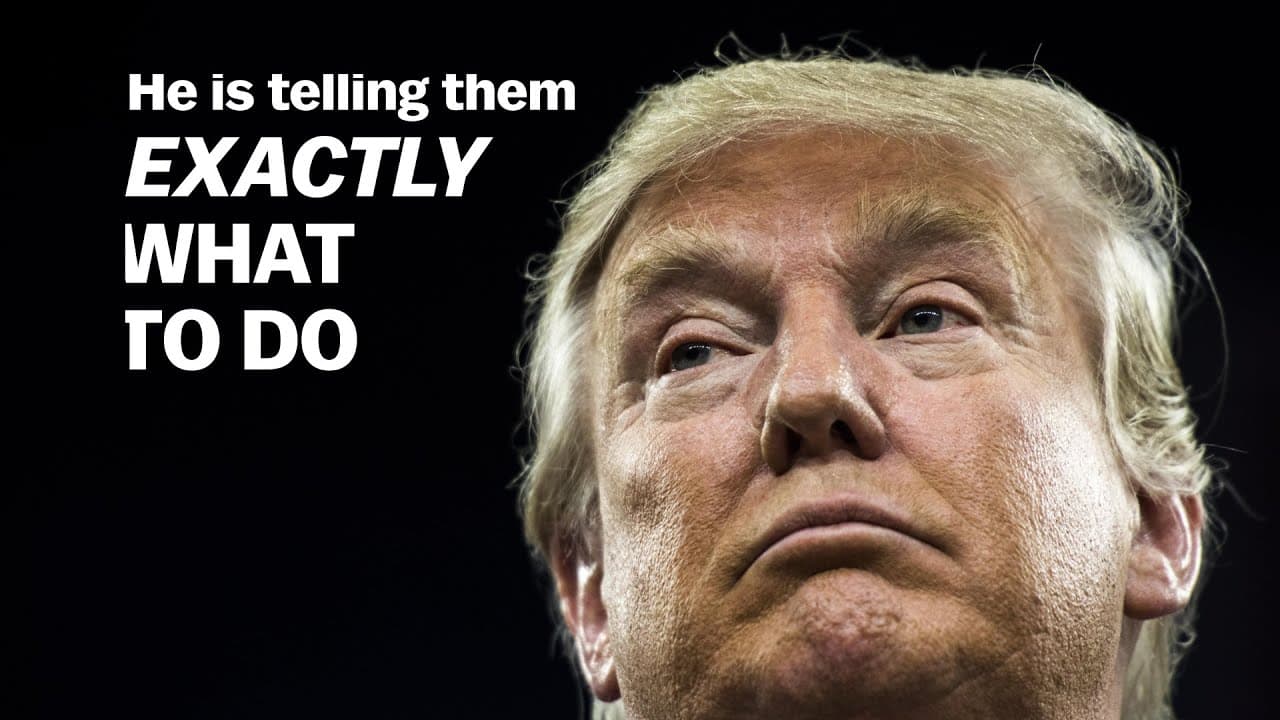
Donald Trump’s message is violent to its core
TL;DR
Trump advocates violence as a political ideology.
Transcript
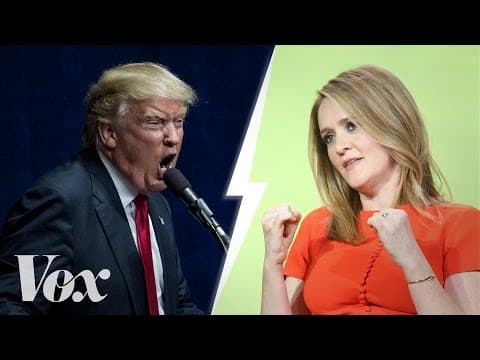
During a rally in St. Louis, Donald Trump lamented, yeah lamented, that nobody wants to hurt each other anymore. Look, he said it right here. [TRUMP] Nobody wants to hurt each other anymore, right. And, they're being politically correct the way they take them out. So it takes a little bit longer, and honestly protestors they realize it. They realiz... Read More
Key Insights
- Donald Trump's rhetoric at rallies emphasizes a return to a past where violence was used to suppress dissent, highlighting his disdain for political correctness.
- Trump's ideology is rooted in nationalism, with a clear 'us vs. them' mentality, identifying various groups as threats to America's greatness.
- He promises protection and legal support to his supporters if they engage in violence on his behalf, reinforcing a dangerous cycle of aggression.
- Trump's approach capitalizes on an authoritarian impulse present in some Americans, providing them with a leader who validates their aggressive instincts.
- The narrative presented by Trump is coherent and clear, offering a solution to perceived threats through force and suppression of dissent.
- At rallies, Trump encourages violence against protestors, suggesting that it adds excitement and flavor to the events.
- The media often misunderstands Trump by underestimating his ideological commitment, viewing him merely as a celebrity rather than a nationalist with a clear agenda.
- If Trump's vision is realized, America could face a future where dissent is harshly punished and political correctness is abandoned in favor of brute force.
Install to Summarize YouTube Videos and Get Transcripts
Explore YouTube Video Summarizer or Get YouTube Transcript Extractor
Questions & Answers
Q: What is the core of Donald Trump's ideology according to the transcript?
The core of Donald Trump's ideology, as presented in the transcript, is nationalism with a strong emphasis on using violence to suppress dissent. He advocates for a return to a time when America was 'strong and tough,' criticizing political correctness and promising to protect supporters who act violently on his behalf.
Q: How does Trump propose to handle protestors at his rallies?
Trump suggests handling protestors at his rallies with violence, encouraging his supporters to physically remove them and promising to pay their legal fees if they face consequences. He reminisces about 'the old days' when protestors would be carried out on stretchers, indicating his preference for a more aggressive approach.
Q: What is Trump's promise to his supporters regarding legal consequences?
Trump promises his supporters that if they protect him by engaging in violence against protestors, he will protect them in return. This includes paying their legal fees and supporting them financially and legally, reinforcing the idea that they will not face consequences for their actions.
Q: How does Trump's ideology relate to nationalism?
Trump's ideology is deeply rooted in nationalism, characterized by an 'us vs. them' mentality. He identifies various groups, such as protestors, immigrants, and foreign nations, as threats to America's greatness and advocates for aggressive measures to counter these perceived threats, reinforcing a nationalist agenda.
Q: What role does political correctness play in Trump's rhetoric?
In Trump's rhetoric, political correctness is portrayed as a weakness that prevents America from being great. He criticizes it for allowing protestors to act without consequences and for making the country 'weak and sensitive.' He advocates for abandoning political correctness in favor of a more forceful approach to dissent.
Q: What is the media's common mistake regarding Trump's ideology?
The media often mistakes Trump's ideology by viewing him as a mere celebrity or reality star without a coherent ideology. In reality, he has a clear nationalist agenda that emphasizes violence and aggression as solutions to perceived threats, which the media frequently underestimates or overlooks.
Q: How does Trump justify the use of violence at his rallies?
Trump justifies the use of violence at his rallies by suggesting it adds excitement and 'flavor' to the events. He argues that suppressing dissent through force is necessary to protect the country and restore its greatness, promising to support those who act violently in line with his rhetoric.
Q: What could be the potential consequences if Trump's vision is realized?
If Trump's vision is realized, America could face a future where dissent is harshly punished, political correctness is abandoned, and violence becomes a legitimate tool for suppressing opposition. This could lead to a more authoritarian society where aggressive nationalism dominates and dissenting voices are silenced through force.
Summary & Key Takeaways
-
Donald Trump's rallies reveal his belief in using violence to suppress dissent, criticizing political correctness for weakening America. He promises to protect supporters who act violently, reinforcing a nationalist ideology that identifies various groups as threats to the nation's greatness.
-
Trump's rhetoric is clear and coherent, appealing to authoritarian impulses by offering a solution to perceived threats through aggression. He positions himself as a leader who will back his supporters legally and financially if they act on his violent suggestions.
-
The media often misjudges Trump as a mere celebrity, ignoring his nationalist ideology that promotes an 'us vs. them' mentality. His approach could lead America down a dark path where protesting has severe consequences and dissent is crushed.
Read in Other Languages (beta)
Share This Summary 📚
Summarize YouTube Videos and Get Video Transcripts with 1-Click
Try YouTube Summary with ChatGPT & Claude or YouTube Transcript Generator
Explore More Summaries from Vox 📚
Summarize YouTube Videos and Get Video Transcripts with 1-Click
Try YouTube Summary with ChatGPT & Claude or YouTube Transcript Generator