What Is the Trailing P/E Ratio and How to Calculate It?
TL;DR
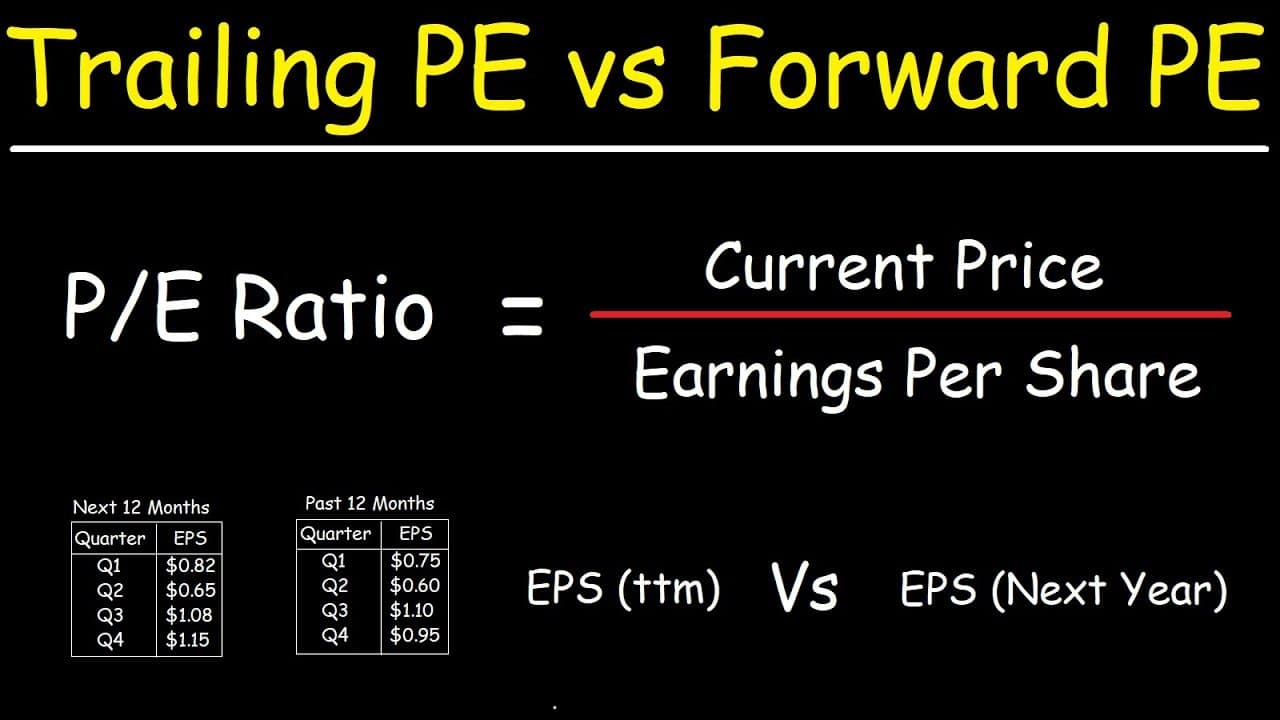
The trailing P/E ratio is calculated by dividing the current stock price by the earnings per share (EPS) from the past 12 months. In contrast, the forward P/E ratio uses estimated EPS for the next 12 months, providing insights into future performance. These ratios help evaluate a company's historical and expected earnings relative to its stock price.
Transcript
in this video we're going to talk about how to calculate the trailing p e ratio and the forward p e ratio so let's start with this example problem the earnings per share for company x xyz is four dollars and 25 cents and next year's estimated eps value is five dollars the current share price of company xyz is 34 dollars what is the trail and p e ra... Read More
Key Insights
- 🥳 Trailing P/E ratio evaluates a company's past performance, while forward P/E ratio estimates its future potential.
- 🥳 Both ratios consider the relationship between stock price and earnings per share (EPS).
- 🥳 Trailing P/E ratio indicates market sentiment based on past earnings, while forward P/E ratio offers insight into future expectations.
- 🥳 Calculating trailing P/E ratio involves dividing current stock price by EPS for the past 12 months.
- 🥳 To calculate forward P/E ratio, divide current stock price by estimated EPS for the next 12 months.
- 🥳 Trailing P/E ratio can be considered a historical measure, while forward P/E ratio is more forward-looking.
- ✋ A high P/E ratio suggests the market has high expectations for a company's future performance.
Install to Summarize YouTube Videos and Get Transcripts
Explore YouTube Video Summarizer or Get YouTube Transcript Extractor
Questions & Answers
Q: How do you calculate the trailing P/E ratio?
The trailing P/E ratio is obtained by dividing the current stock price by the EPS value for the previous 12 months. It reflects the market's assessment of the company's recent performance and profitability.
Q: What is the formula for calculating the forward P/E ratio?
The forward P/E ratio is calculated by dividing the stock price by the estimated EPS value for the next 12 months. It helps investors gauge the market's valuation based on anticipated future earnings.
Q: What is the significance of the trailing P/E ratio?
The trailing P/E ratio provides insight into a company's historical valuation in relation to its earnings. A higher ratio suggests the stock is relatively expensive, while a lower ratio may indicate undervaluation.
Q: How is the forward P/E ratio useful for investors?
By using the forward P/E ratio, investors can analyze a company's potential growth and profitability. A lower forward P/E ratio compared to the trailing P/E ratio might indicate expected future improvement in earnings.
Summary & Key Takeaways
-
Trailing P/E ratio is calculated by dividing the current stock price by EPS value over the previous 12 months.
-
Forward P/E ratio is determined by dividing the stock price by the estimated EPS value for the next year.
-
Trailing P/E ratio represents the price-to-earnings ratio for the past 12 months, while forward P/E ratio provides a future-oriented price-to-earnings ratio.
Read in Other Languages (beta)
Share This Summary 📚
Summarize YouTube Videos and Get Video Transcripts with 1-Click
Try YouTube Summary with ChatGPT & Claude or YouTube Transcript Generator
Explore More Summaries from The Organic Chemistry Tutor 📚


Summarize YouTube Videos and Get Video Transcripts with 1-Click
Try YouTube Summary with ChatGPT & Claude or YouTube Transcript Generator