What 33,000 pages of leaked emails teach us about Hillary Clinton
TL;DR
Leaked emails raise concerns about Clinton's ties to Wall Street.
Transcript
In October 2016, Wikileaks released over 33,000 pages of emails from John Podesta, Hillary Clinton’s campaign chair. The Clinton campaign has refused to authenticate individual emails provided by wikileaks, instead, saying correctly that the Russian government appears to be behind the attack. There are no bombshells in these emails. If you were pla... Read More
Key Insights
- The leaked emails highlight concerns about Hillary Clinton's perceived closeness to Wall Street, which has long been a point of contention among her critics, particularly those on the left.
- Despite the lack of bombshell revelations, the emails confirm suspicions that Clinton may not fully grasp the political ramifications of her connections with financial institutions.
- The Clinton campaign has not authenticated the emails but has pointed to Russian involvement in the leak, adding a layer of geopolitical intrigue to the situation.
- Internal debates within Clinton's campaign reveal a struggle between political considerations and policy ideals, exemplified by the disagreement over the Cadillac Tax and its potential impact on union endorsements.
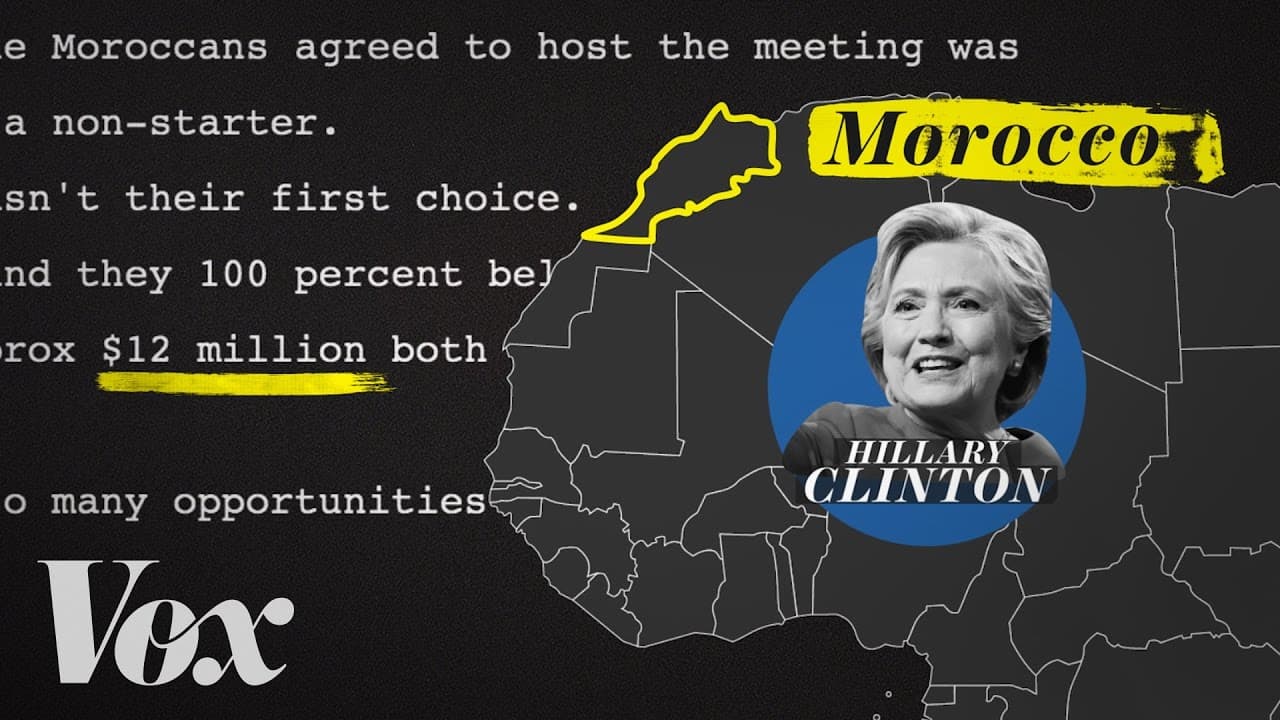
- The emails show Clinton's willingness to engage with donors, such as agreeing to attend an event in Morocco for a significant donation to the Clinton Global Initiative, raising questions about influence.
- Comparisons are drawn between Clinton's actions and those of other politicians, including President Obama and Republican figures, suggesting a broader context of political fundraising practices.
- The emails suggest that while Clinton's bank regulation platform is tougher than Donald Trump's, her perceived proximity to financial interests remains a contentious issue for some voters.
- The Clinton Foundation's global impact is acknowledged, but the emails fuel concerns that donations may have been motivated by a desire to gain favor with a potential Clinton administration.
Install to Summarize YouTube Videos and Get Transcripts
Explore YouTube Video Summarizer or Get YouTube Transcript Extractor
Questions & Answers
Q: What do the leaked emails reveal about Hillary Clinton's ties to Wall Street?
The leaked emails confirm suspicions that Hillary Clinton has a close relationship with Wall Street, which has been a longstanding concern among her critics, particularly those on the left. The emails reveal internal campaign discussions about managing her image and the potential political ramifications of her financial ties.
Q: How has the Clinton campaign responded to the leaked emails?
The Clinton campaign has not authenticated the leaked emails but has pointed to Russian involvement in the leak as a significant factor. This response adds a layer of geopolitical intrigue and shifts some focus away from the content of the emails themselves, emphasizing concerns about foreign interference in the election.
Q: What internal debates within Clinton's campaign are highlighted by the emails?
The emails highlight internal debates over policy decisions, such as the Cadillac Tax, which divided Clinton's team between political aides urging her to abandon the tax to gain union endorsements and policy aides supporting it as the right agenda. These debates illustrate the tension between political strategy and policy ideals.
Q: What concerns are raised by Clinton's willingness to engage with donors?
The emails reveal that Clinton agreed to attend an event in Morocco in exchange for a $12 million donation to the Clinton Global Initiative. While there is no evidence of a quid pro quo, this raises questions about the potential influence of donors, especially given the foundation's significant global impact.
Q: How does the Clinton campaign compare to other politicians regarding fundraising practices?
The emails suggest that Clinton's fundraising practices are not unique, as similar practices are seen among other politicians, including President Obama and Republicans. This broader context highlights the pervasive nature of political fundraising and the challenges of balancing donor engagement with public perceptions.
Q: What does the email leak suggest about Clinton's bank regulation platform?
The emails indicate that while Clinton's bank regulation platform is tougher than Donald Trump's, her perceived proximity to financial interests remains a contentious issue for some voters. This tension is exacerbated by her statements about Dodd-Frank, which some see as politically motivated rather than a genuine regulatory effort.
Q: What impact do the emails have on perceptions of the Clinton Foundation?
The emails fuel concerns that donations to the Clinton Foundation may have been motivated by a desire to gain favor with a potential Clinton administration. Despite the foundation's acknowledged positive global impact, these concerns persist, particularly among the left wing of the Democratic Party.
Q: What broader political context is suggested by the email leak?
The email leak suggests a broader political context in which fundraising practices and donor engagement are common among politicians. It highlights the challenges of maintaining transparency and integrity while navigating the complex landscape of political fundraising, exacerbated by foreign interference concerns.
Summary & Key Takeaways
-
The leaked emails from Hillary Clinton's campaign chair, John Podesta, reveal concerns about her ties to Wall Street, confirming suspicions among some liberals of her proximity to financial interests. Despite no bombshells, the emails highlight internal campaign debates and the influence of political considerations on policy decisions.
-
The Clinton campaign has not verified the emails, attributing the leak to Russian interference. The emails show Clinton's involvement with donors, such as a $12 million donation for attending a Moroccan event, raising questions about potential influence, despite the Clinton Foundation's acknowledged positive global impact.
-
Internal campaign discussions reveal divisions over policy decisions, such as the Cadillac Tax, illustrating the balance between political strategy and policy ideals. The emails also draw comparisons between Clinton's actions and those of other politicians, suggesting a broader context of political fundraising practices.
Read in Other Languages (beta)
Share This Summary 📚
Summarize YouTube Videos and Get Video Transcripts with 1-Click
Try YouTube Summary with ChatGPT & Claude or YouTube Transcript Generator
Explore More Summaries from Vox 📚


Summarize YouTube Videos and Get Video Transcripts with 1-Click
Try YouTube Summary with ChatGPT & Claude or YouTube Transcript Generator