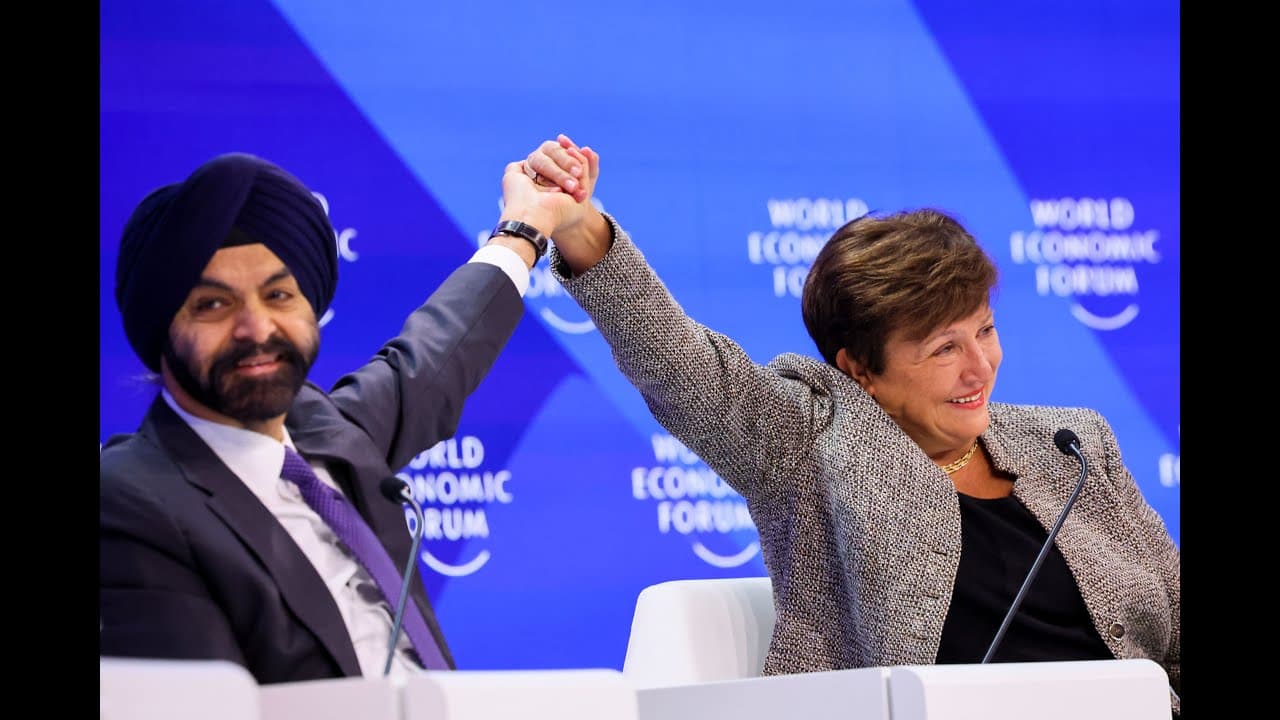
Virtual Media Briefing: Previewing the World Bank/IMF Spring Meetings
TL;DR
Geopolitical tensions and economic challenges dominate World Bank/IMF meetings.
Transcript
FROMAN: Good morning, everybody. And welcome to today’s CFR media briefing. I’m Mike Froman. I’m president of the Council on Foreign Relations. This media briefing is on the eve of the spring meetings of the World Bank and the IMF. I’m joined today by CFR senior fellows Heidi Crebo-Rediker, Sebastian Mallaby, and Brad Setser. We’re going to h... Read More
Key Insights
- Geopolitical tensions, including conflicts in the Middle East and Ukraine, are influencing the agenda of the World Bank and IMF meetings, affecting economic policies and discussions.
- Emerging markets are facing significant debt challenges, with some regaining market access, but concerns remain about the sustainability of their debt profiles.
- The World Bank under Ajay Banga is focusing on speeding up loan disbursements and improving efficiency, but the institution's scale is inadequate for current global challenges.
- China's economic strategies, including its export-led growth model, are causing global tensions, with potential trade conflicts looming, especially in sectors like electric vehicles.
- The World Bank and IMF are exploring ways to enhance their lending capacity, but without significant capital increases, their ability to address global needs is limited.
- Industrial policy is a contentious issue, with countries adopting strategies to counter China's industrial policies, despite criticisms from institutions like the IMF.
- The role of China as a major creditor and exporter is critical, with its economic policies impacting global trade dynamics and creating challenges for other economies.
- There is a need for creative solutions to address the financing needs of low-income countries, involving multilateral cooperation and private sector engagement.
Install to Summarize YouTube Videos and Get Transcripts
Explore YouTube Video Summarizer or Get YouTube Transcript Extractor
Questions & Answers
Q: What are the main geopolitical issues affecting the World Bank and IMF meetings?
The main geopolitical issues include the ongoing conflicts in the Middle East, particularly the recent Iranian attack on Israel, and the Russia-Ukraine war. These conflicts are influencing global economic policies and discussions at the meetings. Additionally, tensions between the U.S. and China, as well as issues related to energy, commodities, and food security, are also impacting the agenda.
Q: How are emerging markets dealing with debt challenges?
Emerging markets are facing significant debt challenges, with some countries regaining market access but others struggling with high debt levels. The debt markets have reopened for some, but concerns remain about the sustainability of their debt profiles. Countries like Zambia and Ghana are undergoing debt restructurings, but the outcomes and long-term sustainability are uncertain. There is a need for coordinated efforts to address these challenges.
Q: What are Ajay Banga's priorities for the World Bank?
Ajay Banga, the World Bank president, is focusing on speeding up loan disbursements and improving the efficiency of the institution. His priorities include reducing the average time for loan approvals and streamlining operations to better meet the needs of borrowing countries. However, there is a recognition that the World Bank's scale is inadequate for addressing the current global challenges, and there is a need for increased resources and capital.
Q: How is China's economic strategy impacting global trade?
China's economic strategy, particularly its reliance on an export-led growth model, is causing significant global trade tensions. The country's focus on exporting goods like electric vehicles is seen as a threat to other economies, leading to potential trade conflicts. China's approach is not aligned with global expectations for domestic demand-led growth, contributing to concerns about its impact on the global economy.
Q: What are the challenges facing the World Bank and IMF in increasing their lending capacity?
The World Bank and IMF face challenges in increasing their lending capacity due to limited capital and resources. Without significant capital increases from member countries, their ability to address global needs is constrained. The institutions are exploring ways to leverage existing resources, but the scale of current global challenges requires more substantial support and funding.
Q: What role does industrial policy play in current global economic dynamics?
Industrial policy is a contentious issue, with countries adopting strategies to counter China's industrial policies. Despite criticisms from institutions like the IMF, industrial policy is seen as a necessary tool to compete with China's state-led economic strategies. There is a lack of consensus on international rules for industrial policy, and countries are unlikely to unilaterally disarm given the competitive pressures.
Q: How is China positioned as a creditor and exporter in the global economy?
China plays a critical role as both a major creditor and exporter in the global economy. As a creditor, China has been involved in debt restructurings for countries like Zambia, but its economic policies and export strategies are causing global trade tensions. China's reliance on exports for growth, rather than domestic demand, creates challenges for other economies and contributes to trade imbalances.
Q: What are the potential solutions for financing needs in low-income countries?
Addressing the financing needs of low-income countries requires creative solutions involving multilateral cooperation and private sector engagement. There is a need to leverage resources from international financial institutions, regional development banks, and private investors. Additionally, incorporating large official bilateral lenders into multilateral structures and encouraging private sector participation are essential for meeting the financing needs of these countries.
Summary & Key Takeaways
-
The World Bank and IMF meetings are set against a backdrop of significant geopolitical tensions and economic challenges, influencing the discussions and policies being considered. Geopolitical issues like the Middle East conflict and the Russia-Ukraine war are affecting economic policies globally.
-
Emerging markets are struggling with debt sustainability, with some regaining market access but facing high risks. The World Bank's efforts to improve efficiency under Ajay Banga are noted, but the institution's scale remains inadequate for current global challenges.
-
China's export-led growth model is causing global tensions, particularly in the electric vehicle sector, with potential trade conflicts looming. The need for increased lending capacity at the World Bank and IMF is highlighted, but significant capital increases are necessary for effective global engagement.
Read in Other Languages (beta)
Share This Summary 📚
Summarize YouTube Videos and Get Video Transcripts with 1-Click
Try YouTube Summary with ChatGPT & Claude or YouTube Transcript Generator
Explore More Summaries from Council on Foreign Relations 📚
Summarize YouTube Videos and Get Video Transcripts with 1-Click
Try YouTube Summary with ChatGPT & Claude or YouTube Transcript Generator