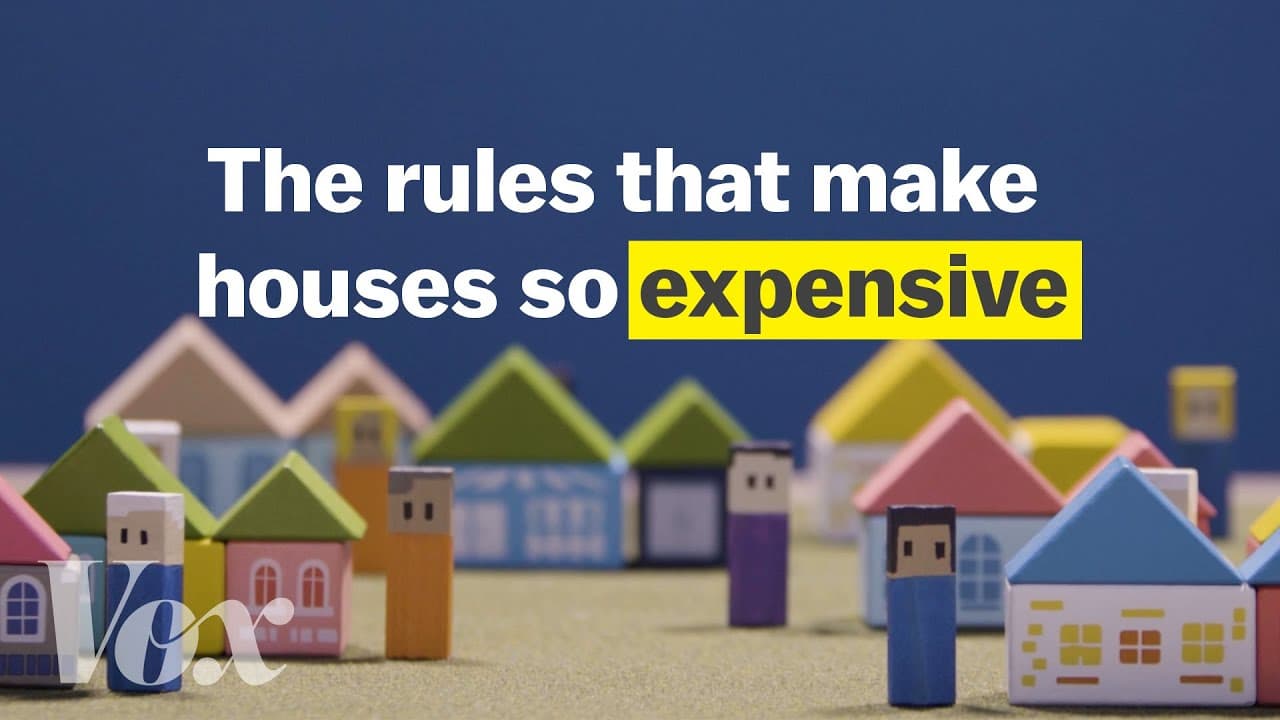
Why Are Affordable Homes Illegal in the US?
TL;DR
Affordable homes in the US are often illegal due to exclusionary zoning laws that prioritize single-family housing and impose strict building regulations. This blocks the development of higher-density housing options, driving up prices and making homeownership unattainable for many. Addressing this issue requires changes in zoning laws at state and federal levels to promote more inclusive housing solutions.
Transcript
So I spend a lot of time looking at houses on Zillow. And lately, I noticed that, even in places where houses are usually expensive... they seem even more expensive. Like here, in the San Francisco Bay Area. What has the last year been like? For years, the Bay Area has been an extreme example of how difficult it is to find affordable housing in t... Read More
Key Insights
- The US is experiencing an unprecedented housing affordability crisis, exacerbated by exclusionary zoning laws that restrict the construction of affordable housing options.
- Millennials entering their prime home-buying years and low mortgage rates have significantly increased housing demand, but supply has not kept pace.
- Exclusionary zoning laws often mandate single-family homes, height restrictions, and parking requirements, limiting the construction of multi-family and starter homes.
- Historically, zoning laws were used to segregate communities racially and socioeconomically, and their legacy continues to perpetuate inequality today.
- The shortage of affordable housing is most acute in areas with high demand, such as those near good jobs, transit, and schools.
- Efforts to change zoning laws face resistance from affluent residents concerned about property values and neighborhood character.
- Some cities have begun to eliminate single-family zoning, but broader state or federal action is needed to address the national housing shortage.
- The Biden administration has proposed a program to incentivize the removal of exclusionary zoning policies, but political challenges remain significant.
Install to Summarize YouTube Videos and Get Transcripts
Explore YouTube Video Summarizer or Get YouTube Transcript Extractor
Questions & Answers
Q: Why are housing prices in the US so high?
Housing prices in the US are high due to a combination of increased demand from millennials entering the housing market and historically low mortgage rates. However, the primary issue is a lack of supply, exacerbated by exclusionary zoning laws that restrict the construction of affordable housing options.
Q: What is exclusionary zoning?
Exclusionary zoning refers to local regulations that limit the types of housing that can be built in certain areas, often mandating single-family homes and imposing height and parking restrictions. These laws have historically been used to segregate communities and continue to limit the availability of affordable housing.
Q: How do zoning laws affect housing affordability?
Zoning laws affect housing affordability by restricting the construction of diverse housing types, such as multi-family and starter homes. This limits supply and drives up prices, making it difficult for many Americans to afford homes, especially in high-demand areas near jobs and schools.
Q: What historical role did zoning laws play in segregation?
Historically, zoning laws were used to segregate communities by race and socioeconomic status, often explicitly excluding people of color from white neighborhoods. Although modern zoning laws do not mention race, they continue to perpetuate inequality by limiting affordable housing options.
Q: What challenges exist in changing zoning laws?
Changing zoning laws is challenging due to resistance from affluent residents who fear changes to property values and neighborhood character. Public meetings often feature wealthier, whiter participants who oppose developments that could introduce more affordable housing into their communities.
Q: What steps have some cities taken to address zoning issues?
Some cities, like Berkeley, Minneapolis, and Portland, have taken steps to address zoning issues by eliminating single-family zoning. These changes aim to increase housing supply and affordability, but broader state or federal action is necessary to address the nationwide housing shortage.
Q: What is the Biden administration doing to tackle exclusionary zoning?
The Biden administration has proposed a five billion-dollar program to incentivize localities to remove exclusionary zoning policies. This initiative represents a significant federal effort to address the housing crisis, but political challenges and resistance from high-value voters remain substantial.
Q: Why is there a need for state or federal intervention in zoning laws?
State or federal intervention in zoning laws is needed because the housing affordability crisis is a nationwide issue that local efforts alone cannot resolve. Coordinated action at higher government levels can provide the necessary resources and regulations to effectively address the shortage of affordable housing.
Summary & Key Takeaways
-
The US housing market is facing a severe shortage of affordable homes, driven by exclusionary zoning laws that limit the types of housing that can be built. This has led to skyrocketing prices and rents, making homeownership unattainable for many Americans.
-
Exclusionary zoning laws historically served to segregate communities and continue to restrict affordable housing development. These laws often mandate single-family homes and impose height and parking restrictions, preventing the construction of multi-family and starter homes.
-
Addressing the housing crisis requires political willpower and systemic changes to zoning laws at state and federal levels. The Biden administration's initiative to remove exclusionary zoning policies is a step forward, but broader efforts are necessary to make a significant impact.
Read in Other Languages (beta)
Share This Summary 📚
Summarize YouTube Videos and Get Video Transcripts with 1-Click
Try YouTube Summary with ChatGPT & Claude or YouTube Transcript Generator
Explore More Summaries from Vox 📚



Summarize YouTube Videos and Get Video Transcripts with 1-Click
Try YouTube Summary with ChatGPT & Claude or YouTube Transcript Generator