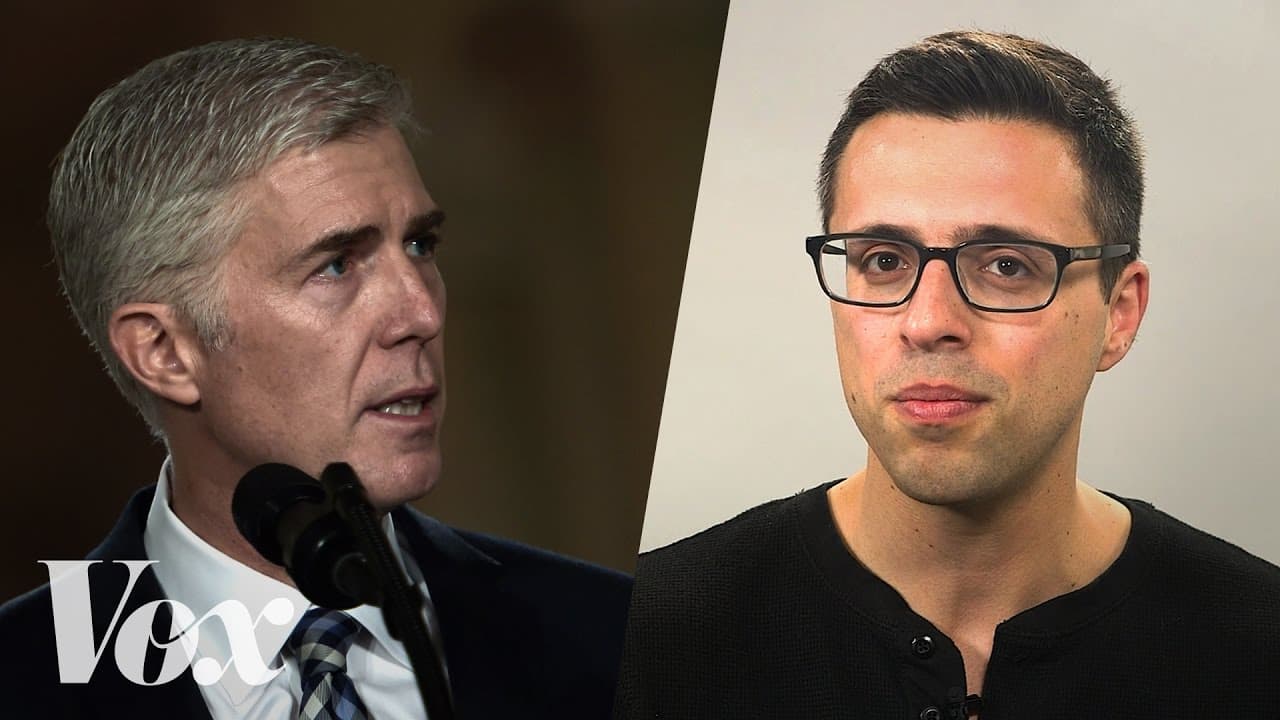
Ezra Klein: Why Neil Gorsuch is the wrong justice for a divided country
TL;DR
Neil Gorsuch's nomination lacks compromise needed for unity.
Transcript
There’s a problem with Neil Gorsuch’s nomination for the Supreme Court, and it’s actually not Neil Gorsuch. He is, by all accounts, a brilliant jurist and a kind man. But he is an extremely conservative judge at a moment when an extremely conservative judge makes a mockery of the popular will. Look, this is a time, if ever there was one, for a comp... Read More
Key Insights
- Neil Gorsuch is recognized as a brilliant jurist and a kind individual, yet his extreme conservatism is controversial in a divided nation.
- The nomination process should ideally lead to a compromise candidate, particularly when the presidency and Senate are controlled by different parties.
- Merrick Garland, a centrist nominee, was proposed by Obama but blocked by Republicans, highlighting a partisan divide in judicial appointments.
- Republicans' refusal to consider any nominee during an election year set a precedent that they later disregarded when Trump took office.
- The Supreme Court's detachment from popular opinion, due to lifetime appointments, makes balance and compromise in nominations crucial.
- Democrats are encouraged to push for centrist nominees and use the filibuster strategically, even if it risks its elimination.
- The popular vote, though not decisive in elections, should influence Supreme Court nominations as a reflection of public will.
- The debate over Gorsuch's nomination centers on whether he is the right choice for the current political climate, not his qualifications.
Install to Summarize YouTube Videos and Get Transcripts
Explore YouTube Video Summarizer or Get YouTube Transcript Extractor
Questions & Answers
Q: Why is Neil Gorsuch's nomination considered problematic?
Neil Gorsuch's nomination is seen as problematic because he is an extremely conservative judge at a time when the country is deeply divided. His appointment could further polarize the Supreme Court and does not reflect the popular will, which suggests a need for a more centrist nominee.
Q: What precedent did Republicans set during Obama's presidency regarding Supreme Court nominations?
During Obama's presidency, Republicans set the precedent of refusing to consider any Supreme Court nominee during an election year. This decision was based on the argument that such nominations should be made by the next president, a stance they later abandoned when President Trump took office.
Q: Why is a compromise nominee considered important for the Supreme Court?
A compromise nominee is important for the Supreme Court to ensure that the Court remains balanced and reflective of the broader public's views. Given the lifetime appointments of justices, having a Court that is too ideologically skewed can lead to decisions that do not align with the majority's values, undermining its legitimacy.
Q: How did Obama's nomination of Merrick Garland highlight partisan divides?
Obama's nomination of Merrick Garland, a centrist judge, was blocked by Republicans, despite Garland being previously suggested by a Republican senator. This move highlighted the deep partisan divides in the judicial appointment process, as Republicans refused to even consider Garland, aiming to wait for a potential Republican president to make the nomination.
Q: What role does the popular vote play in Supreme Court nominations?
While the popular vote does not directly decide Supreme Court nominations, it should influence them as a reflection of the public's will. Ignoring the popular vote in nominations can lead to a Court that is out of step with the majority of Americans, furthering the perception of it as an undemocratic institution.
Q: What strategy should Democrats consider regarding the filibuster and Supreme Court nominations?
Democrats should consider using the filibuster to push for a compromise nominee, even at the risk of Republicans eliminating it. By doing so, they can demonstrate their commitment to a more balanced Court and highlight the importance of aligning judicial appointments with the popular will, even if it means exposing the filibuster as a political fiction.
Q: How does the Supreme Court's structure affect its relationship with public opinion?
The Supreme Court's structure, with lifetime appointments and insulation from direct public influence, makes it crucial for nominations to reflect a balance of public opinion. If the Court becomes too ideologically skewed, it risks making decisions that do not align with the majority, undermining its credibility and connection to democratic values.
Q: What is the central debate regarding Gorsuch's nomination?
The central debate regarding Gorsuch's nomination is not about his qualifications, which are widely acknowledged, but whether he is the right choice for the current political climate. The concern is that his appointment could further polarize the Court and does not represent the compromise needed to reflect the nation's divided political landscape.
Summary & Key Takeaways
-
Neil Gorsuch is a highly qualified, conservative nominee for the Supreme Court, but his nomination is contentious due to the current political divide. The situation calls for a compromise candidate to reflect the popular will and maintain balance within the Court.
-
The nomination of Merrick Garland by President Obama was blocked by Republicans, despite Garland being a centrist choice. This decision has fueled ongoing partisan tensions and debates over the appropriate process for Supreme Court nominations.
-
Democrats are urged to advocate for a centrist nominee and consider using the filibuster, despite potential risks. The importance of aligning the Supreme Court with the public's will is emphasized to prevent further detachment from democratic principles.
Read in Other Languages (beta)
Share This Summary 📚
Summarize YouTube Videos and Get Video Transcripts with 1-Click
Try YouTube Summary with ChatGPT & Claude or YouTube Transcript Generator
Explore More Summaries from Vox 📚


Summarize YouTube Videos and Get Video Transcripts with 1-Click
Try YouTube Summary with ChatGPT & Claude or YouTube Transcript Generator