How to Optimize Your Website for Google SEO

TL;DR
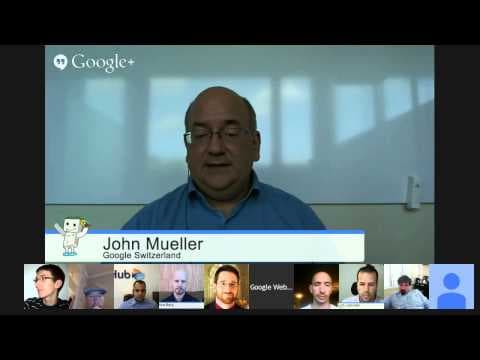
John Mueller from Google answers questions about SEO best practices, including the importance of alt text for images, the use of hreflang tags, and the impact of pagination on search rankings. He emphasizes the importance of creating quality content and maintaining a clear site hierarchy to improve search visibility.
Transcript
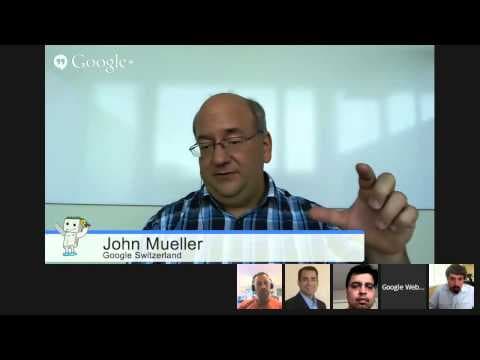
JOHN MUELLER: All right, welcome, everyone, to today's Webmaster Central Office Hours Hangout. My name is John Mueller. I am a webmaster trends analyst here at Google in Switzerland. And part of what we do are these Office Hour Hangouts, where folks can join in and ask any question around their website and web search. And we'll try to find an answe... Read More
Key Insights
- Alt text is used for both web and image search, but it's not critical for web search rankings.
- Using the same H1 tags across pages is common and not harmful, but unique H1s are a best practice.
- Hreflang tags help direct users to the correct language version of a site, but content differences are crucial.
- Google treats noindex pages as soft 404s, affecting their visibility in search.
- Google's algorithms consider user experience and quality content over manipulative tactics like buying links.
- A flat site hierarchy can confuse Google's understanding of page importance, affecting site links.
- Mobile-first indexing focuses on the mobile version of a site, so ensure it has all necessary content.
- Structured data should provide value and context to users, not just visual appeal in search results.
Install to Summarize YouTube Videos and Get Transcripts
Explore YouTube Video Summarizer or Get YouTube Transcript Extractor
Questions & Answers
Q: How does alt text affect SEO?
Alt text is used by Google for both web and image search. It provides additional context about the image and can contribute to the page's relevance in search results. However, it is not a critical factor for web search rankings, as Google also considers the overall content and context of the page.
Q: What is the impact of using the same H1 tags across pages?
Using the same H1 tags across multiple pages is a common practice and is not considered harmful by Google. However, having unique H1 tags can provide more context about the page's content, helping Google understand the page better. It is a best practice to use unique H1s where possible, but not critical for rankings.
Q: How do hreflang tags work for international sites?
Hreflang tags are used to indicate the language and regional targeting of a webpage, helping Google direct users to the correct language version of a site. They are particularly important for sites with similar content across different regions. However, ensuring content differences between language versions is crucial to avoid indexing issues and ensure the correct page is shown in search results.
Q: What happens if a page is marked as noindex?
Pages marked as noindex are treated by Google as soft 404s, meaning they are not included in the search index. This affects their visibility in search results. To make these pages indexable again, the noindex directive must be removed, and Google must be informed of the change, typically through a sitemap update or URL submission.
Q: Are backlinks still important for SEO?
Backlinks are one of many factors used by Google's algorithms to determine search rankings. However, Google's algorithms prioritize user experience and quality content over manipulative tactics like buying links. Just because a site ranks well does not mean it is benefiting from purchased links, as there are many other factors at play.
Q: How does site hierarchy affect SEO?
A clear site hierarchy helps Google understand the relationships between pages, which can influence how site links are displayed in search results. A flat hierarchy can confuse Google's understanding of page importance, potentially leading to suboptimal site links. A balanced hierarchy, with clear category and subcategory relationships, is recommended.
Q: What is mobile-first indexing?
Mobile-first indexing means Google predominantly uses the mobile version of a site for indexing and ranking. This means the mobile version should contain all necessary content, structured data, and images. If the mobile site has less content or lower-quality images than the desktop site, it could affect search visibility.
Q: How should structured data be used for SEO?
Structured data should be used to provide additional context and value to users, not just to enhance the visual appeal of search results. Google's algorithms prefer structured data that helps users understand why a page is relevant and useful. Overly promotional or non-informative structured data may not be shown in search results.
Summary & Key Takeaways
-
John Mueller discusses the importance of alt text for SEO, stating that it contributes to both web and image search but is not critical for web rankings. He advises using unique H1 tags where possible, although having the same H1 across pages is not detrimental.
-
The use of hreflang tags is highlighted as a method to guide users to the correct language version of a site. However, ensuring content differences between language versions is crucial to prevent indexing issues.
-
Mueller emphasizes focusing on creating quality content and a clear site hierarchy to improve search visibility. He advises against manipulative tactics like buying links, as Google's algorithms prioritize user experience.
Read in Other Languages (beta)
Share This Summary 📚
Summarize YouTube Videos and Get Video Transcripts with 1-Click
Try YouTube Summary with ChatGPT & Claude or YouTube Transcript Generator
Explore More Summaries from Google Search Central 📚

Summarize YouTube Videos and Get Video Transcripts with 1-Click
Try YouTube Summary with ChatGPT & Claude or YouTube Transcript Generator