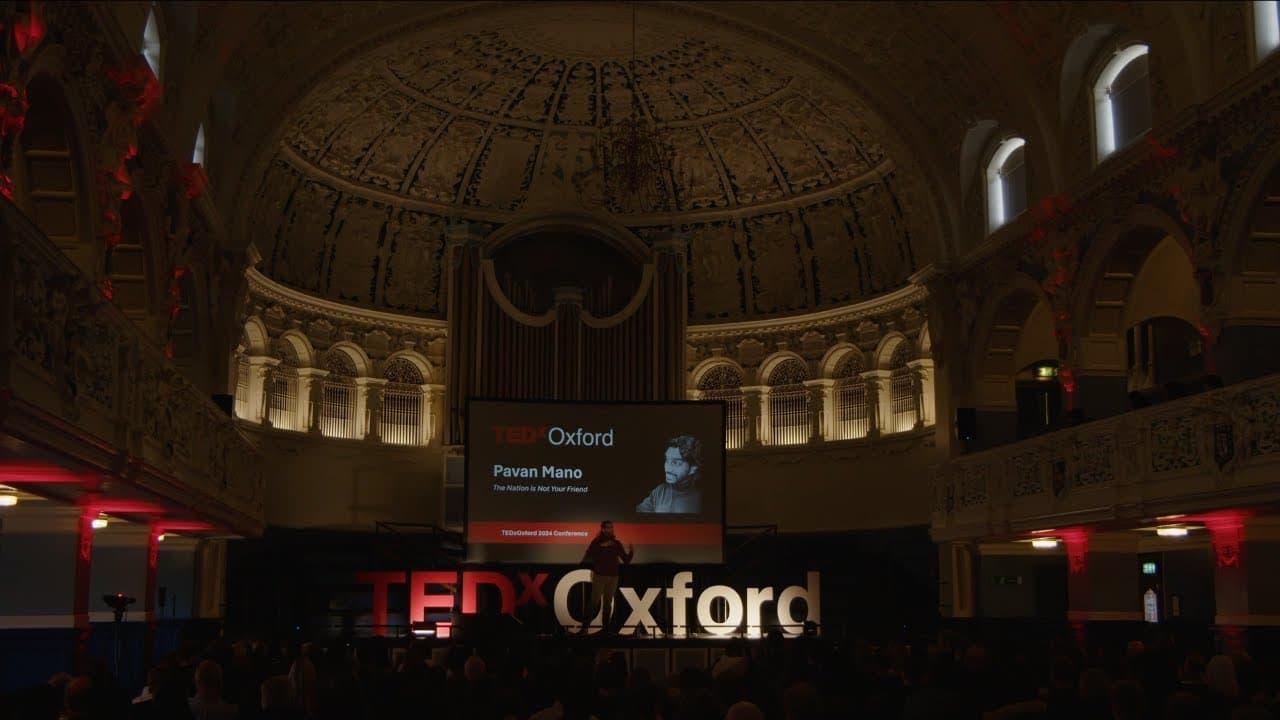
Why we should resist nationalism | Pavan Mano | TEDxOxford
TL;DR
The speaker questions the idea of national belonging and argues that it is a political construct that doesn't align with personal relationships or cultural practices.
Transcript
hi everyone um let's start by talking about chai or CH as we call it in my family and I know that's maybe a slightly left field way to begin I promised you this talk on the nation and we will get there um but let's go with this for now and so cha ch ch is key for those of you who don't CH is tea sometimes the couple of spices mixed in and I imagine... Read More
Key Insights
- 👷 National identity is often constructed and has historical roots in colonialism and cultural assimilation.
- 😨 Nationalism as a political force relies on generating fear and exclusion of outsiders.
- 🫵 Different scholars have different views on the nature of the nation, with some emphasizing inclusivity and shared language, while others highlight racial politics and hierarchies of belonging.
- 🌍 Personal relationships, cultural practices, and identities transcend national borders and cannot be contained within a particular political unit.
Install to Summarize YouTube Videos and Get Transcripts
Explore YouTube Video Summarizer or Get YouTube Transcript Extractor
Questions & Answers
Q: How does the speaker describe the relationship between tea and British national identity?
The speaker argues that tea has become a cornerstone of British identity, but it is important to acknowledge its origins in British colonialism. Tea is not inherently British, but its cultural significance has been constructed.
Q: What is the speaker's view on the rise of nationalism?
The speaker sees nationalism as a resurgent force in current politics, characterized by the creation of outsider figures and the belief in expelling those perceived as threats. They view this as a dangerous political fantasy.
Q: How does the speaker differentiate between patriotism and nationalism?
The speaker suggests that patriotism is often seen as benign, expressing love for one's country. However, they argue that the nation, as a political unit, should not be equated with personal relationships or cultural identities.
Q: What is the significance of the speaker's example of Singaporean immigrants in the UK?
The speaker uses this example to illustrate how national belonging can be complex and doesn't always align with political or cultural boundaries. The immigrants still felt a sense of affinity towards Singapore, even after living in the UK for many years.
Summary & Key Takeaways
-
The speaker discusses the significance of tea in British culture and its connection to British colonialism, highlighting the constructed nature of national identity.
-
They argue that nationalism, as a political force, generates fears of outsiders and seeks to expunge or exclude those who don't fit the perceived national identity.
-
The speaker explores how different scholars have approached the concept of the nation, with some emphasizing inclusivity and others highlighting the racial politics involved.
Read in Other Languages (beta)
Share This Summary 📚
Summarize YouTube Videos and Get Video Transcripts with 1-Click
Try YouTube Summary with ChatGPT & Claude or YouTube Transcript Generator
Explore More Summaries from TEDx Talks 📚




Summarize YouTube Videos and Get Video Transcripts with 1-Click
Try YouTube Summary with ChatGPT & Claude or YouTube Transcript Generator