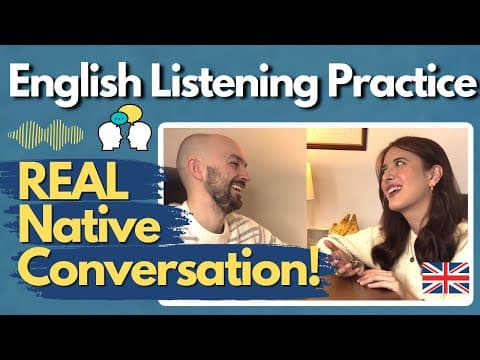
How To Understand FAST Spoken English

TL;DR
Learn tips to understand fast native English speakers.
Transcript
Read and summarize the transcript of this video on Glasp Reader (beta).
Key Insights
- Diversify listening practice by engaging with unscripted content like reality shows and podcasts to adapt to different dialects and speech patterns.
- Engage in conversations with native speakers using platforms like iTalki to improve listening skills through authentic interactions.
- Understand and practice linking sounds to comprehend fast English, as these sounds often blur words together.
- Familiarize yourself with the schwa sound, the most common vowel sound in British English, to improve comprehension.
- Recognize that native speakers often use contractions and informal speech, which can alter familiar words and create confusion.
- Learn to follow non-verbal cues and physical gestures to better understand the flow of conversation, as speech rarely follows complete sentences.
- Practice speaking in a continuous flow, like singing, to become accustomed to the rhythm and linking in fast English.
- Understand that new vocabulary or altered familiar words can cause confusion and focus on learning these variations.
Install to Summarize YouTube Videos and Get Transcripts
Explore YouTube Video Summarizer or Get YouTube Transcript Extractor
Questions & Answers
Q: Why is it important to diversify listening practice?
Diversifying listening practice by engaging with unscripted content like reality shows and podcasts helps listeners adapt to different dialects and speech patterns. This approach strengthens the ear's ability to handle various accents and makes real-life conversations easier to understand.
Q: How does iTalki help improve English listening skills?
iTalki offers one-to-one customized language lessons with native speakers, providing authentic interactions that improve listening skills. By engaging with teachers of different accents and speech patterns, learners can better understand and adapt to various English dialects in real conversations.
Q: What role do linking sounds play in understanding fast English?
Linking sounds blur words together, making sentences sound like one continuous word. Understanding and practicing these sounds help learners comprehend fast English, as they become familiar with how native speakers naturally connect words in speech.
Q: Why is the schwa sound significant in British English?
The schwa sound is the most common vowel sound in British English, occurring frequently in everyday speech. Familiarity with the schwa helps learners distinguish words and understand fast-spoken English, as it often replaces clearer vowel sounds in informal conversation.
Q: How do contractions affect understanding of fast English?
Contractions shorten phrases and alter familiar words, creating potential confusion for learners. Recognizing common contractions and their meanings is essential for understanding native speakers, as they frequently use these informal forms in fast-spoken English.
Q: What is the benefit of focusing on non-verbal cues in conversations?
Non-verbal cues, such as facial expressions and gestures, provide context and help track the flow of conversation. Since speech often lacks complete sentences, paying attention to these cues aids in understanding the speaker's thoughts and intentions beyond the words.
Q: How can practicing speaking in a continuous flow aid English comprehension?
Practicing speaking in a continuous flow, akin to singing, helps learners get accustomed to the rhythm and linking in fast English. This exercise trains the ear to recognize the natural connections and pauses in speech, improving overall comprehension.
Q: Why is it important to learn new vocabulary and altered words in English?
New vocabulary and altered familiar words can cause confusion in fast-spoken English. Understanding these variations helps learners grasp the full meaning of conversations and reduces misunderstandings, as native speakers often use informal or contracted forms in everyday speech.
Summary & Key Takeaways
-
The video provides tips for understanding fast-spoken English, emphasizing the importance of listening to unscripted content to adapt to various dialects.
-
Engaging in conversations with native speakers and practicing linking sounds are recommended strategies to improve comprehension of fast English.
-
Understanding the schwa sound, contractions, and non-verbal cues are crucial for grasping the nuances of fast native English speech.
Read in Other Languages (beta)
Share This Summary 📚
Summarize YouTube Videos and Get Video Transcripts with 1-Click
Try YouTube Summary with ChatGPT & Claude or YouTube Transcript Generator
Explore More Summaries from Smashing English! Free and Fun English Lessons! 📚





Summarize YouTube Videos and Get Video Transcripts with 1-Click
Try YouTube Summary with ChatGPT & Claude or YouTube Transcript Generator