What Real Experiments Inspired Mary Shelley's Frankenstein?
TL;DR
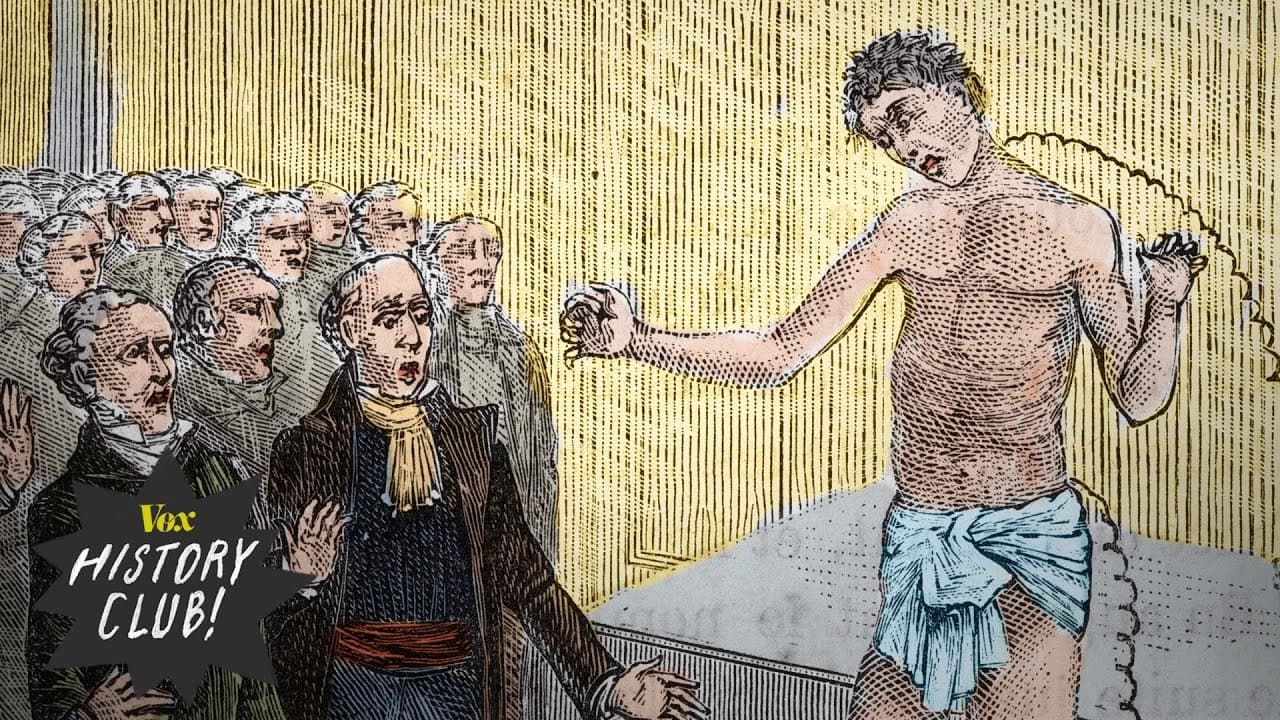
Mary Shelley's Frankenstein was inspired by real experiments in galvanism, where electricity was applied to animate dead tissues. This scientific practice, alongside Enlightenment-era breakthroughs, challenged the boundaries of life and death, making the concept of reanimating a corpse seem plausible to contemporary readers.
Transcript
“This storm will be magnificent.” “It may shock you.” I guess we should tell everyone what we’re doing here again, right? Yes, do you want to explain what the premise of this is? Yeah, I’m Coleman Lowndes. I’m Phil Edwards. This is History Club, where either Phil tells me a story or I tell Phil a story. So last time I told you this story, and now I... Read More
Key Insights
- Mary Shelley's 1818 novel Frankenstein was influenced by real scientific experiments of the Enlightenment era, particularly galvanism.
- Galvanism, a practice of using electricity to stimulate muscles in dead animals, inspired the concept of reanimating life in Frankenstein.
- The Age of Enlightenment brought about significant scientific breakthroughs that challenged traditional views on life and death.
- The fear of being buried alive led to inventions like coffins with bells, reflecting the era's uncertainties about diagnosing death.
- Giovanni Aldini's experiments with electricity on human corpses were sensational but ultimately unsuccessful in reviving the dead.
- Shelley's novel was not seen as mere fiction by contemporary readers but rather a plausible extension of scientific progress.
- The introduction of the term 'scientist' and the concept of scientific experimentation were still emerging during Shelley's time.
- The podcast 'History Club' explores historical stories, aiming to make history engaging with user-generated catchphrases.
Install to Summarize YouTube Videos and Get Transcripts
Explore YouTube Video Summarizer or Get YouTube Transcript Extractor
Questions & Answers
Q: What inspired Mary Shelley to write Frankenstein?
Mary Shelley was inspired by the scientific experiments of the Enlightenment era, particularly the practice of galvanism, which involved using electricity to animate dead body parts. This scientific context made the idea of reanimating the dead seem plausible to contemporary readers, influencing her creation of Frankenstein's monster.
Q: What is galvanism and how did it influence Frankenstein?
Galvanism is the practice of using electricity to stimulate muscles in dead animals, discovered by Luigi Galvani. This scientific phenomenon suggested the possibility of reanimating the dead, which directly influenced the concept of Victor Frankenstein's experiments in Mary Shelley's novel.
Q: How did the Age of Enlightenment impact views on life and death?
The Age of Enlightenment brought significant scientific breakthroughs, challenging traditional views on life and death. Scientific advancements led to a reevaluation of the nature of life, with experiments like galvanism suggesting that the boundary between life and death was not as rigid as previously thought.
Q: What were Giovanni Aldini's contributions to galvanism?
Giovanni Aldini, nephew of Luigi Galvani, advanced the practice of galvanism by experimenting with electricity on severed animal and human body parts. His most famous experiment involved attempting to revive a human corpse using electricity, which, despite its failure, captured public attention and influenced the narrative of Frankenstein.
Q: How did contemporary readers perceive Frankenstein?
Contemporary readers of Frankenstein did not view it as mere science fiction but rather as a plausible extension of ongoing scientific experiments. The novel reflected the era's scientific progress and debates about the nature of life, making it more terrifying and relevant to its original audience.
Q: What was the public's reaction to Aldini's experiments?
Giovanni Aldini's experiments with electricity on human corpses were sensational and captured public fascination. Although he failed to revive the dead, the experiments highlighted the potential of scientific advancements and sparked debates about the possibilities and ethics of reanimating life.
Q: What role did electricity play in the scientific advancements of the Enlightenment?
Electricity was a key focus of scientific research during the Enlightenment, with experiments demonstrating its ability to stimulate muscle contractions in dead animals. This led to the development of galvanism, which influenced public perceptions of life and death and inspired narratives like Frankenstein.
Q: How does the podcast 'History Club' engage with historical stories?
The podcast 'History Club' aims to make history engaging by sharing intriguing historical stories in a conversational format. The hosts invite audience participation by encouraging listeners to suggest catchphrases for the show, fostering a sense of community and interaction with historical content.
Summary & Key Takeaways
-
Mary Shelley's Frankenstein was inspired by the scientific practice of galvanism, where electricity was used to animate dead body parts. The novel, published in 1818, was seen as plausible due to the era's scientific advancements, challenging the boundary between life and death.
-
The Age of Enlightenment brought significant breakthroughs in science, prompting people to reconsider the nature of life and death. This period saw the emergence of galvanism, which influenced Shelley's creation of Frankenstein's monster, reflecting contemporary scientific debates.
-
Experiments by Luigi Galvani and Giovanni Aldini demonstrated the potential of electricity to animate dead tissue, influencing the narrative of Frankenstein. Although Aldini's attempts to revive a human corpse were unsuccessful, they sparked public fascination and fear about the possibilities of science.
Read in Other Languages (beta)
Share This Summary 📚
Summarize YouTube Videos and Get Video Transcripts with 1-Click
Try YouTube Summary with ChatGPT & Claude or YouTube Transcript Generator
Explore More Summaries from Vox 📚





Summarize YouTube Videos and Get Video Transcripts with 1-Click
Try YouTube Summary with ChatGPT & Claude or YouTube Transcript Generator