Syria's Chemical Weapons Disarmament: Three Things to Know
TL;DR
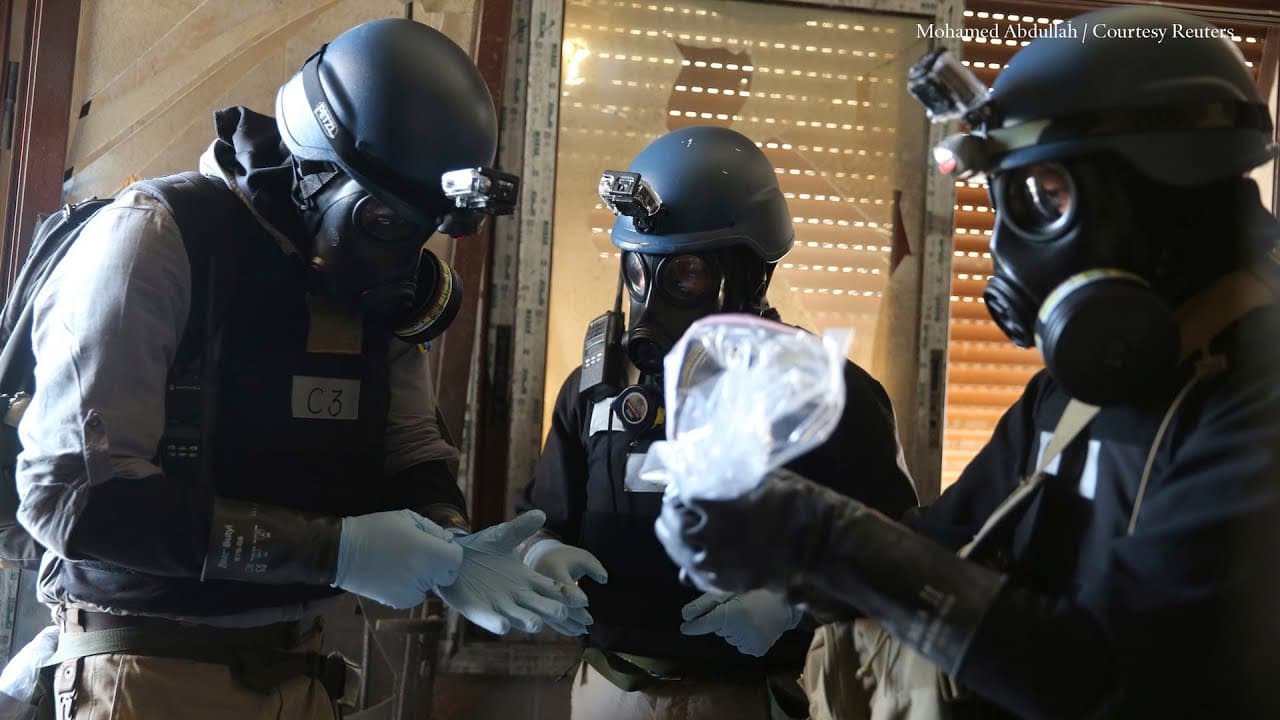
Syria's chemical weapons disarmament is complex amid ongoing civil war.
Transcript
As a result of an agreement reached between the United States and Russia on September 14, Syria has agreed to relinquish its stockpile of chemical weapons to international control and rapid destruction. These weapons have been used on several occasions during the current civil war in Syria, most recently on August 21st with the loss of hundreds of... Read More
Key Insights
- The disarmament of Syria's chemical weapons is a result of a U.S.-Russia agreement made on September 14, aiming for completion by mid-2014.
- Syria possesses over 1000 metric tons of chemical agents dispersed across the country, complicating safe removal and destruction.
- Ensuring full cooperation from Syrian authorities is critical, and verifying no hidden weapons remain is a major challenge.
- The disarmament process is unprecedented as it occurs during an ongoing civil war, risking potential unraveling due to battlefield developments.
- Rebel forces gaining control of chemical weapons or regime elements obstructing the process are significant risks to the agreement's success.
- The agreement does not guarantee an end to the civil war, which has claimed over 100,000 lives, without a comprehensive political settlement.
- U.S. and Russia's recent cooperation offers some hope for a diplomatic solution, but fundamental differences persist.
- The potential for further mass atrocities unrelated to chemical weapons increases pressure for military intervention.
Install to Summarize YouTube Videos and Get Transcripts
Explore YouTube Video Summarizer or Get YouTube Transcript Extractor
Questions & Answers
Q: What prompted Syria to agree to relinquish its chemical weapons?
Syria agreed to relinquish its chemical weapons following a U.S.-Russia agreement reached on September 14. This agreement aimed to place Syria's chemical weapons under international control for rapid destruction. The decision was influenced by the international community's response to the use of chemical weapons in Syria, most notably the attack on August 21 that resulted in hundreds of civilian casualties.
Q: What are the challenges in verifying the disarmament process?
Verifying the disarmament process in Syria is challenging due to the dispersed nature of over 1000 metric tons of chemical agents across the country. Ensuring that none of these weapons are hidden for future use requires full cooperation from Syrian authorities. The complexity is heightened by the ongoing civil war, which adds layers of mistrust and potential obstruction by various parties involved in the conflict.
Q: Why is disarming Syria's chemical weapons during a civil war unprecedented?
Disarming Syria's chemical weapons during an ongoing civil war is unprecedented because no major disarmament process has ever been attempted in wartime. The civil war creates a volatile environment where battlefield developments can alter the interests of the parties to the conflict, potentially causing the disarmament agreement to unravel. The presence of armed groups and the risk of chemical weapons falling into the wrong hands add to the complexity.
Q: What risks might rebel forces pose to the disarmament process?
Rebel forces pose a significant risk to the disarmament process as they may gain control of chemical weapons and decide to use them for various reasons. Additionally, if rebel forces make significant advances on the battlefield, the Assad regime might feel compelled to use chemical weapons again. Such developments could obstruct the disarmament process and potentially lead to the agreement's unraveling.
Q: Can the chemical weapons agreement end the Syrian civil war?
The chemical weapons agreement alone cannot end the Syrian civil war, which has already claimed over 100,000 lives. Ending the conflict requires either a decisive victory by one side or a comprehensive political settlement. While the U.S. and Russia's cooperation offers some hope for a diplomatic solution, their fundamental differences remain, making a swift resolution unlikely.
Q: What role do U.S. and Russia play in the disarmament process?
The U.S. and Russia play pivotal roles in the disarmament process, having brokered the agreement for Syria to relinquish its chemical weapons. Their cooperation is crucial for ensuring the safe removal and destruction of the chemical stockpile. However, while this collaboration offers hope for further diplomatic efforts, both countries have fundamental differences that could hinder a lasting resolution to the Syrian conflict.
Q: How might further mass atrocities influence international intervention?
Further mass atrocities in Syria, even if unrelated to chemical weapons, could increase international pressure for military intervention. Such events could highlight the ongoing humanitarian crisis and the inability of the current disarmament agreement to address the broader conflict. This pressure might lead to calls for more direct action to protect civilians and stabilize the region.
Q: What is the timeline for the disarmament process, and why is it challenging?
The disarmament process is scheduled to be completed by the first half of 2014, as outlined in the U.S.-Russia agreement. This timeline is challenging due to the immense complexity of safely removing and destroying Syria's chemical weapons stockpile, which is dispersed across the country. The ongoing civil war, combined with the need for full cooperation from Syrian authorities, adds further difficulty to meeting this deadline.
Summary & Key Takeaways
-
Following a U.S.-Russia agreement, Syria agreed to relinquish its chemical weapons stockpile for international control and destruction. The process is complex due to Syria's over 1000 metric tons of chemical agents dispersed nationwide, requiring full cooperation from Syrian authorities to ensure no weapons are hidden.
-
The disarmament process is unprecedented as it occurs amidst Syria's ongoing civil war, risking potential unraveling due to developments on the battlefield. Rebel forces or regime elements could obstruct the process, and further mass atrocities may increase pressure for military intervention.
-
The chemical weapons agreement will not end Syria's civil war, which requires a comprehensive political settlement. While U.S. and Russia's cooperation offers hope for a diplomatic solution, their fundamental differences remain, indicating the conflict may not end soon.
Read in Other Languages (beta)
Share This Summary 📚
Summarize YouTube Videos and Get Video Transcripts with 1-Click
Try YouTube Summary with ChatGPT & Claude or YouTube Transcript Generator
Explore More Summaries from Council on Foreign Relations 📚

Summarize YouTube Videos and Get Video Transcripts with 1-Click
Try YouTube Summary with ChatGPT & Claude or YouTube Transcript Generator