Why American public transit is so bad | 2020 Election
TL;DR
US public transit is outdated, favoring cars over efficient commuting.
Transcript
This is a map of Chicago’s train system. If you look at its design, it’s not hard to figure out what it was built to do. All its different lines intersect here, in Chicago’s downtown, and then fan outward. This is a system that’s really good at moving people between the suburbs, or the outer rings of the city, and downtown. But that’s not really us... Read More
Key Insights
- Chicago's transit system is designed for suburb-to-downtown commutes, not suburb-to-suburb, limiting its usefulness for many residents.
- Most Americans commute from suburb to suburb, a route poorly served by current US public transit systems, leading to heavy reliance on cars.
- Owning a car is a significant financial burden for Americans, and contributes to high greenhouse gas emissions due to the lack of viable public transit options.
- Historical US infrastructure projects prioritized highways over public transit, leading to sprawling, car-dependent cities with limited pedestrian access.
- Transit-oriented development offers a solution by creating dense neighborhoods centered around transit hubs, reducing the need for car ownership.
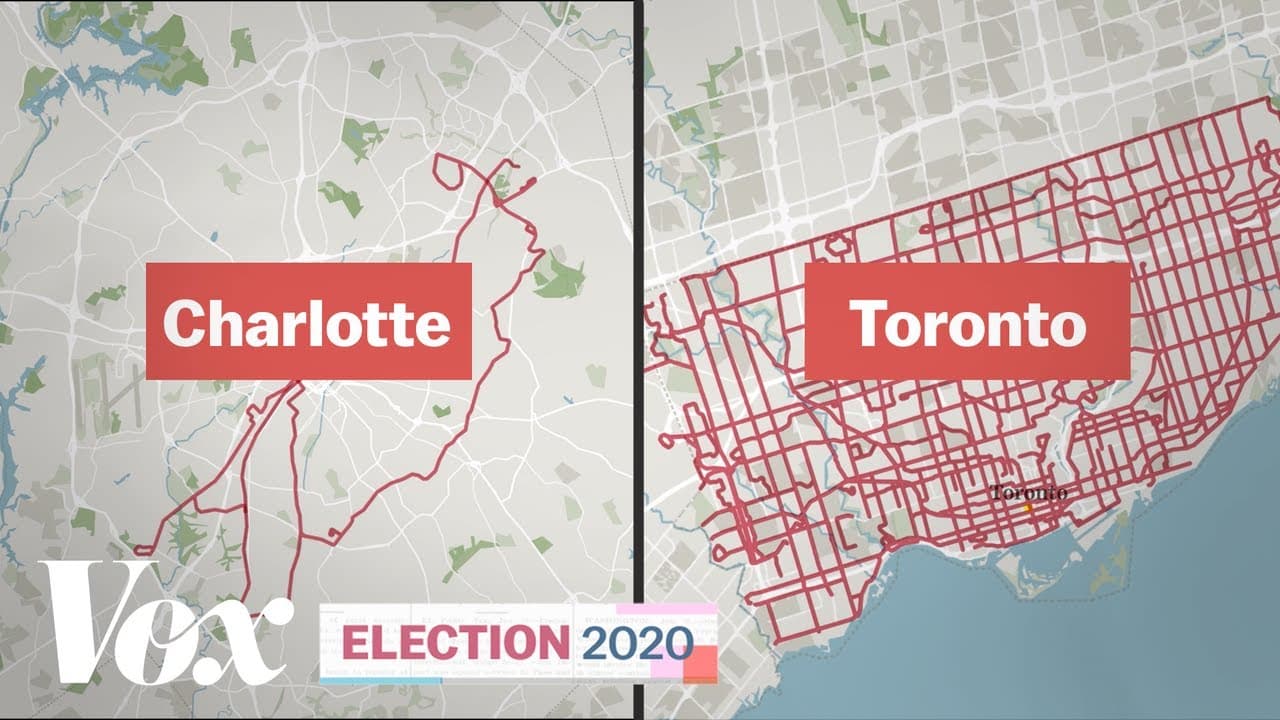
- Improving public transit in the US requires investment in reliable, frequent local services, similar to models in cities like Toronto.
- Federal funding for US public transit focuses on capital investments rather than operational improvements, limiting the effectiveness of transit systems.
- Political divisions impact public transit funding, with urban-focused Democrats favoring transit investments and Republicans preferring highway funding.
Install to Summarize YouTube Videos and Get Transcripts
Explore YouTube Video Summarizer or Get YouTube Transcript Extractor
Questions & Answers
Q: Why is the Chicago transit system not useful for some residents?
The Chicago transit system is primarily designed to facilitate suburb-to-downtown commutes, which does not accommodate the increasingly common suburb-to-suburb commutes. This design limits its utility for residents like Nina, who need to travel between suburbs, making car travel a more practical option despite the proximity of bus and train stops.
Q: What are the financial and environmental impacts of car dependency in the US?
Car dependency in the US imposes significant financial burdens on households, as owning a car is the second largest household expense. Additionally, it contributes to high greenhouse gas emissions, as transportation is the largest source of emissions in the country. This dependency is exacerbated by inadequate public transit options that fail to meet modern commuting needs.
Q: How did historical infrastructure projects influence current US transit systems?
Mid-20th century US infrastructure projects prioritized the construction of interstate highways over public transit, leading to sprawling urban designs centered around car travel. This focus on highways transformed cities into car-dependent environments, making it challenging for pedestrians and public transit users to navigate effectively without a vehicle.
Q: What is transit-oriented development and how can it help reduce car dependency?
Transit-oriented development involves creating dense neighborhoods centered around transit hubs, with mixed-use buildings that include housing, office spaces, and businesses. This approach reduces the need for car ownership by placing essential services and transit options within walking distance, encouraging residents to walk, bike, or use public transit instead of driving.
Q: What improvements are suggested for enhancing US public transit systems?
Enhancing US public transit systems requires investing in reliable, frequent local services, such as buses that run every 30 minutes or more frequently. This approach, modeled after cities like Toronto, can increase transit ridership by providing dependable and convenient alternatives to car travel, encouraging even car owners to use public transit.
Q: How does federal funding affect US public transit operations?
Federal funding for US public transit primarily supports capital investments, such as new infrastructure projects, rather than operational improvements. This allocation limits the ability of transit systems to enhance day-to-day services, which are crucial for increasing ridership and making public transit a viable alternative to car travel.
Q: What are the political dynamics affecting public transit funding in the US?
Public transit funding in the US is influenced by political divisions, with Democrats typically advocating for increased transit funding due to their urban constituencies, while Republicans often prioritize highway and road investments. These political dynamics impact the allocation of resources and the development of transit systems, affecting their effectiveness and reach.
Q: What immediate actions can improve American transit systems?
Immediate improvements to American transit systems can be achieved by investing in basic operations, such as increasing the frequency and reliability of local transit services. This requires funding shifts from capital projects to operational enhancements, which can be implemented quickly and effectively encourage more people to use public transit.
Summary & Key Takeaways
-
The US public transit system was historically designed for suburb-to-downtown commutes, which does not align with modern commuting patterns. This has led to a car-dependent culture, with significant financial and environmental impacts.
-
Transit-oriented development could reduce car dependency by creating dense, transit-centered neighborhoods. However, improving existing transit systems through reliable and frequent services is a more immediate solution.
-
Federal and local funding priorities affect the quality of public transit, with current investments focusing more on infrastructure than operational improvements. Political dynamics also play a role in shaping transit funding and development.
Read in Other Languages (beta)
Share This Summary 📚
Summarize YouTube Videos and Get Video Transcripts with 1-Click
Try YouTube Summary with ChatGPT & Claude or YouTube Transcript Generator
Explore More Summaries from Vox 📚



Summarize YouTube Videos and Get Video Transcripts with 1-Click
Try YouTube Summary with ChatGPT & Claude or YouTube Transcript Generator