How to Harness the Compass of Zettelkasten for Ideas
TL;DR
Unlock the power of the Zettelkasten method by using the idea compass to facilitate idea exploration. This structured approach helps you think associatively, allowing you to connect, organize, and expand your thoughts effectively, leading to deeper insights and creativity.
Transcript
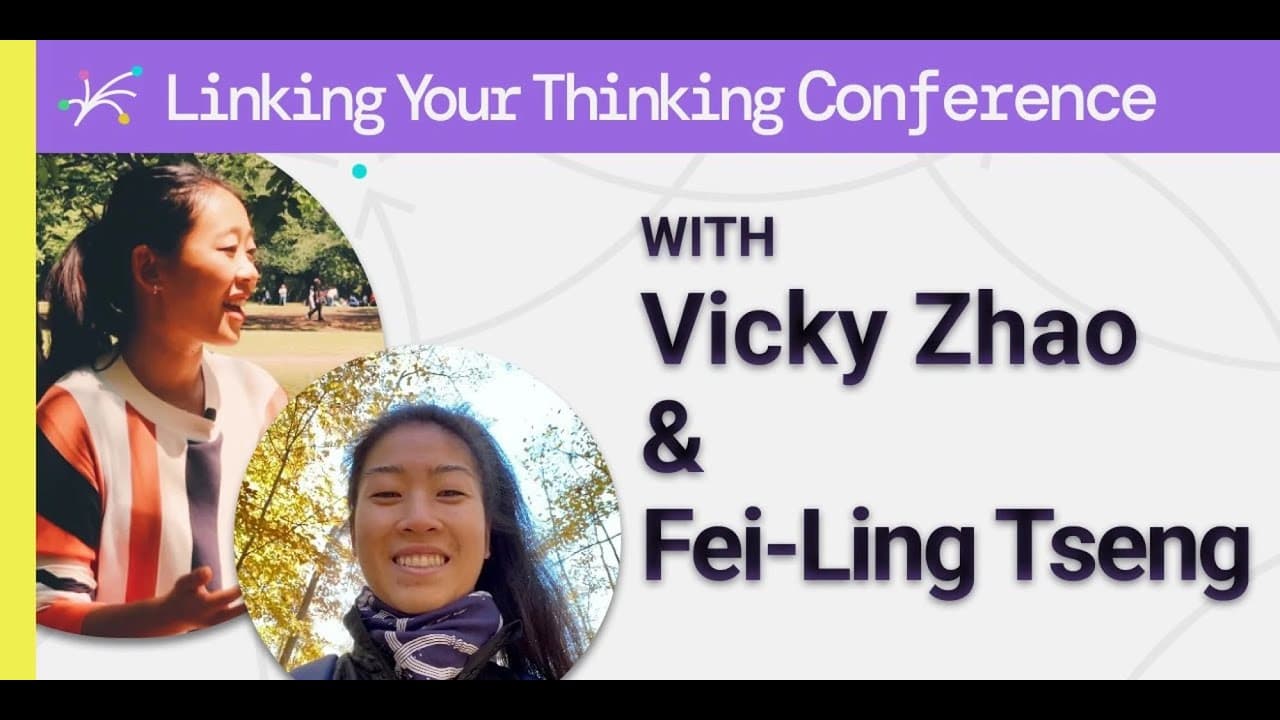
day one of the linking your thinking conference continues with a pretty awesome presentation i'm really excited to introduce the following tag team here uh for one thank you so much for tuning in i don't think you're going to be disappointed so our presenters today i'm excited to introduce are vicky zao and feyling zhen um i'm probably not saying t... Read More
Key Insights
- 🎤 Vicki Zao and Feyling Zhen are introducing the concept of the "compass of zettelkasten," which is a practical method for connecting and expanding ideas. They have benefited from this system and want to share it with others.
- 🎉 The idea compass helps individuals survey the context of an idea, allowing them to explore different directions and connections. It serves as a tool for leveraging and expanding thoughts.
- 🔍 The zettelkasten method was developed by Nicholas Luman, who wrote 70 books and 400 scholarly articles in 40 years using this system. The method involves taking atomic notes, connecting them, and organizing them into categories.
- 🌍 Tools for thought, such as note-taking systems, extend our mental abilities and capacity. They have been used by humans for centuries, and computational implementations are a subset of these tools.
- 💡 The compass of zettelkasten helps users with associative thought, allowing them to make connections between different ideas. This is a key aspect of implementing the zettelkasten method effectively.
- 🧭 The compass consists of four main stages: input (capturing fleeting and literature notes), digest (thinking about the notes and connecting ideas), organize (categorizing and filing ideas), and outline/output (reusing and expanding on ideas).
- 🔁 Atomic notes are highly recommended for linking ideas together. Vicki and Faye use a combination of small atomic notes linked in an index and larger notes that serve as outputs or summaries of multiple atomic notes.
- 👥 The session includes a live crowd-sourced ideation exercise using the idea compass. Participants contribute ideas and connections related to the topic "Writing is thinking on paper." The compass helps in exploring different directions and expanding the concept.
Install to Summarize YouTube Videos and Get Transcripts
Explore YouTube Video Summarizer or Get YouTube Transcript Extractor
Questions & Answers
Q: How does the compass of Zettelkasten help with idea exploration?
The compass of Zettelkasten provides a structured approach to analyzing ideas from different perspectives, making it easier to explore and expand upon them.
Q: What are the four main stages of the Zettelkasten method?
The four main stages are input (capturing fleeting and literature notes), digest (reviewing and connecting ideas), organize (filing and tagging notes), and outline (creating meaningful output from your notes).
Q: How does Vicky organize her notes using the compass of Zettelkasten?
Vicky uses tags to categorize her notes based on different criteria, such as anecdotes, ideas to build upon, and content for specific output formats like newsletters and videos.
Q: What is the role of associative thought in the Zettelkasten method?
Associative thought is a crucial aspect of the method, as it helps make connections between ideas and expand upon them. It allows for deeper exploration and synthesis of information.
Summary & Key Takeaways
-
Vicky and Faye introduce the concept of the compass of Zettelkasten, a practical and systematic way to connect and expand your ideas.
-
The Zettelkasten method consists of four main stages: input, digest, organize, and outline.
-
Vicky focuses on idea exploration and uses tags to organize her notes, while Faye emphasizes the importance of associative thought and uses indents in his note-taking system.
Read in Other Languages (beta)
Share This Summary 📚
Summarize YouTube Videos and Get Video Transcripts with 1-Click
Try YouTube Summary with ChatGPT & Claude or YouTube Transcript Generator
Explore More Summaries from Linking Your Thinking with Nick Milo 📚

Summarize YouTube Videos and Get Video Transcripts with 1-Click
Try YouTube Summary with ChatGPT & Claude or YouTube Transcript Generator