A murder solved, 23 years later | Part 3
TL;DR
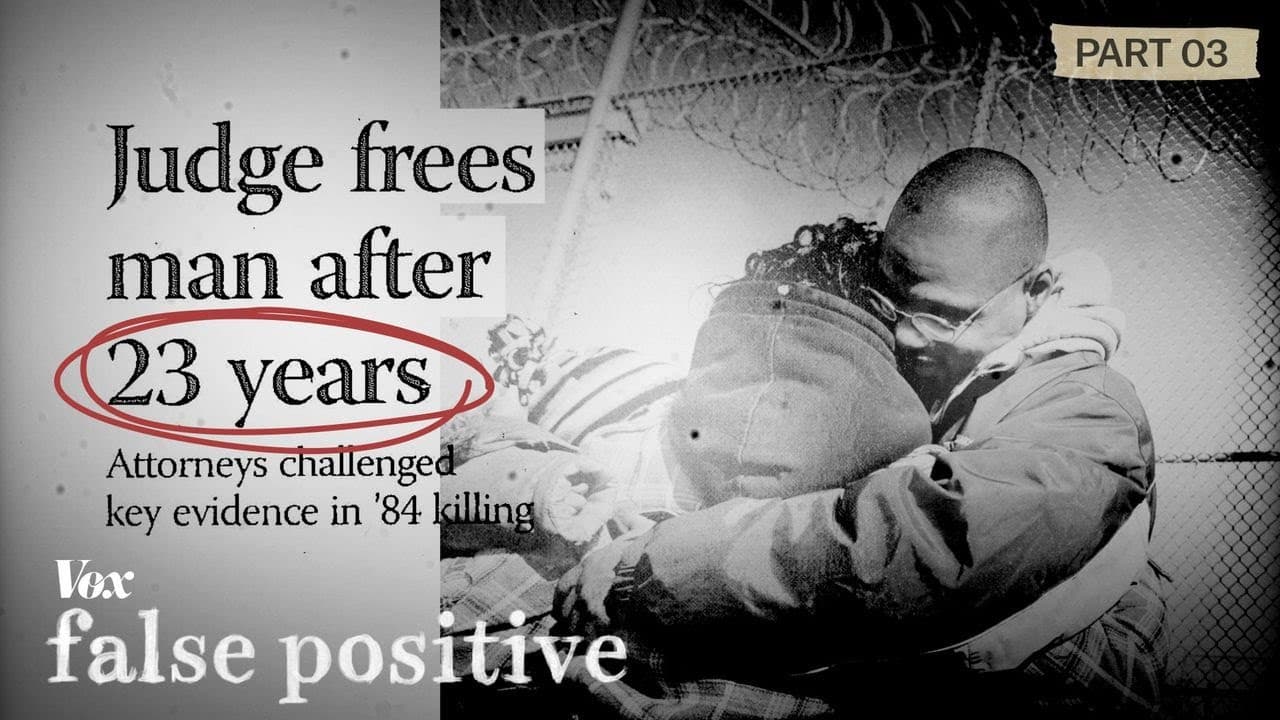
Robert Stinson was exonerated after 23 years due to flawed forensic evidence.
Transcript
“Think about what you were doing between the years 1985 and 2009. All those years you spent getting your education, building a resume." "Mr. Gorbachev, tear down that wall." "Getting married. Buying a home." "The Hubble Space Telescope is released." "Having children." "Can you explain what internet is?" "Building up retirement." "O.J. Simpson not g... Read More
Key Insights
- Robert Lee Stinson was wrongfully convicted of murder due to flawed forensic bite mark evidence, which was later discredited.
- The Innocence Project played a crucial role in re-examining the bite mark evidence, revealing significant errors by the original forensic experts.
- DNA evidence, which was not available during Stinson's trial, eventually excluded him as the source of the crime, leading to his exoneration.
- The case highlights the limitations of forensic disciplines like bite mark analysis, which lack the scientific rigor and statistical backing of DNA evidence.
- The National Academy of Sciences reported that many forensic science disciplines are lacking basic research and need more scientific grounding.
- Despite recommendations for reform, including the creation of a federal agency to oversee forensic science, progress has been slow due to various institutional challenges.
- The real perpetrator, Moses Price Jr., was identified through DNA evidence years after Stinson's conviction, underscoring the potential for wrongful convictions without reliable forensic methods.
- The documentary 'False Positive' examines the broader issues within the U.S. criminal justice system that allow unreliable forensic science to persist.
Install to Summarize YouTube Videos and Get Transcripts
Explore YouTube Video Summarizer or Get YouTube Transcript Extractor
Questions & Answers
Q: What led to Robert Stinson's wrongful conviction?
Robert Stinson's wrongful conviction was primarily due to flawed forensic bite mark evidence. Two forensic odontologists testified that his teeth matched bite marks found on the victim, but later reviews revealed significant errors in their analysis. This unreliable evidence was crucial in securing his conviction, despite Stinson maintaining his innocence.
Q: How did the Innocence Project contribute to Stinson's exoneration?
The Innocence Project played a pivotal role in Stinson's exoneration by re-examining the bite mark evidence. They enlisted experts to review the original forensic analysis, which uncovered significant errors and ultimately discredited the evidence used against Stinson. Their efforts, combined with new DNA evidence, led to his release after 23 years.
Q: Why is DNA evidence considered more reliable than bite mark analysis?
DNA evidence is considered more reliable because it is based on quantifiable and unique genetic markers that can be statistically analyzed to determine the likelihood of a match. In contrast, bite mark analysis lacks standardized methods and scientific validation, making it prone to subjective interpretation and errors, as seen in Stinson's case.
Q: What did the National Academy of Sciences report say about forensic science?
The National Academy of Sciences report highlighted significant shortcomings in forensic science, noting that many disciplines, including bite mark analysis, lacked scientific validation and rigorous research. The report called for more scientific grounding in forensic practices and recommended the creation of a federal agency to oversee and fund forensic science research.
Q: What challenges exist in reforming forensic science practices?
Reforming forensic science faces challenges such as institutional resistance, lack of funding, and insufficient scientific research. Crime labs are often overburdened and lack resources to conduct validation studies. Additionally, the forensic community has been slow to adopt reforms, partly due to defensiveness and lack of incentives for change.
Q: How was the real perpetrator in Stinson's case identified?
The real perpetrator, Moses Price Jr., was identified through DNA evidence collected from the victim's clothing. This DNA profile was entered into a database, and a match was found years later, leading to Price's confession. His identification was facilitated by advancements in DNA technology, which were not available at the time of Stinson's conviction.
Q: What does Stinson's case reveal about the criminal justice system?
Stinson's case reveals systemic issues in the criminal justice system, where reliance on unreliable forensic methods can lead to wrongful convictions. It underscores the need for reform and scientific rigor in forensic practices to prevent similar miscarriages of justice. The case also highlights the importance of organizations like the Innocence Project in advocating for the wrongfully convicted.
Q: What recommendations have been made to improve forensic science?
Recommendations to improve forensic science include establishing a federal agency to oversee and fund research, implementing standardized methods across forensic disciplines, and increasing collaboration between academic researchers and crime labs. These measures aim to enhance the scientific validity and reliability of forensic evidence used in the criminal justice system.
Summary & Key Takeaways
-
Robert Lee Stinson was convicted of murder based on flawed bite mark evidence and spent 23 years in prison before being exonerated by DNA evidence. The case underscores the limitations of certain forensic methods and the need for reform in forensic science practices.
-
The Innocence Project was instrumental in revisiting Stinson's case, revealing significant errors in the forensic analysis that led to his wrongful conviction. DNA evidence later proved his innocence, highlighting the superiority of DNA over other forensic techniques.
-
The case of Robert Stinson illustrates systemic issues in the criminal justice system, where unreliable forensic methods can lead to wrongful convictions. Despite recommendations for reform, progress has been slow, emphasizing the need for more scientific rigor in forensic disciplines.
Read in Other Languages (beta)
Share This Summary 📚
Summarize YouTube Videos and Get Video Transcripts with 1-Click
Try YouTube Summary with ChatGPT & Claude or YouTube Transcript Generator
Explore More Summaries from Vox 📚


Summarize YouTube Videos and Get Video Transcripts with 1-Click
Try YouTube Summary with ChatGPT & Claude or YouTube Transcript Generator