CISA Cybersecurity Incident Response Playbook With Examples

Dec 19, 2025
12 min read
9 views
In today’s digital era, organizations face an increasing number of cyber threats, ranging from phishing attacks to sophisticated ransomware campaigns. The ability to respond effectively to these incidents can mean the difference between minor disruptions and catastrophic data breaches. An Incident Response Playbook serves as a structured, step-by-step guide that helps IT and security teams handle cyber incidents efficiently and consistently. The Cybersecurity and Infrastructure Security Agency (CISA) provides guidelines and templates for incident response, enabling organizations to align their procedures with recognized standards. By following these playbooks, teams can quickly identify threats, contain their impact, and recover systems with minimal disruption.
This article aims to provide a comprehensive overview of CISA Cybersecurity Incident Response Playbooks, including their components, benefits, and practical examples, which are also useful for professionals preparing for the CISA certification. Readers will gain insights into how these playbooks can be implemented, customized, and maintained to strengthen an organization’s cybersecurity posture.
What Is an Incident Response Playbook?
An Incident Response Playbook is a formalized, step-by-step guide that outlines how an organization should respond to various cybersecurity incidents. Unlike a general Incident Response Plan, which provides high-level strategies, a playbook offers detailed procedures, checklists, and responsibilities for each type of incident. It ensures that responses are consistent, timely, and effective, reducing confusion during high-pressure situations. The main purpose of a playbook is to help organizations prepare, detect, contain, eradicate, and recover from cyber incidents systematically. It typically includes clear instructions for identifying the type of incident, assessing its severity, assigning roles, and implementing immediate response actions. By following a playbook, teams can minimize operational downtime, limit damage, and ensure compliance with internal and external regulations.
A well-designed playbook also promotes accountability by clearly specifying who is responsible for each task, from initial detection to post-incident review. It often incorporates communication protocols, ensuring that relevant stakeholders, including management and legal teams, are informed at the right time. Additionally, playbooks provide guidance on documenting all actions taken during the incident, which is crucial for audits, reporting, and lessons learned. An Incident Response Playbook is a practical tool that translates cybersecurity policies into actionable steps. Understanding playbooks is not only critical for operational readiness but also aligns with topics covered in the CISA exam, particularly in areas of risk assessment, governance, and audit of IT controls.
Overview of the CISA Cybersecurity Incident Response Framework
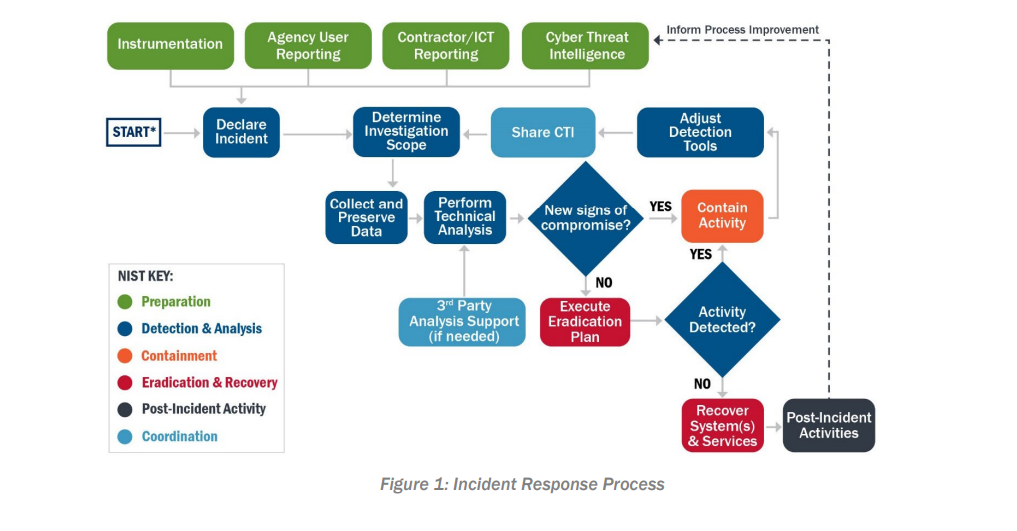
The CISA Cybersecurity Incident Response Framework provides organizations with a structured approach to handle cyber incidents effectively. It aligns closely with the NIST Incident Response Lifecycle, offering a practical roadmap for identifying, managing, and recovering from cybersecurity threats. By following this framework, organizations can ensure that their response processes are systematic, repeatable, and aligned with industry best practices.
The CISA framework is built around six key phases:
Preparation: This phase focuses on establishing policies, procedures, and tools needed to respond to incidents. Teams are trained, response roles are assigned, and systems are monitored to detect potential threats proactively.
Detection & Analysis: Early detection of incidents is critical. This phase involves monitoring alerts, analyzing suspicious activity, and confirming the presence of a security incident.
Containment: Once an incident is confirmed, containment measures are implemented to limit its impact. This may include isolating affected systems, blocking malicious traffic, or disabling compromised accounts.
Eradication & Recovery: The root cause of the incident is identified and removed. Malware is deleted, vulnerabilities are patched, and any compromised accounts or credentials are secured.
Post-Incident Activity: Systems and services are restored to normal operations while ensuring that no residual threats remain. This may involve restoring data from backups, verifying system integrity, and monitoring for recurring issues.
Coordination: After the incident, the response is reviewed to identify gaps, improve future playbooks, and enhance overall security posture. Documentation from this phase is crucial for regulatory compliance and continuous improvement.
By following the CISA framework, organizations not only respond more efficiently to cyber incidents but also build a resilient cybersecurity environment. It enables teams to act quickly, coordinate effectively, and reduce the impact of attacks while maintaining regulatory and organizational standards.
Key Components of a CISA Incident Response Playbook
A well-structured CISA Incident Response Playbook contains several critical components that ensure an organization can respond to cybersecurity incidents efficiently and consistently. Each component serves a specific purpose, guiding teams through the entire lifecycle of an incident.
1: Incident Description and Scope
This section defines the type of incident (e.g., phishing, ransomware, data breach) and its potential impact on the organization. Clear documentation helps teams understand the severity and prioritize response actions.
2: Incident Severity Classification
Assigning a severity level (low, medium, high, critical) ensures that the appropriate resources and response measures are deployed. It helps teams focus on high-risk incidents first and allocate efforts effectively.
3: Roles and Responsibilities
The playbook clearly specifies who is responsible for each task, including IT personnel, security analysts, management, and legal teams. Defining responsibilities prevents confusion and ensures accountability during critical moments.
4: Detection and Analysis Procedures
Step-by-step guidance for identifying and analyzing the incident is included. This may involve reviewing logs, monitoring alerts, and correlating threat intelligence. Accurate detection reduces false positives and accelerates response.
5: Response and Containment Actions
Detailed instructions guide the team on how to contain the threat to prevent further damage. Examples include isolating affected systems, terminating malicious processes, or blocking network access.
6: Communication and Escalation Process
Effective communication is essential. The playbook defines who to notify, the timing of notifications, and escalation paths to senior management or regulatory bodies. Transparent communication minimizes misunderstandings and supports decision-making.
7: Documentation and Reporting Requirements
Thorough documentation of every action taken during the incident is required. This includes timelines, steps performed, tools used, and evidence collected. Proper documentation supports audits, regulatory compliance, and post-incident review.
By incorporating these components, a CISA Incident Response Playbook ensures that cybersecurity teams can respond quickly, accurately, and consistently. It not only improves operational efficiency but also strengthens organizational resilience, ensuring that the impact of cyber threats is minimized.
Why Should Organizations Use CISA Playbook Templates?
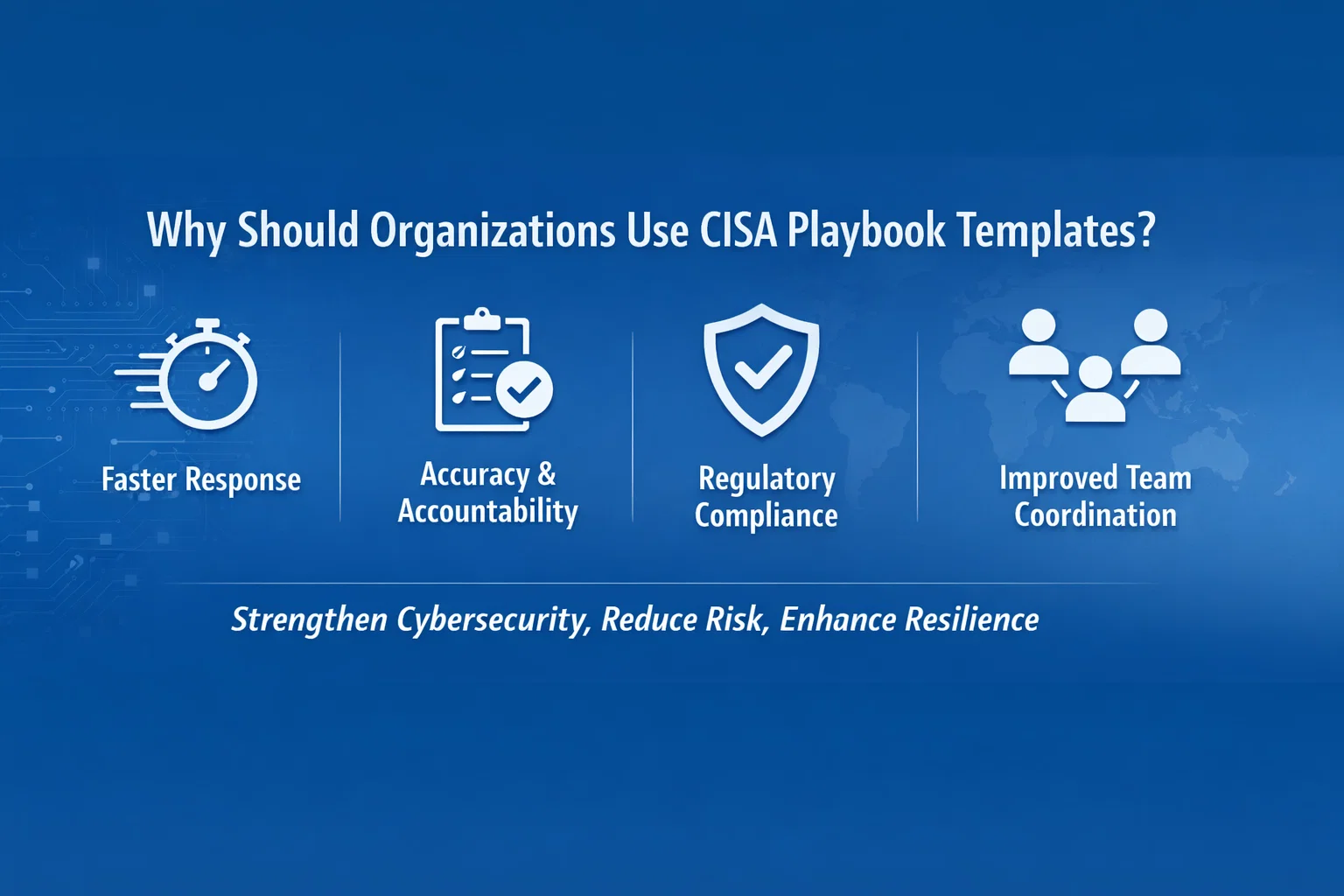
Organizations face an ever-growing variety of cyber threats, and responding effectively requires standardized and structured procedures. CISA Incident Response Playbook Templates provide a ready-to-use framework that guides teams through every step of an incident, ensuring responses are consistent, efficient, and compliant with industry standards. One key advantage of using these templates is speed. When an incident occurs, teams do not waste time deciding what actions to take; the playbook provides a predefined roadmap, allowing faster containment and mitigation. This can significantly reduce the operational and financial impact of cyberattacks.
Another benefit is accuracy and accountability. CISA templates clearly define roles and responsibilities, communication protocols, and escalation procedures. By following a template, organizations ensure that every team member knows their tasks, minimizing errors during high-pressure situations. These templates help organizations maintain regulatory compliance. Many industries require documentation of incident response processes. Using a CISA template ensures that all necessary steps are followed and recorded, making audits and reporting straightforward.
CISA playbook templates promote team coordination. They provide a structured approach for collaboration across IT, security, legal, and management teams, ensuring that the organization responds as a unified and well-prepared unit. By adopting CISA Incident Response Playbook Templates, organizations not only improve their incident response capabilities but also strengthen their overall cybersecurity posture, reducing risk and increasing resilience against evolving threats.
CISA Incident Response Playbook Template Structure
A CISA Incident Response Playbook Template provides a standardized structure that organizations can follow to ensure consistent and effective responses to cybersecurity incidents. The template organizes essential information and procedures in a clear, actionable format.
1. Header Information
Each playbook begins with basic details such as the incident name, template owner, version, and date. This information ensures proper documentation and easy reference during audits or post-incident reviews.
2. Trigger Conditions
This section defines the conditions or events that initiate the use of the playbook. For example, detection of malware, unauthorized access, or a reported phishing email can trigger specific response actions.
3. Step-by-Step Response Actions
The core of the template is a detailed, sequential set of actions for responding to the incident. It includes initial containment measures, eradication steps, and recovery procedures. Each action is clearly assigned to a responsible individual or team.
4. Tools and Resources Required
This section lists all tools, software, and documentation necessary for responding to the incident. Examples include security monitoring platforms, forensic tools, and backup systems.
5. Post-Incident Review Checklist
After the incident is resolved, this section guides teams through a review process. It includes documenting lessons learned, updating security policies, and refining the playbook based on the incident experience.
By following this template structure, organizations ensure that incident response is organized, repeatable, and aligned with best practices. It also supports faster decision-making, better coordination among teams, and compliance with regulatory and auditing requirements.
Incident Response Playbook Examples
1: Phishing Attack Response Playbook
Phishing attacks remain one of the most common cybersecurity threats, targeting employees to steal sensitive information. A structured response playbook ensures that teams act quickly to mitigate the impact.
1: Detection Indicators
Suspicious emails requesting sensitive information
Unexpected attachments or links
Reports from employees
2: Immediate Response Actions
Isolate affected accounts to prevent further access.
Notify the IT security team for immediate analysis.
Block malicious URLs or email addresses using security tools.
3: Containment and Mitigation Steps
Reset compromised credentials and enforce multi-factor authentication (MFA).
Conduct phishing awareness communication to staff.
Monitor network activity to identify additional threats.
4: Incident Response Example
Ensuring critical data remains accessible over time is a concept often tested in CISA exams. Organizations achieve this by regularly migrating archived data to current technology and maintaining backups. This not only protects against data loss but also strengthens incident preparedness.
Source: Example Adapted from Pass4Future CISA Exam Sample Questions
By following this playbook, organizations can minimize data loss, strengthen employee awareness, and ensure a timely, coordinated response.
2: Ransomware Incident Response Playbook
Ransomware incidents can severely disrupt operations by encrypting critical systems. A playbook provides step-by-step guidance to contain and recover from the attack.
1: Identification and Isolation
Detects unusual file encryption activity or ransom notes.
Isolate affected systems from the network to prevent propagation.
2: Backup and Recovery Procedures
Verify availability of secure backups.
Restore systems from clean backup copies.
Validate system integrity before reconnecting to the network.
3: Notification and Escalation
Inform senior management and legal teams.
Notify external parties if required by regulations.
Maintain detailed documentation for audit and review.
Following this playbook helps organizations reduce operational downtime, protect sensitive data, and comply with regulatory requirements.
3: Data Breach Incident Response Playbook
Data breaches involve unauthorized access to sensitive information. A dedicated playbook ensures systematic detection, containment, and reporting.
1: Breach Confirmation
Analyze logs and alerts to confirm the breach.
Identify affected systems and data types.
2: Impact Assessment
Determine the severity and scope of compromised data.
Evaluate potential legal and reputational consequences.
3: Legal and Communication Actions
Notify regulatory authorities if required.
Communicate with affected stakeholders in a timely, transparent manner.
Review and update policies to prevent future breaches.
This structured approach allows organizations to respond efficiently, limit damages, and maintain trust with stakeholders.
4: Customizing CISA Playbooks for Organizational Needs
While CISA Incident Response Playbook Templates provide a standardized framework, each organization must customize them to address specific operational environments, industry requirements, and risk profiles. Customization ensures that the playbooks are practical, relevant, and actionable during real-world incidents.
1: Organization Size and Environment
Small businesses may simplify steps for limited IT staff, while large enterprises require detailed procedures for multi-team coordination.
Cloud-based environments may require additional steps for SaaS platforms, while on-premises systems follow traditional containment and recovery procedures.
2: Industry-Specific Requirements
Healthcare organizations must consider HIPAA compliance during incident handling.
Financial institutions need to follow regulatory reporting requirements for data breaches or fraud incidents.
Manufacturing and critical infrastructure may integrate industrial control system (ICS) monitoring and response steps.
3: Automation and SOAR Integration
Organizations can integrate Security Orchestration, Automation, and Response (SOAR) tools into playbooks to automate repetitive tasks, such as alert triage or containment actions.
Automated workflows reduce human error and accelerate response times, especially during high-volume incidents.
By tailoring CISA playbooks to organizational needs, teams can improve efficiency, ensure compliance, and enhance coordination, creating a response system that is both robust and adaptable to the evolving threat landscape.
5: Best Practices for Maintaining Incident Response Playbooks
Maintaining an up-to-date and effective Incident Response Playbook is essential for ensuring that organizations can respond quickly and efficiently to cyber incidents. Implementing best practices improves the reliability and effectiveness of response procedures.
1. Regular Testing and Tabletop Exercises
Conduct periodic drills to simulate real-world incidents.
Validate the playbook’s effectiveness and identify gaps in procedures.
Train teams to respond confidently under pressure.
2. Continuous Updates
Cyber threats evolve rapidly, making updates crucial.
Review and revise the playbook after each incident or threat intelligence report.
Incorporate lessons learned to prevent similar incidents in the future.
3. Training and Awareness
Ensure that all relevant personnel are familiar with the playbook.
Conduct regular awareness sessions for IT, security, management, and support staff.
Emphasize the importance of following standardized procedures.
4. Documentation and Lessons Learned
Maintain thorough records of all incidents and responses.
Use post-incident reviews to improve the playbook’s accuracy and effectiveness.
Document successes and failures to inform future response strategies.
By adhering to these best practices, organizations can strengthen their cybersecurity posture, minimize incident impact, and ensure that teams are prepared to respond consistently to evolving threats.
6: Common Challenges in Incident Response Playbooks
While Incident Response Playbooks are essential for managing cybersecurity incidents, organizations often encounter several common challenges when implementing and maintaining them.
1. Outdated Playbooks
Cyber threats evolve rapidly.
Playbooks that are not regularly updated may fail to address new attack techniques or vulnerabilities.
2. Lack of Ownership
Without clear responsibility, tasks may be overlooked during incidents.
Assigning dedicated owners ensures accountability and timely execution.
3. Poor Communication
Inefficient communication between teams can delay containment and mitigation.
Playbooks must include well-defined notification and escalation protocols.
4. Incomplete Documentation
Failure to record actions taken during incidents can hinder post-incident analysis.
Thorough documentation is essential for lessons learned, audits, and compliance.
5. Complexity and Accessibility
Overly complex playbooks may confuse team members during high-pressure situations.
Playbooks should be concise, well-structured, and easily accessible to all relevant personnel.
By addressing these challenges proactively, organizations can ensure that their incident response playbooks remain effective, practical, and reliable, even as threats continue to evolve.
Final Verdict
In today’s cyber threat landscape, a well-structured CISA Incident Response Playbook is essential for organizations of all sizes. These playbooks provide a step-by-step approach to detect, contain, and recover from incidents, ensuring efficient and consistent responses. Using CISA templates offers clear roles, predefined actions, and communication protocols, reducing errors and downtime. They also support regulatory compliance and post-incident reviews. Customizing and regularly updating these playbooks ensures teams are prepared for evolving threats, while real-world examples like phishing, ransomware, and data breaches demonstrate practical applications. Additionally, understanding these playbooks is valuable for CISA exam candidates, helping them connect theory to practical workflows in risk assessment, governance, and IT controls. CISA Incident Response Playbooks enhance organizational cybersecurity and provide insight for both professionals and exam aspirants.
References
CISA – Cybersecurity Incident Response Playbooks
NIST Special Publication 800-61 Revision 2 – Computer Security Incident Handling Guide https://nvlpubs.nist.gov/nistpubs/SpecialPublications/NIST.SP.800-61r2.pdf
SANS Institute – Incident Handlers Handbook
ISO/IEC 27035 – Information Security Incident Management https://www.iso.org/standard/60803.html
Incident Response Example Adapted From https://www.pass4future.com/questions/isaca/cisa
MITRE ATT&CK Framework – Enterprise https://attack.mitre.org/matrices/enterprise/
US-CERT – Incident Handling Resources
Incident Response Playbook
Cybersecurity Policies Guide Templates
https://www.sangfor.com/glossary/what-is-a-cybersecurity-policy-guide-templates
NIST Incident Response Lifecycle
CISA Cybersecurity Incident Response Framework
Financial Impact of Cyberattacks
Phishing Attack Response Playbook
Ransomware Incidents Response Playbook
https://www.fbi.gov/how-we-can-help-you/scams-and-safety/common-frauds-and-scams/ransomware
Data Breach Incident Response Playbook
Notes:
All references are official, authoritative, and widely recognized in cybersecurity.
Links can be used for further reading, citation, and verification.
Comments
As a content writer, I focus on discussing the latest technology and innovations shaping the modern world.