The Deepest Hole in the World, And What We've Learned From It
TL;DR
Soviet scientists drilled 12km into Earth, revealing water, fossils, and extreme heat.
Transcript
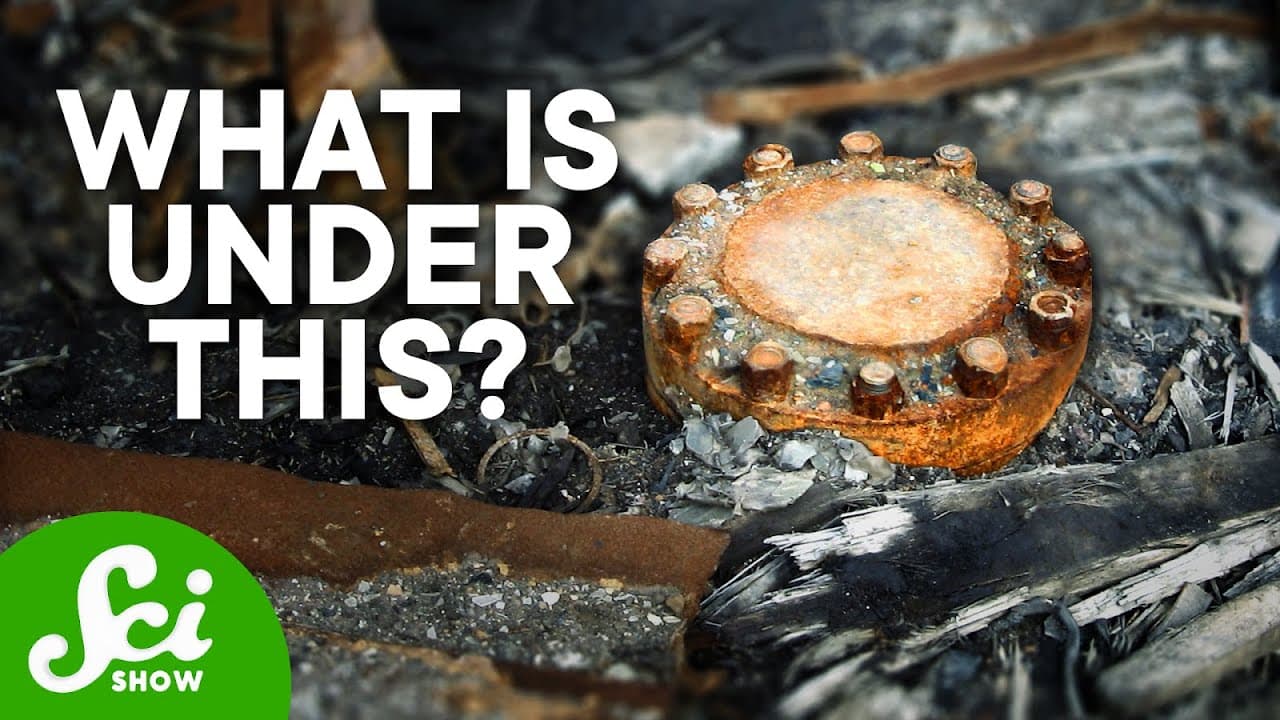
Deep in western Russia, the frigid desert contains the remnants of one of the most ambitious scientific experiments ever performed. It's a ruin now, a wasteland of jagged metal and crumbling concrete. If you search around long enough, you will find a rusted disc, bolted to the earth. So unassuming that you might even try to pick it up. But you won'... Read More
Key Insights
- 🤒 The Kola Superdeep Borehole is the deepest hole on Earth, reaching a record depth of 12,262 meters.
- 💦 Water originating from rock minerals was found at depths scientists didn't expect water to exist.
- ✋ Microscopic fossils were discovered at depths of up to 6.7 kilometers, preserved by high pressures and temperatures.
- 📽️ The project revealed temperatures exceeding 180 degrees Celsius at extreme depths, causing operational issues.
- 💯 The borehole only scratched the surface of Earth's layers, barely touching the mantle or inner core.
- 🙅 The drilling project lasted for 24 years before being halted in 1994.
- 📽️ The Kola Superdeep Borehole project showcased remarkable technological and scientific achievements.
Install to Summarize YouTube Videos and Get Transcripts
Explore YouTube Video Summarizer or Get YouTube Transcript Extractor
Questions & Answers
Q: What was the original purpose of the Kola Superdeep Borehole?
The borehole was drilled by Soviet scientists to gain a better understanding of the Earth's crust by reaching depths of 15,000 meters.
Q: What unexpected discovery was made at the Kola Superdeep Borehole?
Scientists found water originating from rock minerals at depths where water was thought to be impossible to be found.
Q: What were the challenges faced by engineers while drilling the Kola Superdeep Borehole?
High temperatures exceeding 180 degrees Celsius and rocks behaving like plastic posed significant challenges to the project.
Q: How deep did the Kola Superdeep Borehole manage to drill, and why was drilling halted?
The borehole reached a record depth of 12,262 meters but was stopped due to extreme heat and the rocks acting unexpectedly.
Summary & Key Takeaways
-
The Kola Superdeep Borehole in Russia was an ambitious scientific experiment, drilled to gain insight into the Earth's crust.
-
Despite reaching a record depth of 12,262 meters after 24 years of drilling, the project was halted in 1994.
-
Discoveries included water originating from rock minerals, microscopic fossils at deep depths, and unexpected high temperatures.
Read in Other Languages (beta)
Share This Summary 📚
Summarize YouTube Videos and Get Video Transcripts with 1-Click
Try YouTube Summary with ChatGPT & Claude or YouTube Transcript Generator
Explore More Summaries from SciShow 📚

Summarize YouTube Videos and Get Video Transcripts with 1-Click
Try YouTube Summary with ChatGPT & Claude or YouTube Transcript Generator