The Ultimate Chapter 7 Bankruptcy Guide - Part 1: Overview of the Chapter 7 Process
TL;DR
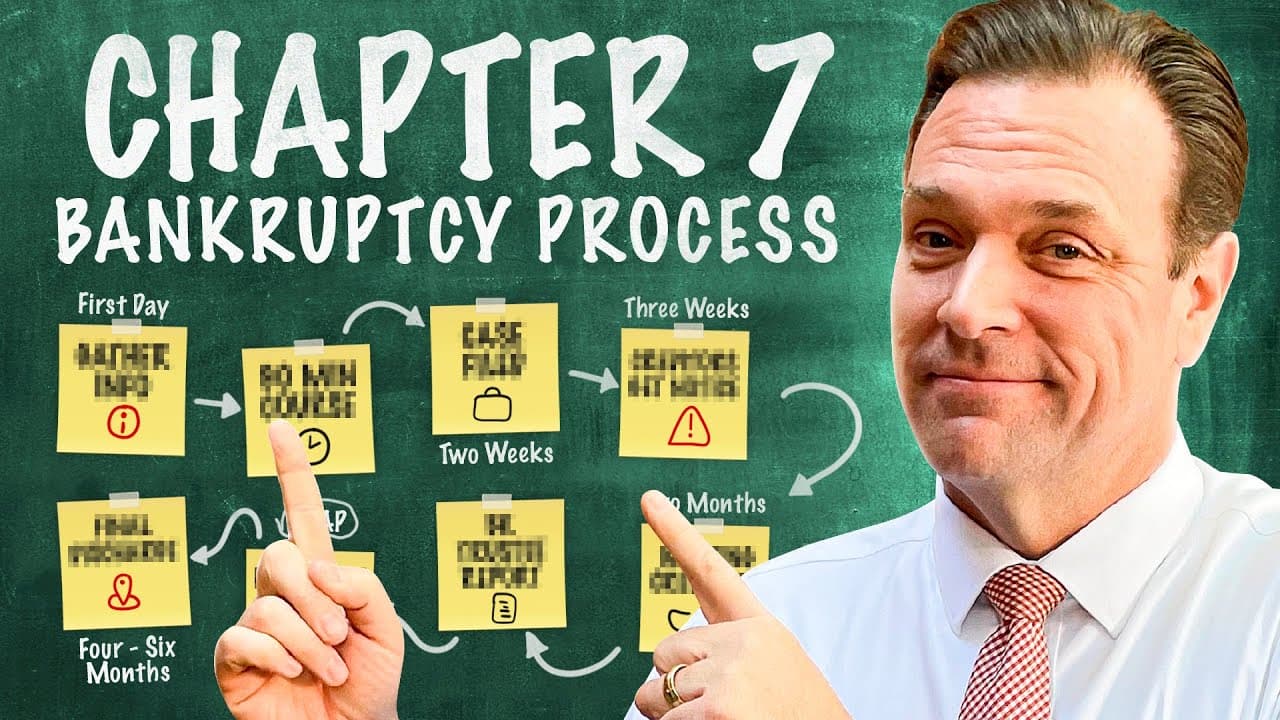
This video provides an introduction to Chapter 7 bankruptcy, explaining its purpose, eligibility requirements, and key differences from Chapter 13 bankruptcy.
Transcript
hey everybody John skba here from the consumer Warrior YouTube channel and in this video actually in this series of videos I'm going to provide you with the ultimate Chapter 7 bankruptcy guide to understanding what the process is helping you decide whether it's a good option for your particular debt situation and really helping you understand the i... Read More
Key Insights
- 👻 Bankruptcy is a legal process enshrined in the US Constitution, allowing individuals to eliminate or reorganize their debts.
- 🍰 Chapter 7 bankruptcy is the most common choice for consumers, providing a relatively short process of four to five months and eliminating unsecured debts.
- ⚾ Chapter 13 bankruptcy involves a longer process of three to five years and requires individuals to repay a portion of their debts based on their income and expenses.
- 🏆 Eligibility for Chapter 7 bankruptcy is determined by the means test, which considers household size and income.
- 😨 Chapter 7 bankruptcy does not impact secured debts like car loans and home loans.
- 🥳 The Chapter 7 bankruptcy process requires individuals to live in their current state for at least 91 days before filing.
- 🧑🤝🧑 Individuals with a prior Chapter 7 bankruptcy filing must wait 8 years from the discharge date before filing again.
Install to Summarize YouTube Videos and Get Transcripts
Explore YouTube Video Summarizer or Get YouTube Transcript Extractor
Questions & Answers
Q: What is the purpose of filing for Chapter 7 bankruptcy?
The purpose of Chapter 7 bankruptcy is to provide individuals with a fresh start by eliminating unsecured debts such as credit cards and medical bills, allowing them to rebuild their financial lives.
Q: How long does the Chapter 7 bankruptcy process typically last?
The Chapter 7 bankruptcy process usually takes about four to five months in most jurisdictions, making it a relatively short process compared to Chapter 13 bankruptcy.
Q: Do secured debts, like car loans and home loans, get affected by Chapter 7 bankruptcy?
Secured debts, such as car loans and home loans, are usually not impacted by Chapter 7 bankruptcy. Individuals will need to continue making payments on these debts if they wish to retain their car or home.
Q: Why would someone choose Chapter 13 bankruptcy over Chapter 7?
Individuals may choose Chapter 13 bankruptcy over Chapter 7 if they don't pass the means test for Chapter 7 eligibility. Chapter 13 provides an opportunity to repay a portion of their debts over a longer period of three to five years.
Summary & Key Takeaways
-
This video is part of a series that aims to provide a thorough guide to Chapter 7 bankruptcy, offering insights and advice for individuals facing serious debt problems.
-
The video discusses the basics of Chapter 7 and Chapter 13 bankruptcy, highlighting that Chapter 7 is the most common choice for consumers.
-
Chapter 7 bankruptcy allows for the elimination of unsecured debts, while Chapter 13 involves a longer process and partial repayment of debts.
Read in Other Languages (beta)
Share This Summary 📚
Summarize YouTube Videos and Get Video Transcripts with 1-Click
Try YouTube Summary with ChatGPT & Claude or YouTube Transcript Generator
Explore More Summaries from Consumer Warrior 📚






Summarize YouTube Videos and Get Video Transcripts with 1-Click
Try YouTube Summary with ChatGPT & Claude or YouTube Transcript Generator