Architect Breaks Down The Design Of 4 Iconic NYC Museums | Architectural Digest
TL;DR
New York City's art museums, including the Metropolitan Museum of Art, Museum of Modern Art, Guggenheim, and Whitney Museum, have unique designs that cater to their collections and exhibit spaces.
Transcript
the museums that New York City has to offer are designed very differently for very different purposes their Unique Designs relate specifically to their unique collections from the height of abstract expressionism to one of the largest collections in the world hi I'm Michael Whitner and I've been in architect in New York City for over 35 years today... Read More
Key Insights
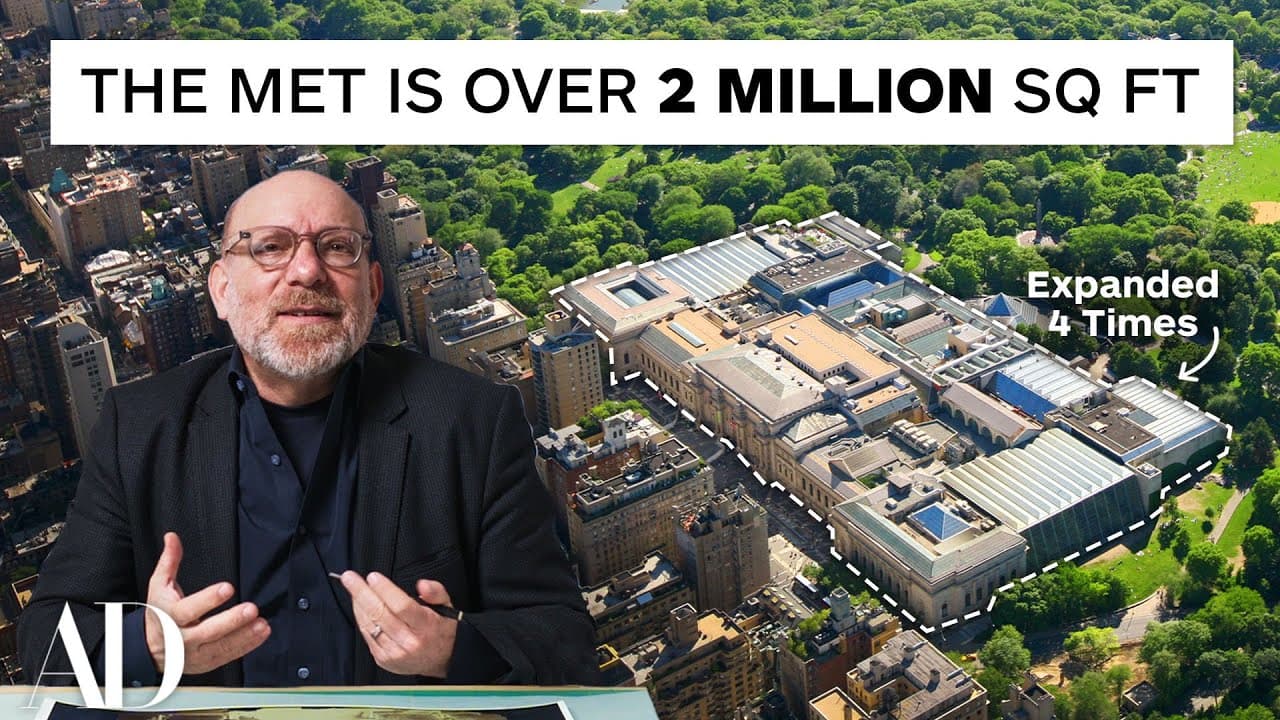
- 👾 The Metropolitan Museum of Art's expansion resulted in a massive museum that accommodates a large number of visitors by dispersing crowds within its vast space.
- 🤍 The Museum of Modern Art's multiple expansions created an endless maze of white box rooms, showcasing a wide variety of modern art.
- 😵💫 The Guggenheim Museum's unique spiral design created a continuous loop experience for visitors but has limitations in displaying large artworks.
Install to Summarize YouTube Videos and Get Transcripts
Explore YouTube Video Summarizer or Get YouTube Transcript Extractor
Questions & Answers
Q: How has the Metropolitan Museum of Art expanded over the years?
The Metropolitan Museum of Art has undergone multiple expansions, with additional wings added in 1890, 1910, and subsequent years, resulting in its current massive size.
Q: Why did the Museum of Modern Art choose a modern-style building for its collection?
The Museum of Modern Art wanted to showcase modern art in a modern way, hence its decision to build a modern-style building that stands out amidst the surrounding more traditional architecture.
Q: What are the drawbacks of Frank Lloyd Wright's design for the Guggenheim Museum?
The Guggenheim Museum's spiral design limits the size of artworks that can be displayed and restricts viewers' ability to stand back and view certain pieces. It also poses challenges with overcrowding during popular exhibitions.
Q: How has the Whitney Museum's design changed over time?
The original Whitney Museum building had a distinct bow house style and was later expanded but eventually became too small. The museum relocated to a new building in the meatpacking district, designed by Renzo Piano.
Summary & Key Takeaways
-
The Metropolitan Museum of Art was originally built in 1880 and has undergone multiple expansions, resulting in a massive five-block-long museum that accommodates a large number of visitors.
-
The Museum of Modern Art was built in 1939 and has since expanded several times, creating a diverse collection of different architectural styles. It offers a modern, linear museum experience.
-
The Guggenheim Museum, designed by Frank Lloyd Wright, features a distinctive spiral design that creates a continuous loop for visitors, but has limitations in terms of displaying large artworks.
-
The Whitney Museum, originally built as the Whitney Museum of American Art, has a unique shape and minimalistic design, and it was later transformed into the Met Breuer before relocating to a new building.
Read in Other Languages (beta)
Share This Summary 📚
Summarize YouTube Videos and Get Video Transcripts with 1-Click
Try YouTube Summary with ChatGPT & Claude or YouTube Transcript Generator
Explore More Summaries from Architectural Digest 📚






Summarize YouTube Videos and Get Video Transcripts with 1-Click
Try YouTube Summary with ChatGPT & Claude or YouTube Transcript Generator