The Chromosomes Hiding in Specks of Lint
TL;DR
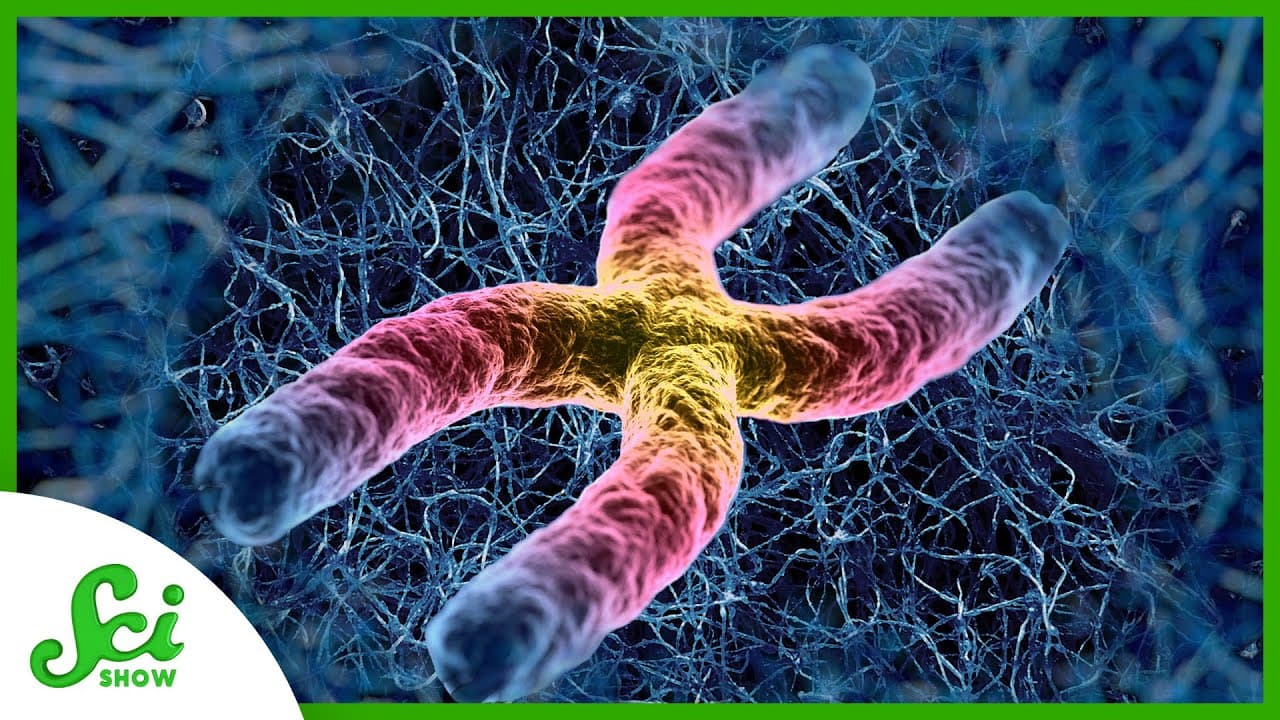
Microchromosomes, once mistaken for lint, are vital building blocks of genomes with unique evolutionary origins.
Transcript
Thanks to Brilliant for supporting this episode of SciShow. Go to Brilliant.orgSciShow to take your STEM skills to the next level! [♪ INTRO] Imagine you’re a scientist peering down the microscope at some bird cells. But your view, unfortunately, is blocked by little tiny flecks of lint. Well that is exactly what happened when scientists first ... Read More
Key Insights
- 🖐️ Microchromosomes, initially mistaken for lint, play a crucial role in organizing DNA in non-mammalian vertebrates.
- 🚱 Recent studies have highlighted the presence of essential genes in microchromosomes, challenging early theories of them being non-functional.
- 🛀 Evolutionary analyses have shown that microchromosomes have ancient origins in vertebrate ancestors, predating the emergence of mammals.
- ❓ Microchromosomes in mammals like the platypus provide insights into the evolutionary history of chromosome structure.
- 🖐️ Microchromosomes may play a role in gene regulation and genome organization within cells.
- 🫵 The unique characteristics of microchromosomes challenge traditional views of chromosome organization and evolution.
- ❓ Understanding the functions and origins of microchromosomes provides valuable insights into the complexity of genome structure and evolution.
Install to Summarize YouTube Videos and Get Transcripts
Explore YouTube Video Summarizer or Get YouTube Transcript Extractor
Questions & Answers
Q: Why were microchromosomes initially mistaken for lint by early researchers?
Early cell biology techniques led researchers to misidentify microchromosomes as lint due to their small size and resemblance to debris under the microscope.
Q: What is the significance of microchromosomes containing essential genes in birds?
Studies have shown that microchromosomes in birds carry approximately half of the chicken genome, indicating their crucial role in gene regulation and genome organization.
Q: How have scientists traced the evolutionary origins of microchromosomes?
By comparing DNA sequences of microchromosomes in different animal groups, researchers have been able to map the evolutionary history of these structures, showing their presence in ancient vertebrate ancestors.
Q: How do microchromosomes in mammals like the platypus differ from those in non-mammalian vertebrates?
Mammals like the platypus have macrochromsomes composed entirely of fused microchromosomes, suggesting a different evolutionary history compared to non-mammalian vertebrates.
Summary & Key Takeaways
-
Microchromosomes, small DNA structures found in non-mammalian vertebrates, were initially mistaken for lint but are fundamental to genome organization.
-
Recent studies have revealed that microchromosomes contain essential genes, showcasing their significance in DNA structure and function.
-
Through evolutionary analyses, scientists have traced the origins of microchromosomes back to ancient vertebrate ancestors, highlighting their evolutionary importance.
Read in Other Languages (beta)
Share This Summary 📚
Summarize YouTube Videos and Get Video Transcripts with 1-Click
Try YouTube Summary with ChatGPT & Claude or YouTube Transcript Generator
Explore More Summaries from SciShow 📚


Summarize YouTube Videos and Get Video Transcripts with 1-Click
Try YouTube Summary with ChatGPT & Claude or YouTube Transcript Generator