Carbon Observatory’s First Data on This Week @NASA - August 15, 2014
TL;DR
NASA's Orbiting Carbon Observatory-2 has reached its final orbit and returned its first data, the European Space Agency's final Automated Transfer Vehicle cargo ship docked to the ISS, and a supermoon was visible in the night sky.
Transcript
“Here’s some of the stories trending This Week at NASA!” A month after its launch, the Orbiting Carbon Observatory-2, NASA’s first spacecraft dedicated to studying atmospheric carbon dioxide – has reached its final operating orbit and returned its first science data. “First light” test data were collected on August 6 as OCO-2 flew over central New ... Read More
Key Insights
- 🏍️ OCO-2 has achieved its intended orbit and collected its first scientific data on atmospheric carbon dioxide, enhancing our understanding of Earth's carbon cycle.
- 🎟️ The successful docking of the Automated Transfer Vehicle Georges Lemaitre demonstrates the ongoing supply missions to the International Space Station.
- 👻 The observation of a supermoon adds visual appeal to celestial events and allows for the study of the moon's orbit and its closeness to Earth.
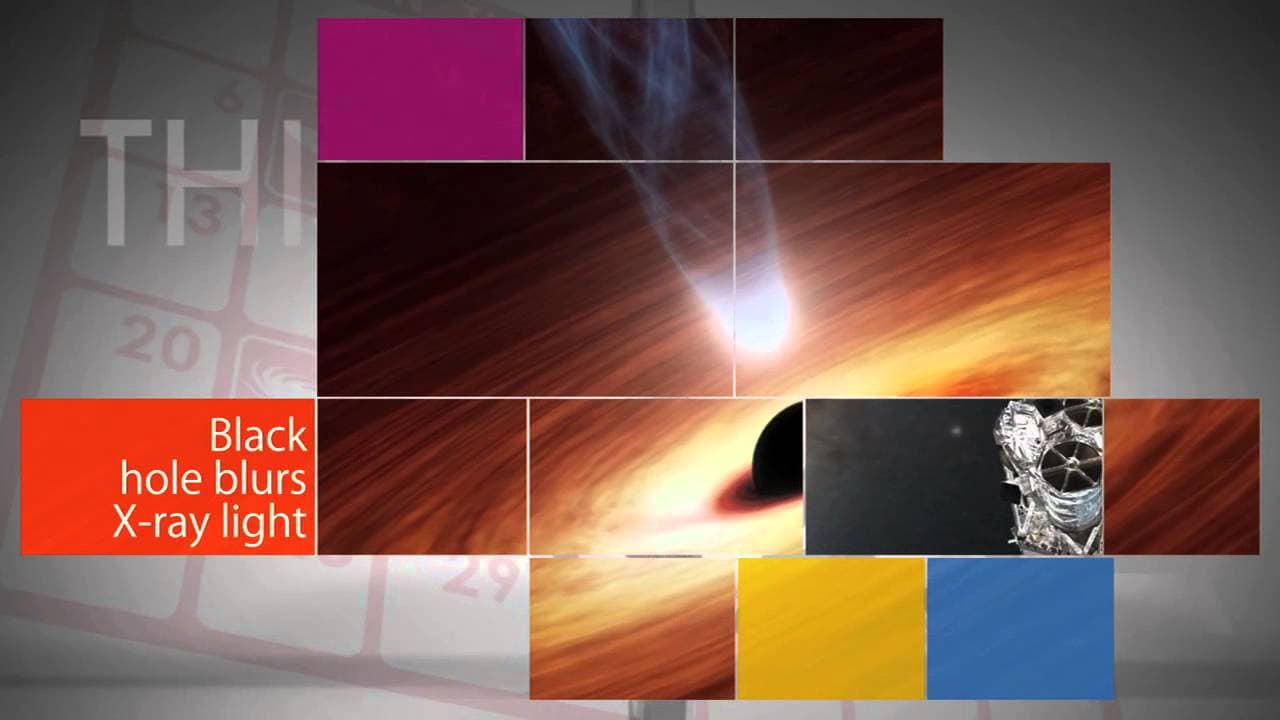
- 📤 NASA's Nuclear Spectroscopic Telescope Array (NuSTAR) provides detailed visualizations of X-ray light distortions caused by the intense gravitational pull of a supermassive black hole.
- 👾 The Stennis Space Center prepares for testing the Space Launch System core stage, utilizing the Main Propulsion Test Article structure previously used for space shuttle propulsion testing.
- 💚 NASA's Marshall Space Flight Center showcases its commitment to environmental sustainability with the opening of a new "green" building.
- 🎟️ The Agency Honor Awards recognize outstanding individuals for their contributions to NASA and its mission.
Install to Summarize YouTube Videos and Get Transcripts
Explore YouTube Video Summarizer or Get YouTube Transcript Extractor
Questions & Answers
Q: What is the purpose of the Orbiting Carbon Observatory-2 (OCO-2)?
The OCO-2 is NASA's dedicated spacecraft for studying atmospheric carbon dioxide and providing valuable data on Earth's carbon cycle.
Q: What did the Automated Transfer Vehicle Georges Lemaitre deliver to the International Space Station?
Georges Lemaitre delivered approximately 7 tons of supplies to the Expedition 40 crew on the International Space Station.
Q: What is a supermoon?
A supermoon occurs when the moon becomes full on the same day as its perigee, the point in the moon's orbit when it is closest to Earth. It results in a larger and brighter-looking moon.
Q: What was the significance of the supermoon observed on August 10?
The supermoon observed on August 10 was the second and largest of the summer, providing a stunning celestial event for observers.
Summary & Key Takeaways
-
The Orbiting Carbon Observatory-2 has successfully reached its final orbit and collected its first data on atmospheric carbon dioxide.
-
The European Space Agency's fifth and final Automated Transfer Vehicle cargo ship called Georges Lemaitre docked to the International Space Station, delivering supplies.
-
A supermoon, the largest of the summer, was observed on August 10.
Read in Other Languages (beta)
Share This Summary 📚
Summarize YouTube Videos and Get Video Transcripts with 1-Click
Try YouTube Summary with ChatGPT & Claude or YouTube Transcript Generator
Explore More Summaries from NASA 📚
Summarize YouTube Videos and Get Video Transcripts with 1-Click
Try YouTube Summary with ChatGPT & Claude or YouTube Transcript Generator