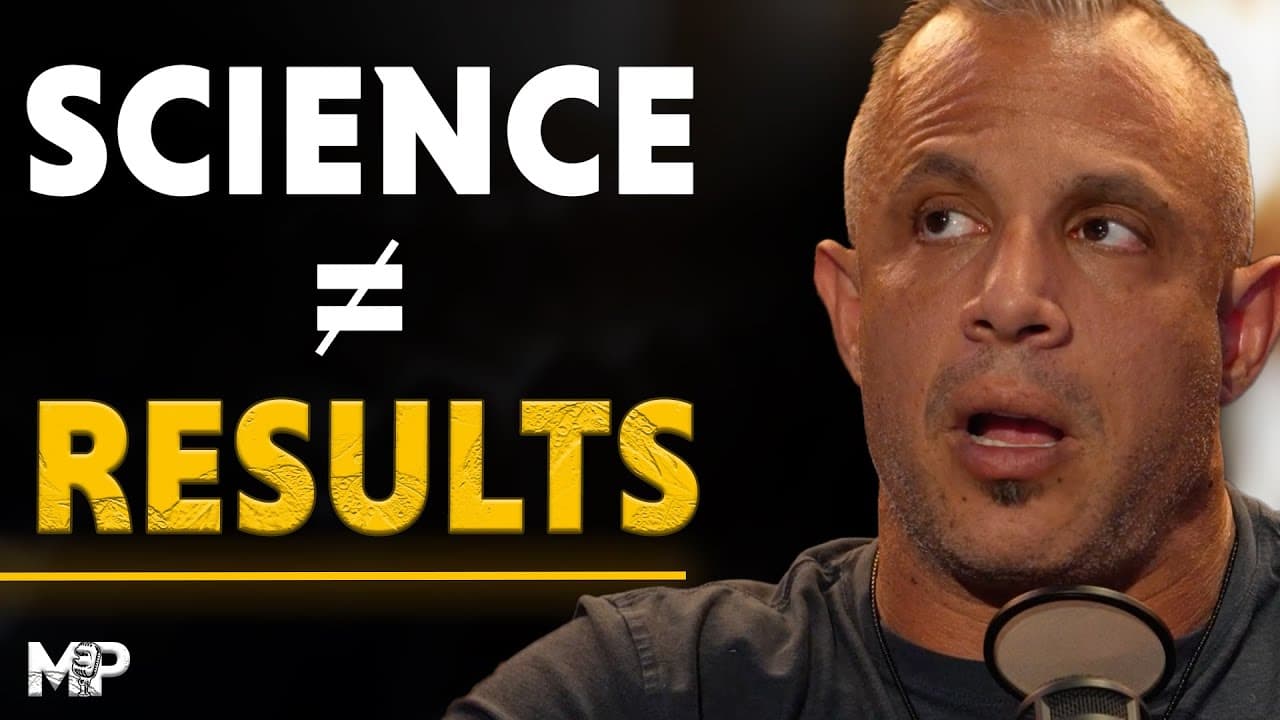
“Science-Based” Lifting Is Killing Your Gains | Mind Pump 2665
TL;DR
This video explains the pitfalls of relying solely on science-based lifting for exercise gains. It emphasizes the importance of combining scientific research with personal experience and anecdotal evidence to achieve optimal results. The discussion critiques the limitations of studies, highlighting the need for experimentation and understanding individual differences in fitness training.
Transcript
These days, there's a lot of studies in regards to exercise, in particular, lifting. You can find a study to tell you which rep range is the best, how many how much you should rest between sets, exercises, everything. But here's the deal. If you follow science-based lifting, that's all you do. You're going to kill your gains. There's a lot of value... Read More
Key Insights
- Relying solely on science-based lifting can limit muscle and strength gains. Combining scientific data with personal experience offers a more comprehensive approach.
- Fitness studies often involve college-aged males, which may not represent the broader population, especially women and older adults.
- Studies are typically short-term, failing to account for long-term adaptation and evolution in fitness training.
- Human psychology and adherence to exercise routines are crucial for long-term success, often overlooked by purely scientific approaches.
- Science-based programs may not be appropriate for everyone. High-intensity training, while effective on paper, may not suit the average person.
- The 'winning' formula from studies may not tell the whole story. Combining different approaches often yields better, more sustainable results.
- Studies often focus on mechanisms like fat oxidation rather than overall outcomes, leading to misleading conclusions about effectiveness.
- Studies may not test all relevant factors, such as functional benefits and psychological adherence, which are crucial for real-world application.
Install to Summarize YouTube Videos and Get Transcripts
Explore YouTube Video Summarizer or Get YouTube Transcript Extractor
Questions & Answers
Q: Why is relying solely on science-based lifting criticized in the video?
The video criticizes relying solely on science-based lifting because it often ignores the valuable insights gained from personal experience and anecdotal evidence. Science-based approaches may not account for individual differences, long-term adaptation, and the psychological aspects of exercise adherence, which are crucial for achieving optimal fitness results.
Q: What are some limitations of fitness studies mentioned in the video?
Fitness studies often have limitations such as short durations, typically 12 to 16 weeks, which do not account for long-term adaptation. They also frequently involve college-aged males, which may not represent the broader population, including women and older adults. These limitations can lead to misleading conclusions about the effectiveness of certain training methods.
Q: How does human psychology play a role in exercise adherence according to the video?
Human psychology is crucial for exercise adherence, as the biggest challenge in fitness is maintaining consistency over time. The video emphasizes that people are more likely to stick with activities they enjoy, and that understanding individual preferences and motivations is essential for creating sustainable exercise routines that people will continue long-term.
Q: Why might science-based programs be inappropriate for some individuals?
Science-based programs, while effective on paper, may not be suitable for everyone due to their high intensity and complexity. The video notes that such programs often require a level of fitness and skill that many people, especially beginners or those with joint issues, do not possess, making them inappropriate for the average person.
Q: What does the video suggest about the 'winning' formula in studies?
The video suggests that the 'winning' formula in studies, such as specific rep ranges or exercise techniques, may not tell the whole story. While certain methods may show superior results in studies, combining different approaches often yields better, more sustainable outcomes by addressing various aspects of fitness, such as strength, mobility, and function.
Q: How do studies sometimes mislead about effectiveness according to the video?
Studies can be misleading by focusing on mechanisms like fat oxidation or muscle activation rather than overall outcomes. For example, while ketogenic diets may show higher fat oxidation, they do not necessarily lead to greater fat loss. The video stresses the importance of looking at end results rather than intermediary processes.
Q: What factors are often not tested in fitness studies?
Fitness studies often do not test factors such as functional benefits, psychological adherence, and overall life quality, which are crucial for real-world application. While studies may show similar hypertrophy results for machines and free weights, they may not account for the additional functional and mobility benefits provided by free weights.
Q: What does the video recommend for optimizing fitness training?
The video recommends a balanced approach that combines scientific data with practical experience to optimize fitness training. It suggests considering individual differences, long-term adaptation, and psychological factors, and being open to experimenting with different methods to find what works best for each person, rather than strictly adhering to scientific findings.
Summary & Key Takeaways
-
The video critiques the exclusive reliance on science-based lifting, emphasizing the need to integrate scientific findings with personal experience to achieve better fitness results. It highlights the limitations of studies, such as short durations and narrow demographics, which often do not represent the average person.
-
Key points include the importance of human psychology in exercise adherence, the inappropriateness of some scientific programs for the general population, and the need to consider long-term adaptation in fitness training. The hosts argue that real-world experience often provides insights that studies cannot.
-
The discussion also addresses the limitations of scientific studies, such as their inability to test all relevant factors and their focus on short-term outcomes. The hosts advocate for a balanced approach that combines scientific data with practical experience to optimize fitness training and overall health.
Read in Other Languages (beta)
Share This Summary 📚
Summarize YouTube Videos and Get Video Transcripts with 1-Click
Try YouTube Summary with ChatGPT & Claude or YouTube Transcript Generator
Explore More Summaries from Mind Pump Show 📚





Summarize YouTube Videos and Get Video Transcripts with 1-Click
Try YouTube Summary with ChatGPT & Claude or YouTube Transcript Generator