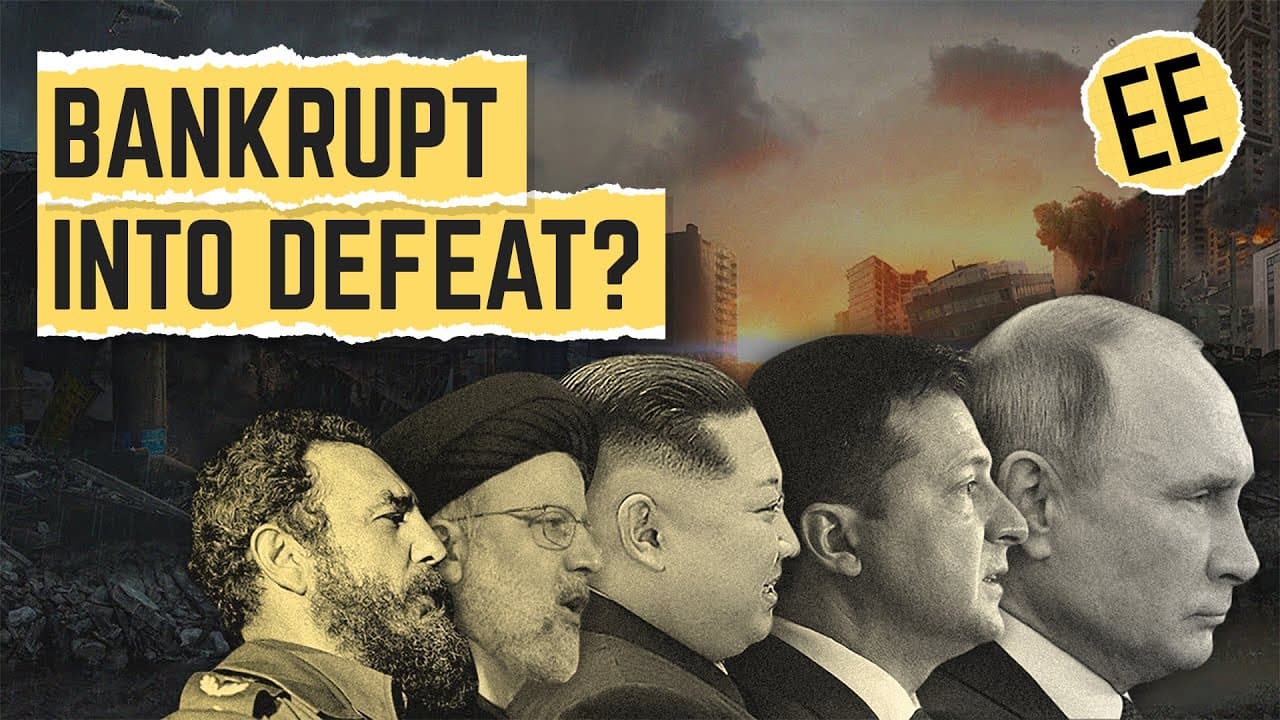
Do Sanctions Work? | Economics Explained
TL;DR
Sanctions can harm both target and imposing countries.
Transcript
So one thing I like to waste a lot of time doing while I should be making videos is watching nature documentaries. There is one in particular that I have been thinking about a lot recently which is a story about a colony of honey bees defending their hive from a hornet. Since these particular bees didn’t have stingers or any other kind of offensive... Read More
Key Insights
- Sanctions are diplomatic actions to protect international law, often seen as alternatives to military actions, but they can have severe economic consequences.
- Economic sanctions may include trade bans, currency restrictions, and asset freezes, affecting both the target and imposing countries economically.
- Sanctions can impact global supply chains, leading to shortages and economic hardship in countries not directly involved in the conflict.
- The effectiveness of sanctions depends on various factors, including the target country's isolation, preparation, and economic independence.
- Sanctions can fail if dictators are willing to isolate their countries and endure economic pain, as seen in historical examples like Iraq.
- The current sanctions on Russia are among the most aggressive ever placed on a major economy, affecting global food and energy supplies.
- Sanctions can lead to unintended consequences, such as asset seizures and disruptions in industries like aviation and oil.
- While sanctions aim to deter aggression, their long-term impact on global trade and economics could be significant, potentially reducing free trade.
Install to Summarize YouTube Videos and Get Transcripts
Explore YouTube Video Summarizer or Get YouTube Transcript Extractor
Questions & Answers
Q: What are economic sanctions?
Economic sanctions are diplomatic actions taken to restrict or ban trade, currency flows, investments, and corporate governance with a target country. They aim to protect international law and can be alternatives to military actions. Sanctions can have severe economic impacts on both the target and imposing countries, affecting global supply chains and economies.
Q: How do sanctions affect global supply chains?
Sanctions can disrupt global supply chains by restricting trade and financial transactions. For example, sanctions on Russia have impacted the global supply of food and energy, as Russia is a major supplier. This can lead to shortages and economic hardship in countries not directly involved in the conflict, affecting global economies.
Q: What factors determine the effectiveness of sanctions?
The effectiveness of sanctions depends on the target country's isolation, economic independence, and preparation. Countries that are more isolated, less democratic, and have had less time to prepare are more susceptible to sanctions. However, if a country's leadership is willing to endure economic pain, sanctions may not achieve their intended goals.
Q: Can sanctions lead to unintended consequences?
Yes, sanctions can lead to unintended consequences, such as asset seizures and disruptions in industries like aviation and oil. For instance, Russian airlines may seize foreign-owned planes due to financial restrictions, affecting global aviation companies. Additionally, sanctions can lead to increased oil prices due to supply disruptions.
Q: Why might sanctions not achieve their intended goals?
Sanctions might not achieve their intended goals if the target country's leadership is willing to isolate the country and endure economic hardship. Historical examples, like Iraq, show that dictators can sometimes ignore sanctions, causing prolonged suffering for their populations without achieving the desired political change.
Q: What are the current sanctions on Russia aiming to achieve?
The current sanctions on Russia aim to deter aggression and potentially cause a regime change. They include trade bans, asset freezes, and financial restrictions, impacting Russia's economy and global supply chains. However, the effectiveness of these sanctions in achieving their goals is uncertain, given Russia's economic independence and preparation.
Q: How do sanctions impact global trade and economics?
Sanctions can have significant long-term impacts on global trade and economics by reducing free trade and increasing economic isolation. Countries may pursue self-sustainability policies, moving away from mutually beneficial trade relationships. This could hinder global wealth creation, which has been driven by free trade in the last century.
Q: What positive outcomes could result from sanctions?
A positive outcome of sanctions could be that countries with aggressive ambitions might reconsider their actions, seeing the rapid international response and economic consequences. This could deter future acts of aggression and promote global stability, as countries weigh the risks of jeopardizing their economies for territorial gains.
Summary & Key Takeaways
-
Sanctions are diplomatic measures used to protect international law, but they can have severe economic impacts on both target and imposing countries. They include trade bans and asset freezes, affecting global supply chains and economies.
-
The effectiveness of sanctions varies based on the target country's economic independence and preparation. Historical examples show that dictators can sometimes endure sanctions, causing prolonged suffering for their populations.
-
The current sanctions on Russia are unprecedented in scope, impacting global food and energy supplies. While they aim to deter aggression, they could have long-term consequences for global trade and economics.
Read in Other Languages (beta)
Share This Summary 📚
Summarize YouTube Videos and Get Video Transcripts with 1-Click
Try YouTube Summary with ChatGPT & Claude or YouTube Transcript Generator
Explore More Summaries from Economics Explained 📚





Summarize YouTube Videos and Get Video Transcripts with 1-Click
Try YouTube Summary with ChatGPT & Claude or YouTube Transcript Generator