Predator-Prey Equations
TL;DR
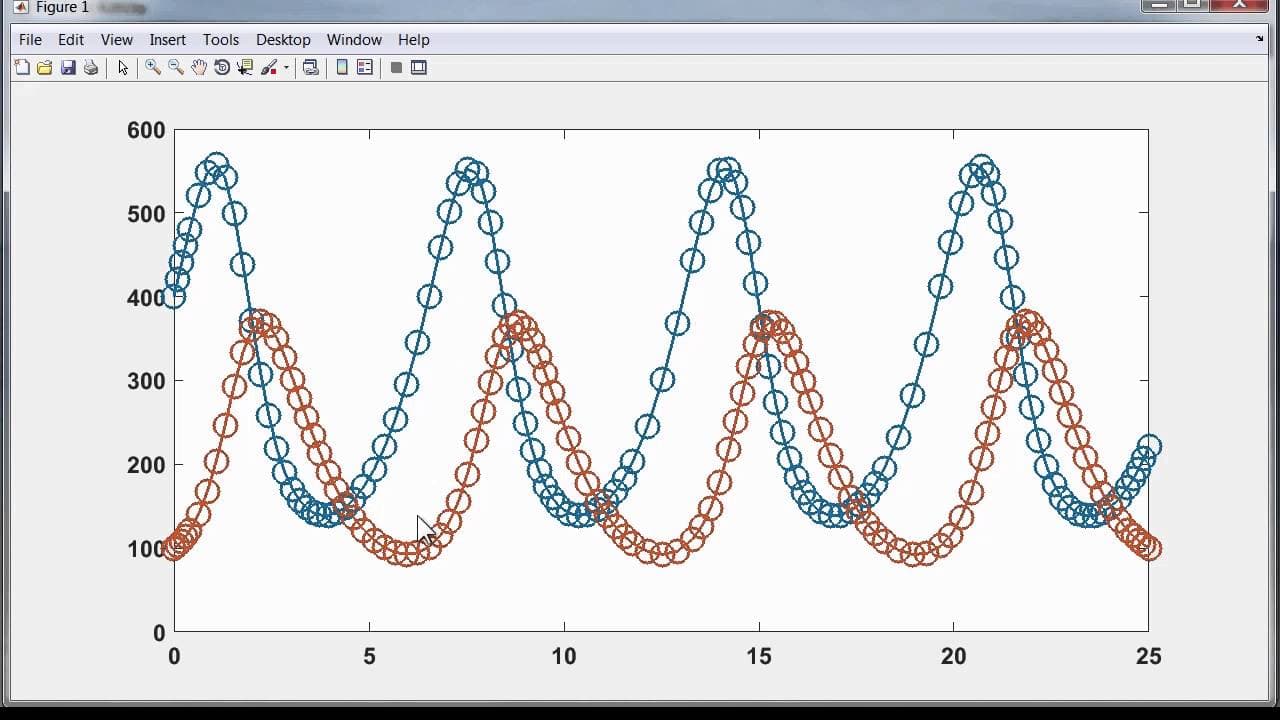
The Lotka-Volterra model is a mathematical model used to understand the relationship between predators and prey in an ecosystem.
Transcript
CLIVE MOLER: The Lotka-Volterra Altera predator prey equations are the granddaddy of all models involvement competition between species. They are the foundation of fields like mathematical ecology. Think of the two species as rabbits and foxes or moose and wolves or little fish in big fish. Y1 represents the prey, who would live peacefully by thems... Read More
Key Insights
- 🛟 The Lotka-Volterra model serves as the foundation for mathematical ecology and is widely used to understand predator-prey dynamics.
- 🍉 The model incorporates exponential growth and decay terms as well as non-linear interactions between the prey and predator populations.
- 😚 The behavior of the solution in the model depends on the initial conditions, with solutions being periodic when the conditions are close to the critical point.
- 🛰️ Periodic solutions in the model can be visualized using MATLAB and can exhibit characteristics such as ellipse-like orbits.
- 🍵 The determination of the period in the model can be achieved through event handling techniques in numerical computations.
- ❓ The Lotka-Volterra model provides insights into the relationships between predators and prey in various ecosystems, despite its idealized nature.
- 👤 Programs and graphical user interfaces, such as Predator Prey in MATLAB, can be used to explore and visualize the dynamics of the model.
Install to Summarize YouTube Videos and Get Transcripts
Explore YouTube Video Summarizer or Get YouTube Transcript Extractor
Questions & Answers
Q: What are the key components of the Lotka-Volterra model?
The Lotka-Volterra model includes terms for exponential growth and decay for the prey and predator populations and non-linear terms that consider the interaction between the two species.
Q: How are the growth of prey and decay of predators limited in the model?
The growth of prey is limited by the presence of predators, while the decay of predators becomes limited when the prey population reaches a certain threshold.
Q: Are the Lotka-Volterra equations applicable to real-world scenarios?
The Lotka-Volterra model is an idealized version of predator-prey relationships in nature, and while it may not perfectly represent real ecosystems, it provides insights into the dynamics of such interactions.
Q: How can the periodicity of the predator-prey relationship be determined?
The period of a periodic solution in the Lotka-Volterra model can be determined through numerical computation, capturing the solution over multiple periods, or by employing event handling techniques during integration.
Summary & Key Takeaways
-
The Lotka-Volterra model describes the interaction between two species, one being the prey and the other being the predator.
-
The model includes exponential growth for the prey population in the absence of predators and exponential decay for the predator population in the absence of prey.
-
The model also incorporates non-linear terms that limit the growth of the prey and the decay of the predator based on the presence of each other.
Read in Other Languages (beta)
Share This Summary 📚
Summarize YouTube Videos and Get Video Transcripts with 1-Click
Try YouTube Summary with ChatGPT & Claude or YouTube Transcript Generator
Explore More Summaries from MIT OpenCourseWare 📚


Summarize YouTube Videos and Get Video Transcripts with 1-Click
Try YouTube Summary with ChatGPT & Claude or YouTube Transcript Generator