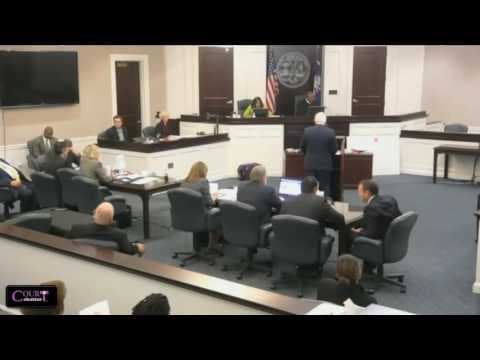
Steven Jones NAU Shooter Hearing Part 2 02/19/16

TL;DR
Defense argues for defendant's innocence based on self-defense, while prosecution highlights strong evidence of guilt.
Transcript
and courage and these boys spent two and a half years here working hard and doing what they were supposed to the shooter was here for six weeks and I think of Colin with standing here today I know I promise you he would not say I wish I had a gun that night so I could have fought back he would have said the Stephen Jones you were you're here for si... Read More
Key Insights
- 👍 Defense emphasizes self-defense and innocence until proven guilty.
- 💪 Prosecution presents strong evidence of the defendant's actions on the night of the incident.
- 💀 Court balances the need for assurance of the defendant's presence at trial with the potential danger to the community.
- ✈️ Different perspectives on the defendant's history and potential flight risk are discussed.
- ❓ Consideration of bond amount and conditions for the defendant's release.
- 😫 Importance of joint scheduling memorandum for setting clear deadlines in the legal process.
- ❓ The role of evidence, witness interviews, and expert reports in the legal proceedings.
Install to Summarize YouTube Videos and Get Transcripts
Explore YouTube Video Summarizer or Get YouTube Transcript Extractor
Questions & Answers
Q: What is the defense's argument regarding the defendant's actions on the night of the incident?
The defense argues that the defendant acted in self-defense, pointing to his lack of prior history of violence and innocence until proven guilty. They emphasize that his actions were a response to being attacked.
Q: What evidence does the prosecution present against the defendant?
The prosecution highlights the distance the defendant traveled to retrieve a gun and shoot four people without a prior physical confrontation. They argue that the evidence points to a lack of self-defense in the situation.
Q: How does the court consider the potential danger to the community posed by the defendant?
The court weighs the potential danger of the defendant to the community, citing the loss of life and near loss of life in the incident. They express concern about the defendant's actions despite no prior history of violence.
Q: What factors does the court consider in determining the defendant's bail conditions?
The court considers the strength of the case against the defendant, the potential penalty he faces, the likelihood of conviction, and the impact of the incident on the community. They emphasize the need for assurance of the defendant's presence at trial and the safety of the community.
Summary & Key Takeaways
-
Defense claims defendant acted in self-defense, emphasizing lack of prior violent history and innocence until proven guilty.
-
Prosecution presents strong evidence against the defendant, citing distance traveled to retrieve gun and absence of physical confrontation.
-
Court considers the potential danger to the community and flight risk, balancing the need for assurance of presence at trial.
Read in Other Languages (beta)
Share This Summary 📚
Summarize YouTube Videos and Get Video Transcripts with 1-Click
Try YouTube Summary with ChatGPT & Claude or YouTube Transcript Generator
Explore More Summaries from Law&Crime Network 📚




Summarize YouTube Videos and Get Video Transcripts with 1-Click
Try YouTube Summary with ChatGPT & Claude or YouTube Transcript Generator