Digital Identity for Corporates - Diffusion Digital April 2021
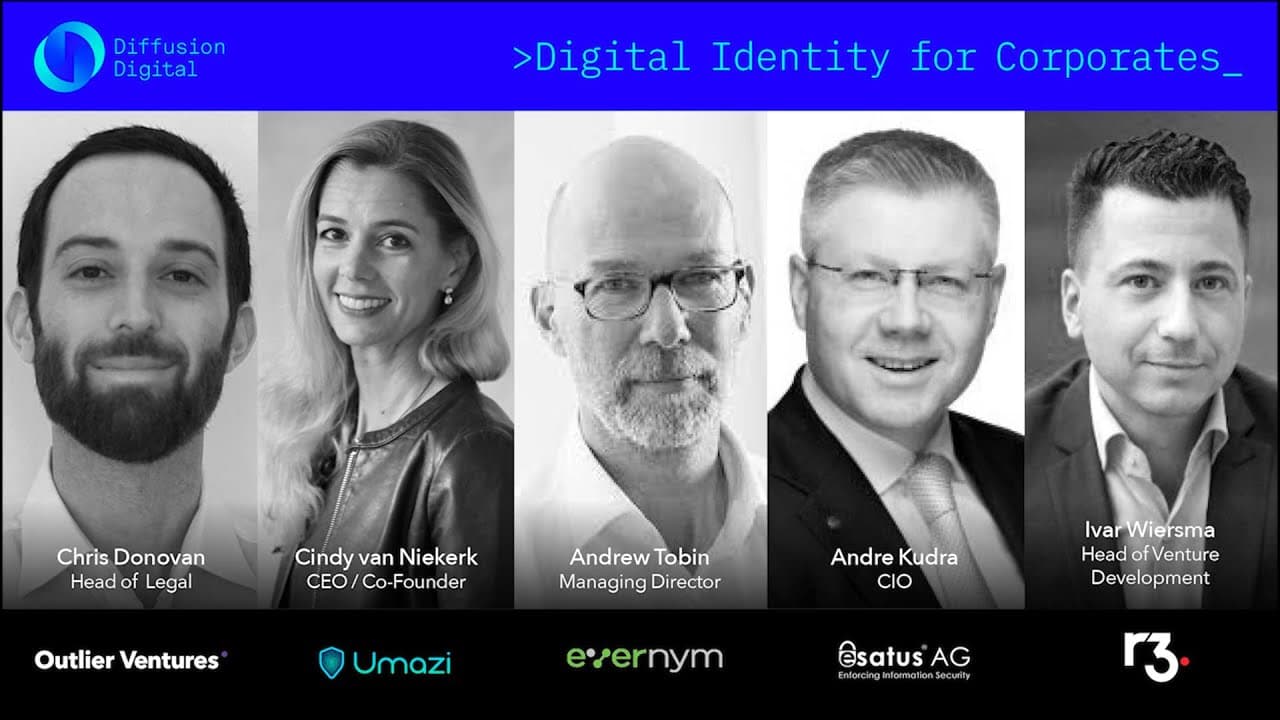
TL;DR
Digital identity can revolutionize business processes, offering efficient, trust-based interactions, unlocking new revenue streams, and addressing regulatory challenges.
Transcript
if you can actually trust who you're dealing with at the other end of a remote connection then you're going to start being being able to just um transform huge numbers of business processes that make things happen much much more quickly and we're focused on a sort of horizontal enabling layer welcome everyone um to day two of our diffusion event co... Read More
Key Insights
- 👨💼 Digital identity enhances trust, efficiency, and revenue streams in business processes.
- ❓ Challenges include regulatory compliance, privacy concerns, and legacy system integration.
- 📒 Incentivization mechanisms drive adoption, while decentralized ledger technology ensures secure data exchange.
- 🤳 Self-sovereign identity principles empower individuals to control and selectively share their data securely.
- ❓ Transitioning from legacy systems to digital identity involves overcoming regulatory, technical, and privacy challenges.
- 👶 Adoption of digital identity can streamline operations, improve customer experiences, and drive new revenue opportunities.
- 🪡 Data protection and privacy are central to digital identity, emphasizing the need for secure and decentralized storage solutions.
Install to Summarize YouTube Videos and Get Transcripts
Explore YouTube Video Summarizer or Get YouTube Transcript Extractor
Questions & Answers
Q: How does digital identity impact traditional business processes?
Digital identity streamlines processes by enabling secure, trust-based interactions, improving customer experiences, and driving operational efficiencies.
Q: What challenges need to be addressed for widespread adoption of digital identity?
Challenges such as regulatory compliance, privacy issues, legacy system integration, and incentivization mechanisms need to be overcome for seamless adoption.
Q: Can digital identity bridge the gap between personal data protection and technological advancements?
Yes, by using decentralized ledger technology and personal data storage at the edge, digital identity ensures privacy while enabling secure data exchange.
Q: How does digital identity give individuals control over their data?
Through self-sovereign identity principles, individuals can control and selectively share their data, empowering them to dictate who accesses their information.
Summary & Key Takeaways
-
Digital identity is a transformative technology that offers trust-based interactions and efficient processes.
-
It can revolutionize various sectors like banking, healthcare, and travel by enabling secure credential verification.
-
Challenges include regulatory buy-in, privacy concerns, and the need to transition from legacy systems.
Read in Other Languages (beta)
Share This Summary 📚
Summarize YouTube Videos and Get Video Transcripts with 1-Click
Try YouTube Summary with ChatGPT & Claude or YouTube Transcript Generator
Explore More Summaries from Outlier Ventures 📚






Summarize YouTube Videos and Get Video Transcripts with 1-Click
Try YouTube Summary with ChatGPT & Claude or YouTube Transcript Generator