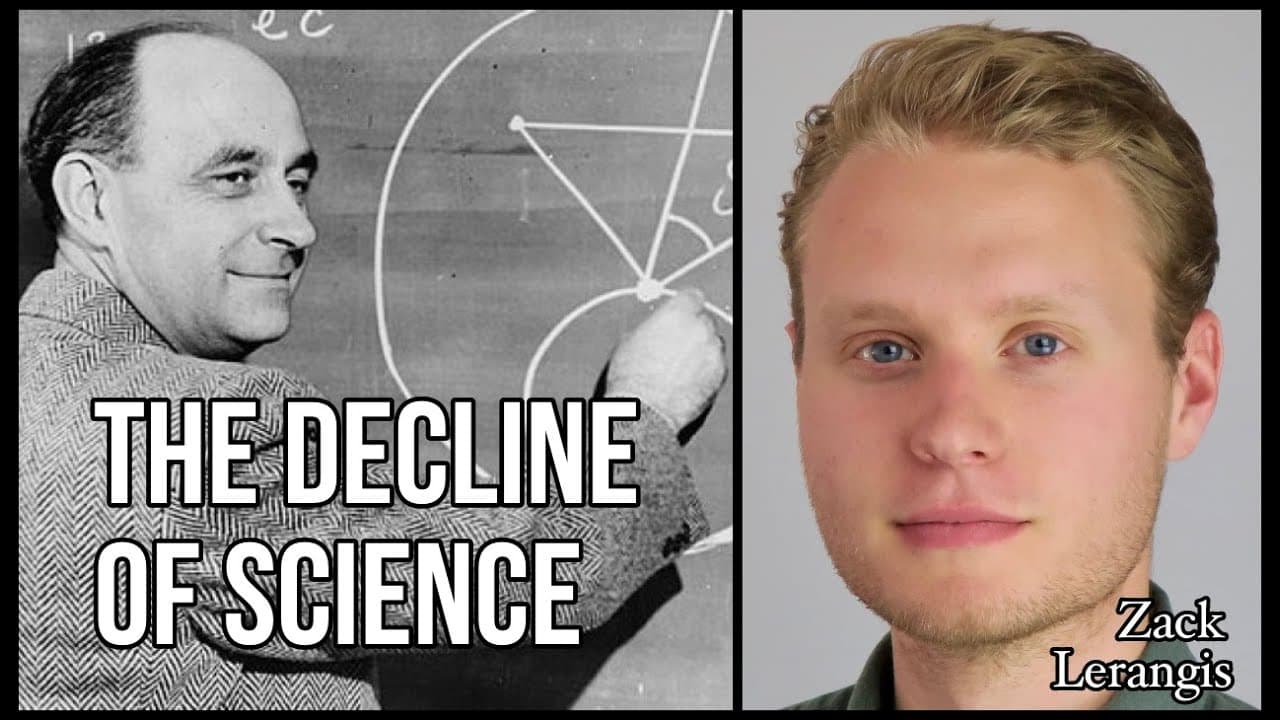
The Decline Of Academic Science
TL;DR
Academic science faces issues like replication crisis, PhD overproduction, and stagnation in breakthroughs due to post-WWII success.
Transcript
something seems to be wrong with academic science there's the ongoing replication crisis there's also the overproduction of PhDs which leads to widespread dissatisfaction and poor job prospects and there's also the stagnation in fields that were once once very dynamic like theoretical physics when you compare this to the glory days of academic scie... Read More
Key Insights
- 😀 Academic science faces replication crisis, PhD overproduction, and stagnation in breakthroughs.
- 🤑 Post-WWII influx of money and talent strained traditional structures in science.
- 😚 Physics in the early 20th century had close collaborations and mentorship, unlike today’s academic science.
- 🔬 Figure like Leo Szilard operated independently, showcasing a stark contrast to academic science today.
- 🔬 Bureaucratization and credential-reliance in academic science hinder mentorship and advancement.
- 🥺 Success of an institution can lead to its downfall if not scaled mindfully.
- 👨🔬 Emphasizing mentorship, preserving traditions, and balancing research with teaching can help prevent the decline of academic science.
Install to Summarize YouTube Videos and Get Transcripts
Explore YouTube Video Summarizer or Get YouTube Transcript Extractor
Questions & Answers
Q: What factors have contributed to the decline of academic science post-WWII?
The influx of money and talent post-WWII strained traditional structures, leading to issues like replication crisis, PhD overproduction, and a lack of breakthroughs in academic science today.
Q: How did physics function differently in the early 20th century compared to academic science today?
Physics in the early 20th century had a small, tightly knit community with close collaborations and mentorship, unlike today’s more bureaucratized and credential-focused academic science.
Q: How did figures like Leo Szilard operate in academic science during their time?
Figures like Szilard operated independently, funding their research through personal connections and collaborations, a stark contrast to the bureaucratic and credential-reliant system of academic science today.
Q: How can the decline of academic science be avoided?
To avoid decline, institutions must scale in a way that preserves functionality, maintain mentorship traditions, and prioritize teaching alongside research to ensure the quality of future generations.
Summary & Key Takeaways
-
Academic science suffers from replication crisis, PhD overproduction, and stagnation in breakthroughs.
-
Post-WWII influx of money and talent strained traditional structures in science.
-
Bureaucratization, lack of mentorship, and focus on research affect the quality of academic science today.
Read in Other Languages (beta)
Share This Summary 📚
Summarize YouTube Videos and Get Video Transcripts with 1-Click
Try YouTube Summary with ChatGPT & Claude or YouTube Transcript Generator
Explore More Summaries from Samo Burja 📚



Summarize YouTube Videos and Get Video Transcripts with 1-Click
Try YouTube Summary with ChatGPT & Claude or YouTube Transcript Generator