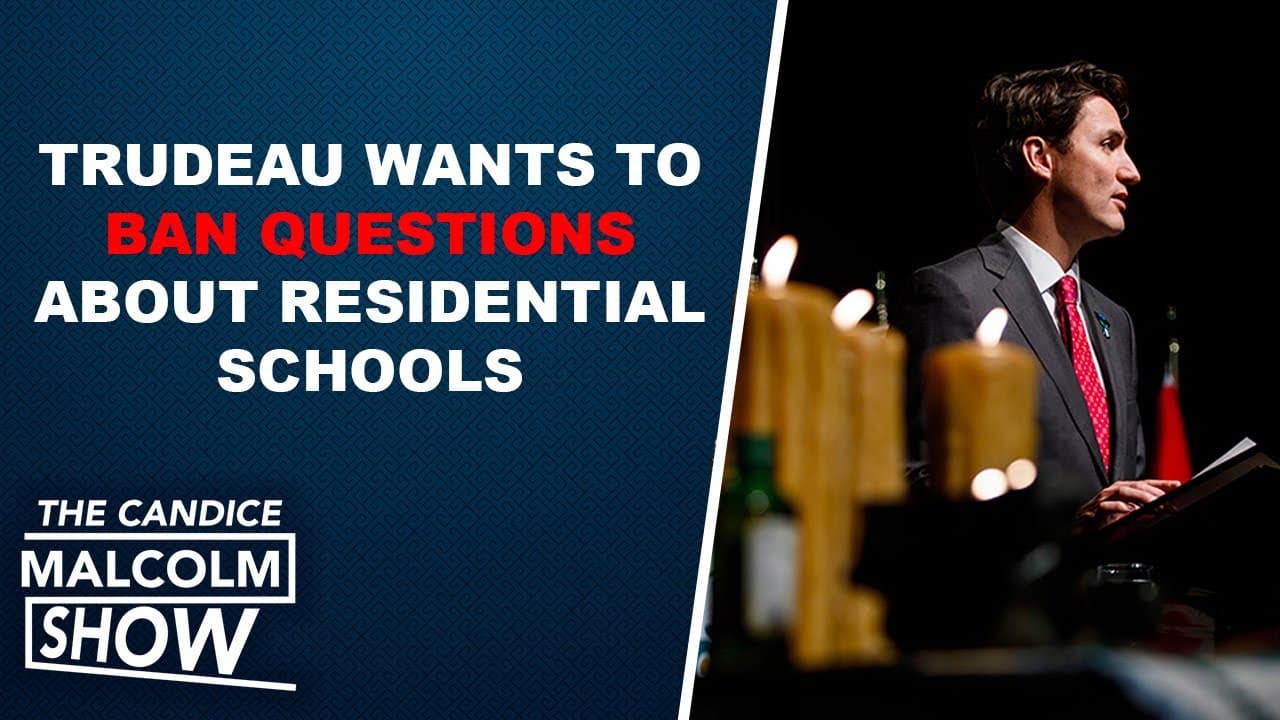
This video may soon be ILLEGAL
TL;DR
Trudeau's government is considering banning critical discussions on residential schools and potentially criminalizing denialism.
Transcript
the Trudeau government would like to ban critical thinking they'd like to criminalize uncomfortable questions surrounding the media's frankly absurd narrative when it comes to Canada's residential school programs claims and narratives by the way that have been completely debunked and discredited over the past few years well if the trudo government ... Read More
Key Insights
- 👨🏫 The Trudeau government is considering amending the criminal code to address residential school denialism, motivated by Indigenous leaders' concerns.
- 🥶 Critics argue that criminalizing denialism could limit free speech rights, placing Canada at risk of undermining democratic values.
- 🗂️ Reports suggest a notable divide between governmental proposals and public sentiment, reflecting a broader societal debate on historical accountability.
- 👨🏫 The narrative surrounding residential schools remains contentious, with ongoing disputes about definitions of accountability and denialism.
- 🤨 The interim report by Murray raises questions about the sufficiency of evidence presented regarding the number of victims and the implications for historical narratives.
- 💖 Attention to the emotional impact of historical abuses has sparked calls for action, but practical implementation of laws remains complex and controversial.
- 😨 The relationship between journalism and government legislation is being tested, as journalists fear repercussions for questioning official narratives.
Install to Summarize YouTube Videos and Get Transcripts
Explore YouTube Video Summarizer or Get YouTube Transcript Extractor
Questions & Answers
Q: What is the proposed legislation by the Trudeau government about?
The proposed legislation aims to criminalize the denial or minimization of abusive practices at residential schools in Canada. This initiative originates from Kimberly Murray, an advisor to the government, who has suggested amendments to the Criminal Code to address what is termed 'residential school denialism,' equating such denial with inciting hate against indigenous people.
Q: Why did Kimberly Murray emphasize the need for criminalizing discussions around residential schools?
Kimberly Murray highlighted a concerning rise in denialism regarding the residential school system, stating it causes pain to survivors and families. She argued that denying the abuses and the legitimacy of survivors' accounts is harmful and should be curtailed legally, similar to laws against Holocaust denialism.
Q: How might the proposed legislation impact free speech in Canada?
If enacted, the legislation could significantly limit free speech by criminalizing any questioning or critical commentary about the narratives surrounding residential schools. This poses a risk of suppressing legitimate journalistic inquiry and public debate, contradicting foundational elements of democratic discourse in Canada.
Q: What are the implications of defining 'denialism' broadly in the proposed legislation?
A broad definition of denialism could lead to criminalizing anyone who questions the established narratives about residential schools, potentially encompassing skeptics and journalists. This could deter open discussions and critical engagement with historical accounts and foster an environment where differing opinions are unwelcome.
Q: What was the context that led to Murray's report and the push for this legislation?
The climate surrounding the proposed legislation intensified in 2021 after the discovery of unmarked graves believed to belong to children who attended residential schools. Murray's report followed ongoing discussions about the traumatic legacy of these institutions, which have drawn significant public and media scrutiny in recent years.
Q: How have lawmakers responded to the proposal to criminalize denialism?
Some lawmakers have expressed openness to considering the options put forth by Murray regarding potential prohibition of denialism. However, specific commitments to legislate have yet to be made, as the final report containing detailed recommendations is still pending release.
Q: What is the general sentiment among Indigenous leaders regarding this legislation?
Reports indicate that many Indigenous leaders support the proposed legislation to criminalize discussions that deny or minimize the impact of residential schools. They believe that addressing denialism is crucial for healing and recognition of historical injustices faced by Indigenous communities.
Q: What potential challenges might arise from implementing such legislation?
The main challenges would involve balancing the protection of free speech with the aim of addressing historical injustices. This could lead to legal disputes over definitions of denialism, the implications for academic and journalistic freedoms, and the overall impact on public discourse about sensitive historical issues.
Summary & Key Takeaways
-
The Trudeau government is evaluating a proposal to criminalize discussions that deny or minimize the atrocities committed at residential schools, as suggested by advisor Kimberly Murray. This has raised concerns about freedom of speech.
-
Critics of the proposals argue that such legislation would stifle critical questions surrounding the narratives about residential schools and suppress journalistic inquiry, fundamentally undermining Canadian democratic values.
-
The debate is ongoing, with indigenous leadership reportedly supporting the legislation, which further complicates discussions about history and accountability in relation to residential schools in Canada.
Read in Other Languages (beta)
Share This Summary 📚
Summarize YouTube Videos and Get Video Transcripts with 1-Click
Try YouTube Summary with ChatGPT & Claude or YouTube Transcript Generator
Explore More Summaries from True North 📚


Summarize YouTube Videos and Get Video Transcripts with 1-Click
Try YouTube Summary with ChatGPT & Claude or YouTube Transcript Generator