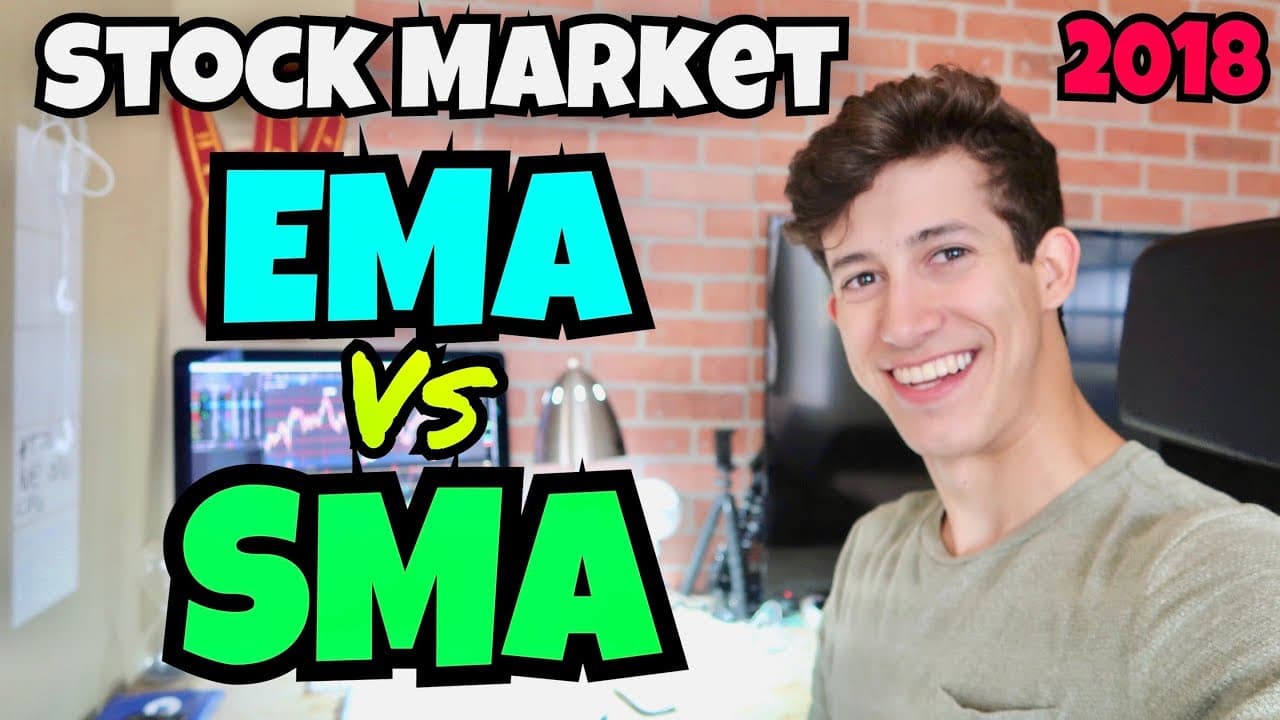
The Difference Between EMA & SMA Indicators | Investing 101
TL;DR
Explanation of EMA and SMA indicators for day trading and swing trading strategies, emphasizing patterns and confirmations.
Transcript
what's good on you guys at 20 protected solutions hope that you guys are all having an amazing Tuesday I do apologize first of all for the late upload but I'm gonna get straight to the point I'm gonna try to make this video as easy as possible it has been a very requested video within our type of solutions community first of all for those that don'... Read More
Key Insights
- 🥳 EMA reacts quicker than SMA, ideal for day trading.
- 💦 SMA works better for swing trades due to its slower movement.
- 🎚️ EMA and SMA provide support and resistance levels for trend confirmation.
- 🙊 Patterns like cup formations or peaks can be understood using EMA and SMA indicators.
- ⌛ EMA and SMA are adaptable to various market conditions and different time frames.
- 🔨 EMA and SMA indicators should not be used in isolation but in conjunction with other analysis tools.
- 📔 Consistent profits are achievable by following patterns, confirmations, and covering profits timely.
Install to Summarize YouTube Videos and Get Transcripts
Explore YouTube Video Summarizer or Get YouTube Transcript Extractor
Questions & Answers
Q: What is the difference between EMA and SMA indicators?
The EMA indicator reacts quicker, making it suitable for day trades, while the SMA moves slower and is better for swing trades.
Q: How are EMA and SMA indicators used for intraday plays?
The EMA acts as a resistance or support level depending on the trend, while the SMA indicates consolidation or reversals.
Q: Can EMA and SMA indicators be applied to OTC stocks?
EMA and SMA indicators can be utilized for OTC stocks, but it's crucial to consider volatility and news catalysts for successful trading.
Q: How do EMA and SMA indicators assist in identifying patterns like cup formations or peaks?
EMA and SMA indicators act as reference points for understanding trend directions, support, and resistance levels in various market conditions.
Summary & Key Takeaways
-
Explains the difference between EMA and SMA indicators.
-
Demonstrates how to use EMA and SMA for both day trading and swing trading.
-
Emphasizes the importance of patterns, confirmations, support, and resistance levels.
Read in Other Languages (beta)
Share This Summary 📚
Summarize YouTube Videos and Get Video Transcripts with 1-Click
Try YouTube Summary with ChatGPT & Claude or YouTube Transcript Generator
Explore More Summaries from Ricky Gutierrez 📚

Summarize YouTube Videos and Get Video Transcripts with 1-Click
Try YouTube Summary with ChatGPT & Claude or YouTube Transcript Generator