Which Seafood Is Better for the Environment: Farmed or Wild Caught?
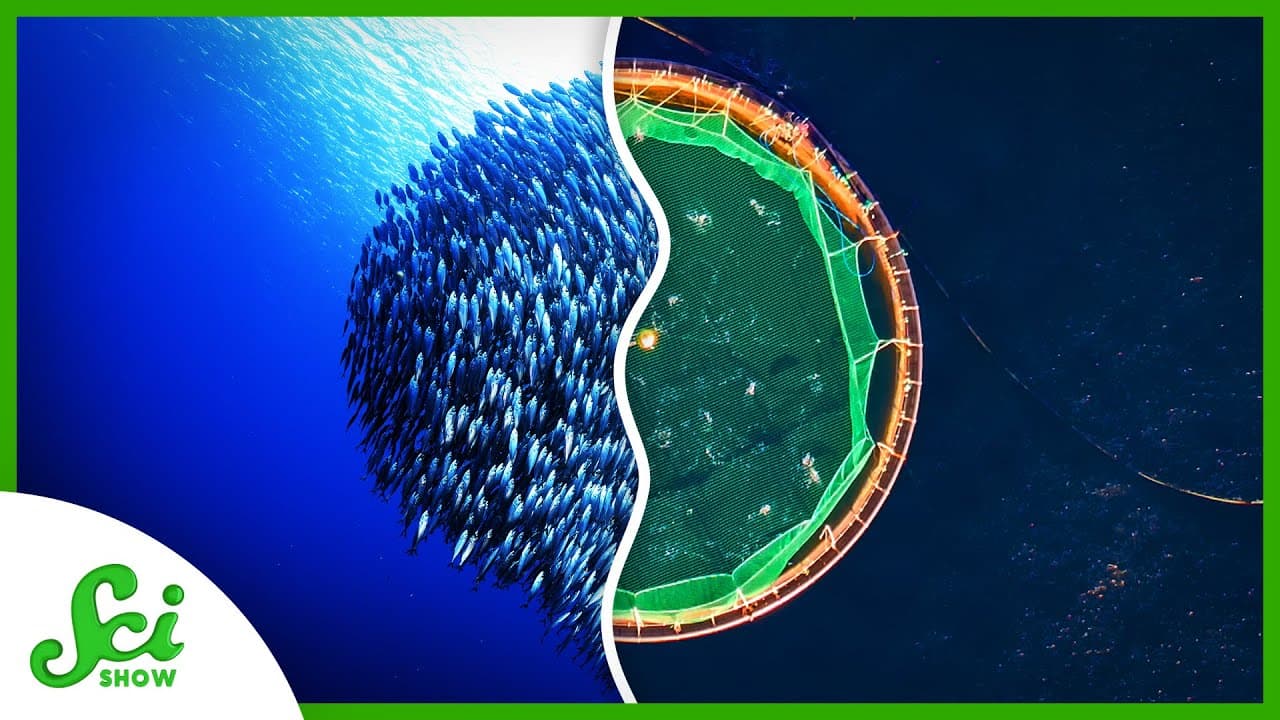
TL;DR
Fish farming and wild-caught fishing both have environmental impacts, with pros and cons for each method.
Transcript
[♪ INTRO] Much of the world’s population depends on fish as a source of protein, and that demand is only growing. But lakes, rivers, and oceans are already overfished, and many fisheries can’t produce as much as they used to. Which means that fish farming, also known as aquaculture, is going to need to ramp up to take the pressures off of wild... Read More
Key Insights
- 🐡 Wild-caught fish have lower greenhouse gas emissions but can harm ecosystems through methods like bottom trawling.
- 🥺 Fish farming is more resource-efficient but may lead to issues like disease outbreaks and habitat destruction.
- 😒 Aquaculture practices are evolving with improvements in containment, antibiotic use, and waste management.
- 💄 Sustainable seafood choices can be made by learning about different fisheries and making informed decisions.
- 💁 Programs like Monterey Bay Aquarium Seafood Watch provide information to help consumers choose more sustainable seafood options.
Install to Summarize YouTube Videos and Get Transcripts
Explore YouTube Video Summarizer or Get YouTube Transcript Extractor
Questions & Answers
Q: What are the environmental impacts of wild-caught fish?
Wild-caught fish have lower greenhouse gas emissions but can harm ecosystems through methods like bottom trawling, leading to bycatch of unwanted species and depleted populations.
Q: How does fish farming contribute to sustainability?
Fish farming can be more resource-efficient than other protein sources, but issues like disease outbreaks and habitat destruction need to be addressed for sustainable practices.
Q: What are the concerns regarding fish farming practices?
Fish farming can lead to escaped farmed fish competing with wild populations, nutrient buildup in water causing algal blooms, and reliance on wild-caught fish as feed for farmed carnivorous species.
Q: How can consumers make more sustainable seafood choices?
Consumers can learn about different fisheries through programs like Monterey Bay Aquarium Seafood Watch to make informed decisions about both wild-caught and farmed fish.
Summary & Key Takeaways
-
The demand for fish as a protein source is increasing, leading to concerns about overfishing.
-
Wild-caught fish have lower greenhouse gas emissions but can harm ecosystems through methods like bottom trawling.
-
Fish farming can be more efficient in terms of resource use but may lead to issues like disease outbreaks and habitat destruction.
Read in Other Languages (beta)
Share This Summary 📚
Summarize YouTube Videos and Get Video Transcripts with 1-Click
Try YouTube Summary with ChatGPT & Claude or YouTube Transcript Generator
Explore More Summaries from SciShow 📚


Summarize YouTube Videos and Get Video Transcripts with 1-Click
Try YouTube Summary with ChatGPT & Claude or YouTube Transcript Generator