Here’s How The USA Won The Cold War - Their Hidden Gimmicks
TL;DR
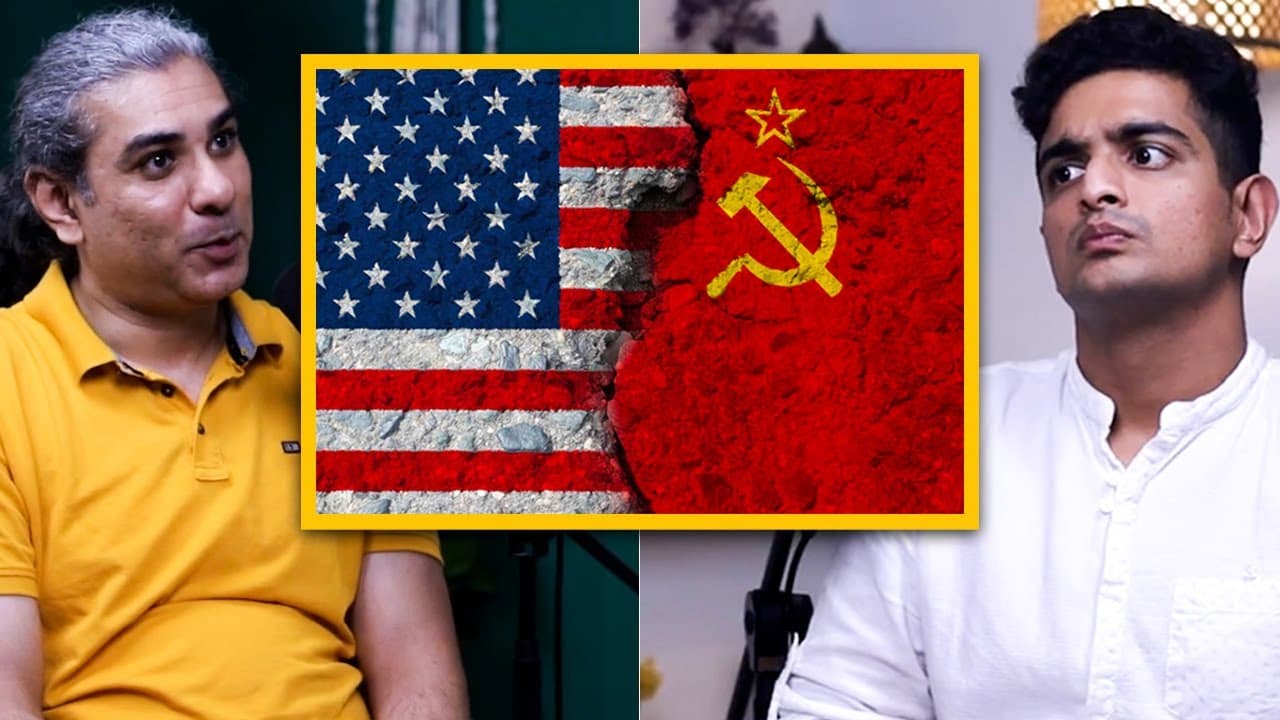
Analyzes the ideological and political factors leading to the fall of the USSR.
Transcript
some of the best minds in the world bringing you some of the best knowledge on trs clips let's dial back a little bit into the 80s and the 90s what finally led to america so-called winning the cold war so there's a whole change chain of events uh what happened was the soviets would call it ideological dilution so you had you had leaders coming in s... Read More
Key Insights
- 😥 The ideological shift from Stalin’s rigid control to Gorbachev’s openness marked a significant turning point in Soviet politics.
- ❓ Economic drawbacks, alongside policies of transparency, weakened the Soviet government's grip and credibility during the 1980s.
- 🥺 Gorbachev's attempts at reform highlighted systemic issues within the Soviet economy, ultimately leading to public dissatisfaction.
- ❤️🩹 The coup attempt in 1991 and Yeltsin's leadership role signified the beginning of the end for the Soviet Union.
- 😮 The privatization under Yeltsin facilitated the rise of a small group of oligarchs who capitalized on former state assets, leading to widespread economic hardship.
- 💢 NATO's expansion during this period alarmed many in Russia and shaped foreign relations in the post-Soviet era.
- 🧍 Chernobyl became a significant event that undermined the USSR's international standing and internal trust.
Install to Summarize YouTube Videos and Get Transcripts
Explore YouTube Video Summarizer or Get YouTube Transcript Extractor
Questions & Answers
Q: What were the ideological changes that occurred in the Soviet Union from Stalin to Gorbachev?
Over the decades, the Soviet leadership experienced a shift from Stalin’s rigid ideological superiority to more lenient views under Gorbachev. While Stalin propagated a strong belief in communism's supremacy, subsequent leaders like Khrushchev and Gorbachev introduced concepts such as openness and transparency that acknowledged shortcomings. Gorbachev’s policies of perestroika and glasnost aimed at reforming the economy and society but also led to a perception of ideological inferiority, contributing to the USSR's eventual decline.
Q: How did Gorbachev's policies impact the Soviet Union economically and politically?
Gorbachev's introduction of perestroika and glasnost aimed to revitalize the economy and increase governmental transparency. However, these policies inadvertently weakened the power of the Communist Party. While they sought to modernize the economy, they faced backlash and dissatisfaction, ultimately resulting in significant political turmoil and a decline in the USSR's international prestige, exacerbating economic decline and loss of control over its republics by the 1990s.
Q: What role did the coup attempt and Boris Yeltsin play in the USSR's dissolution?
The coup attempt of 1991 was a critical moment that showcased the declining influence of Gorbachev. Yeltsin emerged as a key figure during this strife, rallying public support against the coup and advocating for reform. His actions not only solidified his leadership but also paved the way for the formal dissolution of the Soviet Union, allowing various republics to declare independence and marking the beginning of a shift towards a pro-Western orientation in Russia.
Q: How did the economic situation in Russia deteriorate under Yeltsin?
Yeltsin's presidency was marked by the tumultuous transition from a collectivized economy to a market economy, which resulted in many negative consequences. He privatized state assets, leading to rampant corruption and the rise of oligarchs who manipulated their newfound wealth. The economy suffered significantly, characterized by high unemployment rates, scarcity of essential goods, and a general decline in living standards, deeply affecting the daily lives of Russian citizens.
Summary & Key Takeaways
-
The analysis discusses the shift in Soviet ideology from Stalin’s strong beliefs to Gorbachev’s openness, leading to weakened power dynamics by the 1980s.
-
Economic decline, political turmoil, and the rise of oligarchs under Yeltsin contributed to the devastating impact on the Russian economy post-USSR dissolution.
-
The expanding NATO and international events, like the fall of the Berlin Wall, played significant roles in reshaping global power dynamics during the late 20th century.
Read in Other Languages (beta)
Share This Summary 📚
Summarize YouTube Videos and Get Video Transcripts with 1-Click
Try YouTube Summary with ChatGPT & Claude or YouTube Transcript Generator
Explore More Summaries from TRS Clips 📚





Summarize YouTube Videos and Get Video Transcripts with 1-Click
Try YouTube Summary with ChatGPT & Claude or YouTube Transcript Generator