Building New Molecules: SciShow Talk Show
TL;DR
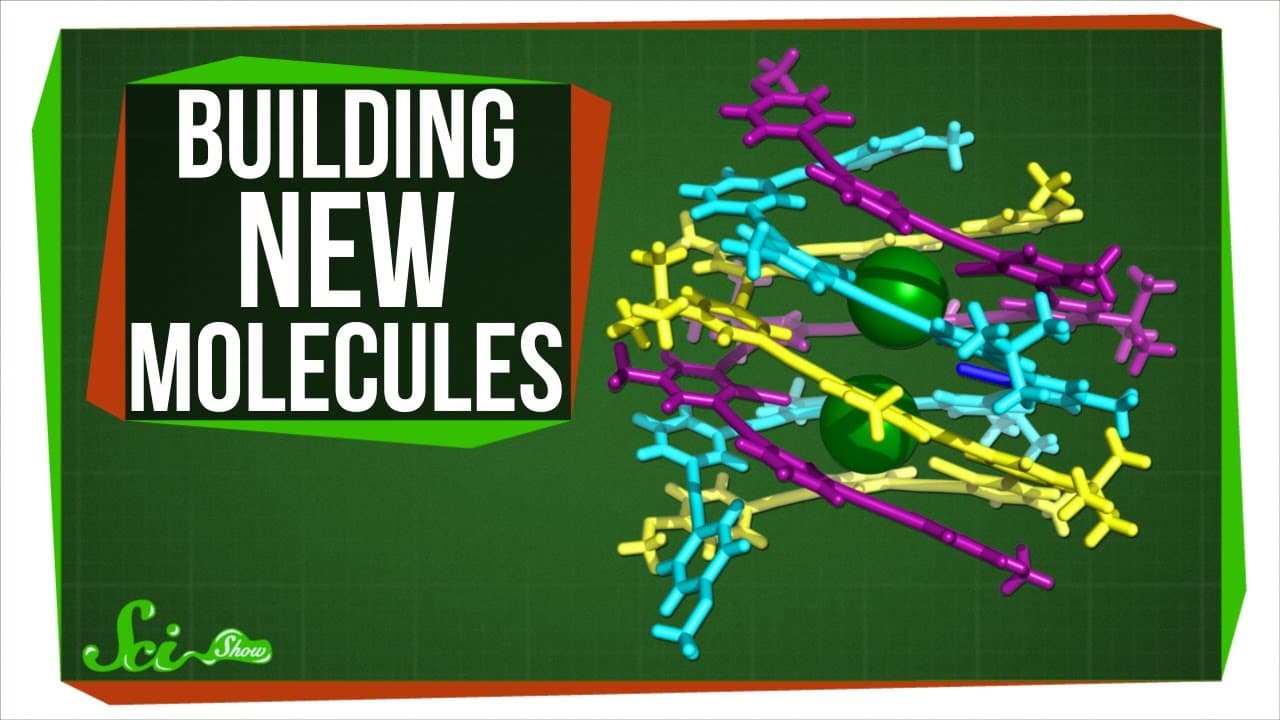
- Researcher discusses using halogen bonding to assemble molecular strands into triple helixes, potentially aiding in medical applications.
Transcript
hello and welcome to the scishow talk show it's that day on scishow where we talk to interesting people about interesting stuff today we're talking to case of Messina from the University of Montana who has done some amazing what like feels like blending between organic and biochemistry to me yeah a little bit so what's your what's your background I... Read More
Key Insights
- 😑 Halogen bonding is utilized to enforce self-assembly of molecular strands around iodide ions into triple helixes.
- 😷 The research aims to create large, well-defined structures with potential medical applications, such as treating diseases like cystic fibrosis.
- 🎨 The design process involves paper conceptualization, computer modeling, organic chemistry synthesis, and collaboration within the chemistry community.
Install to Summarize YouTube Videos and Get Transcripts
Explore YouTube Video Summarizer or Get YouTube Transcript Extractor
Questions & Answers
Q: What is the main focus of the research on halogen bonding discussed in the video?
The main focus of the research is to utilize halogen bonding to self-assemble molecular strands around iodide ions into triple helixes, aiming for potential medical applications in treating diseases like cystic fibrosis.
Q: How does the researcher approach designing the molecular strands for self-assembly?
The researcher starts by conceptualizing the designs on paper, then transitions to computer modeling to visualize them in 3D space before proceeding with organic chemistry synthesis to actualize the strands.
Q: What potential application is highlighted for the large, well-defined structures created through this research?
One potential application is the development of synthetic channels or carriers to aid in ion transport across cell membranes, potentially serving as treatments for diseases such as cystic fibrosis.
Q: What makes the molecule design process exciting for the researcher and motivates the pursuit of new ideas?
The researcher emphasizes the collaborative nature of chemistry research, aiming to bring new and innovative contributions to the field while considering potential practical applications as sources of motivation.
Summary & Key Takeaways
-
Researcher discusses using halogen bonding to self-assemble molecular strands around iodide ions into triple helixes.
-
The goal is to create large, well-defined structures for potential applications in treating diseases like cystic fibrosis.
-
The process involves designing the molecular strands, computer modeling, organic chemistry synthesis, and extensive experimentation.
Read in Other Languages (beta)
Share This Summary 📚
Summarize YouTube Videos and Get Video Transcripts with 1-Click
Try YouTube Summary with ChatGPT & Claude or YouTube Transcript Generator
Explore More Summaries from SciShow 📚


Summarize YouTube Videos and Get Video Transcripts with 1-Click
Try YouTube Summary with ChatGPT & Claude or YouTube Transcript Generator