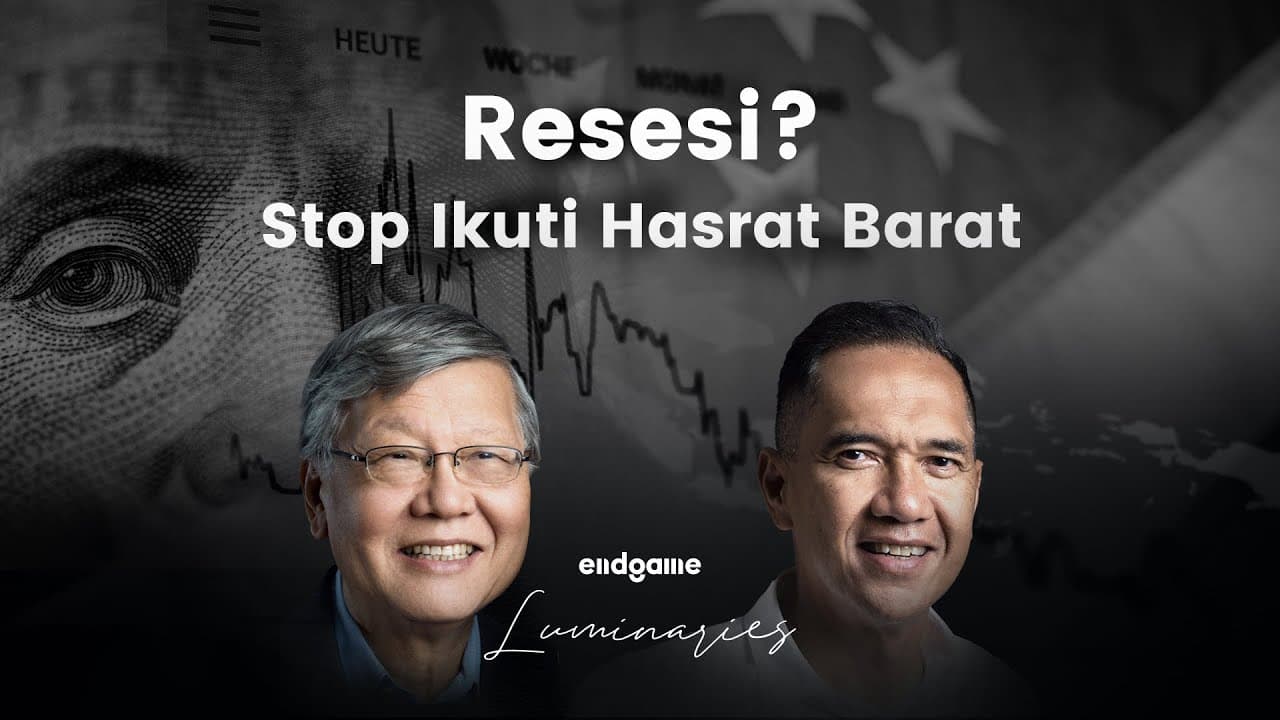
Is West Still Best? - Andrew Sheng | Endgame #104 (Luminaries)
TL;DR
Andrew Sheng discusses ASEAN's economic future and lessons from past financial crises.
Transcript
GITA WIRJAWAN: Hello friends, today we have Andrew Sheng. My friend but he also served at Bank Negara (Malaysia) and also as the Chairman at the Hong Kong Securities and Futures Commission. Hi Andrew, thank you so much for coming on to our show. ANDREW SHENG: Thank you very much, Mr. Gita. - Call me Gita, don't call me Mr. Andrew, tell us about you... Read More
Key Insights
- Andrew Sheng highlights the impact of the Asian and Global Financial Crises, emphasizing the need for ASEAN to learn from these events and build resilient financial systems.
- He argues that excessive financialization has led to inequality and environmental degradation, calling for a shift towards equity-based finance and risk-sharing models.
- Sheng suggests that ASEAN economies can benefit from decentralized finance (DeFi) and blockchain technology, which offer opportunities for more inclusive and equitable financial systems.
- He emphasizes the importance of nurturing entrepreneurship and innovation in ASEAN, advocating for education and support for young entrepreneurs to drive economic growth.
- Sheng believes that ASEAN's demographic and technological dividends position the region for significant economic growth, potentially becoming the fourth largest economy globally.
- He critiques the West's financial practices, particularly quantitative easing, and encourages ASEAN countries to focus on investing in their own people and economies.
- Sheng sees potential in ASEAN's ability to leverage low-tech and high-tech innovations to improve productivity and prosperity across the region.
- He advocates for a multi-stage stock market approach to support SMEs and foster a culture of entrepreneurship and risk-taking in ASEAN.
Install to Summarize YouTube Videos and Get Transcripts
Explore YouTube Video Summarizer or Get YouTube Transcript Extractor
Questions & Answers
Q: What are the key lessons from the 1998 and 2008 financial crises according to Andrew Sheng?
Andrew Sheng highlights the importance of understanding the systemic issues that led to the crises, such as excessive financialization and reliance on debt-based systems. He emphasizes the need for ASEAN to build resilient financial systems that can withstand shocks and avoid the pitfalls of past crises. Sheng also stresses the importance of telling the story from an Asian perspective, challenging the Western narrative that often blames the victims of such crises.
Q: How does Andrew Sheng view the role of financialization in creating inequality?
Andrew Sheng argues that financialization has exacerbated inequality by allowing the elites to benefit disproportionately from low interest rates and easy access to credit. He suggests that this system has led to environmental degradation and social imbalances, as the rich get richer while the poor remain marginalized. Sheng advocates for a shift towards equity-based finance and risk-sharing models that promote fairness and sustainability.
Q: What opportunities does Sheng see in decentralized finance (DeFi) for ASEAN?
Sheng sees DeFi as a transformative opportunity for ASEAN to create more inclusive and equitable financial systems. He believes that DeFi can empower individuals and small businesses by providing access to capital and financial services without the need for traditional intermediaries. This decentralized approach can help bridge the gap between the developed and developing economies, fostering innovation and entrepreneurship in the region.
Q: Why does Andrew Sheng emphasize the importance of entrepreneurship in ASEAN?
Andrew Sheng emphasizes entrepreneurship as a key driver of economic growth and innovation in ASEAN. He believes that fostering a culture of risk-taking and creativity is essential for the region to capitalize on its demographic and technological dividends. Sheng advocates for education and support for young entrepreneurs, suggesting that this will lead to a more dynamic and resilient economy capable of competing on a global scale.
Q: What is Sheng's perspective on ASEAN's economic potential?
Sheng is optimistic about ASEAN's economic potential, predicting that the region could become the fourth largest economy globally. He cites ASEAN's young population, technological advancements, and strategic geographic position as key factors that will drive growth. Sheng believes that by investing in local talent and fostering innovation, ASEAN can leverage these advantages to achieve significant economic progress and prosperity.
Q: How does Sheng propose ASEAN should respond to Western financial practices like quantitative easing?
Sheng criticizes Western financial practices such as quantitative easing, arguing that they have not improved productivity and have led to increased inequality. He suggests that ASEAN should focus on investing in its own people and economies, rather than relying on Western financial systems. Sheng advocates for a more cautious approach to monetary policy, emphasizing the importance of sustainable growth and local investment.
Q: What is the significance of a multi-stage stock market for ASEAN according to Sheng?
Sheng proposes a multi-stage stock market to support SMEs and foster entrepreneurship in ASEAN. He argues that the current system is too elite-focused, with limited opportunities for small businesses to access equity. By creating a multi-stage approach, ASEAN can provide a pathway for SMEs to grow and eventually compete on a global scale. This would encourage innovation and economic diversification across the region.
Q: What role does Sheng see for technology in ASEAN's future economic growth?
Sheng sees technology as a critical driver of ASEAN's future economic growth. He believes that both low-tech and high-tech innovations can significantly improve productivity and prosperity in the region. Sheng highlights the potential for technology to disrupt traditional industries and create new opportunities for entrepreneurship and investment. He encourages ASEAN to embrace technological advancements and leverage them to achieve sustainable economic development.
Summary & Key Takeaways
-
Andrew Sheng discusses the lessons learned from the 1998 and 2008 financial crises, emphasizing the need for ASEAN to develop resilient financial systems and challenge outdated global practices.
-
He advocates for a shift from debt-based financial systems to equity-based models that promote risk-sharing, innovation, and entrepreneurship, particularly through decentralized finance and blockchain technology.
-
Sheng is optimistic about ASEAN's future, citing demographic and technological advantages that position the region for significant economic growth, urging investment in local talent and markets.
Read in Other Languages (beta)
Share This Summary 📚
Summarize YouTube Videos and Get Video Transcripts with 1-Click
Try YouTube Summary with ChatGPT & Claude or YouTube Transcript Generator
Explore More Summaries from Gita Wirjawan 📚



Summarize YouTube Videos and Get Video Transcripts with 1-Click
Try YouTube Summary with ChatGPT & Claude or YouTube Transcript Generator