What Is High-Frequency Trading and Its Effects on Markets?
TL;DR
High-frequency trading (HFT) is a type of algorithmic trading that involves rapidly executing orders to profit from small price differences, constituting about 50% of market trading volumes. While it can enhance market liquidity, HFT often leads to increased volatility, higher transaction costs, and potential price manipulation, making it challenging for individual investors.
Transcript
this video is sponsored by North Vee pn goto nor VPN comm slash the plain bagel and use coupon code the plain bagel to get 70% off a three year plan plus one month for free for all the benefits the stock markets provide there's of course no lack of criticism around how the large institutions of Wall Street have taken advantage of everyday people ju... Read More
Key Insights
- 🔊 Algorithmic trading, including high-frequency trading, has become a dominant force in the stock market, with over 80% of trading volumes allegedly driven by machines.
- 😷 High-frequency trading can be profitable for companies through bid-ask spreads but has negative effects, such as increased volatility and worsened liquidity.
- ✋ Some high-frequency trading strategies, like latency arbitrage, disadvantage individual investors and increase transaction costs.
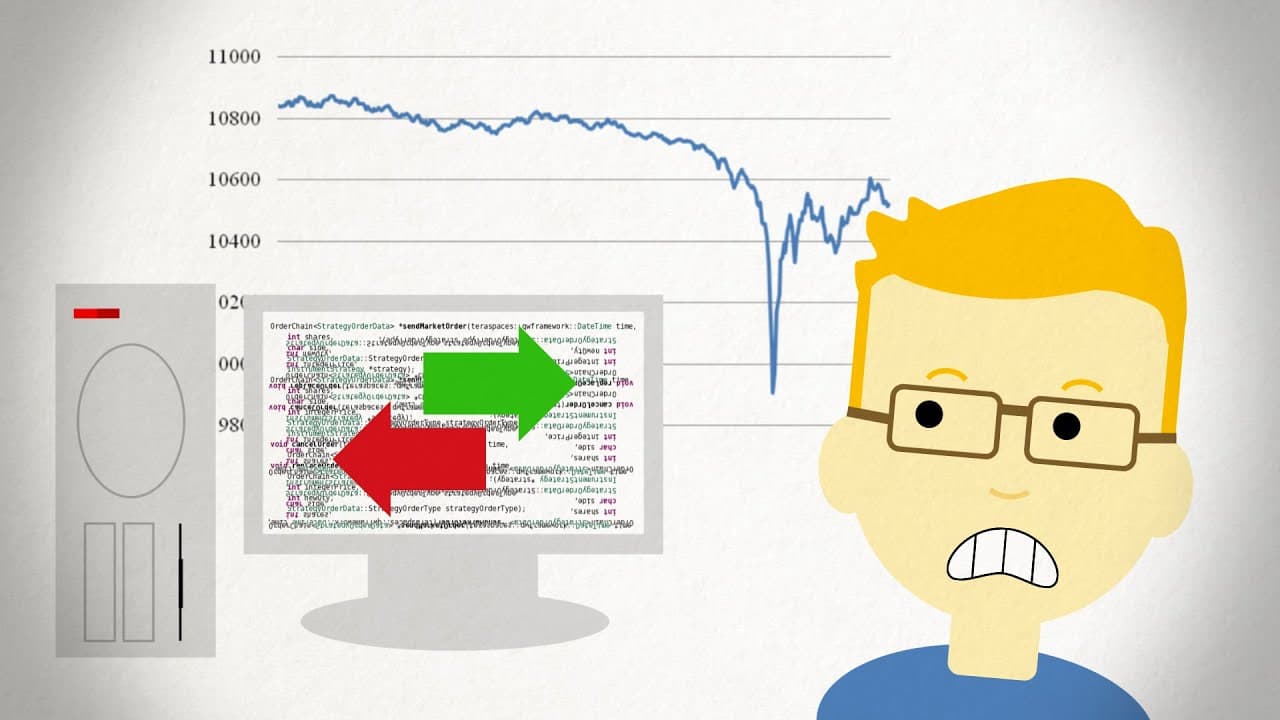
- ✋ High-frequency trading can also contribute to market instability, as complex algorithms can trigger extreme volatility events.
- ✋ While high-frequency trading has its drawbacks, long-term investment strategies still have a significant impact on stock prices.
- 😷 Implementing trading taxes to discourage high-frequency trading can have unintended consequences, such as increasing bid-ask spreads for stocks.
- ✋ High-frequency trading can be used for nefarious practices, such as manipulating stock prices, but these practices have since been made illegal.
Install to Summarize YouTube Videos and Get Transcripts
Explore YouTube Video Summarizer or Get YouTube Transcript Extractor
Questions & Answers
Q: Why is high-frequency trading considered a significant market structure development?
High-frequency trading has become a major part of market trading volumes, with algorithms quickly trading stocks to take advantage of bid-ask spreads, making it a significant development in the market structure.
Q: How do high-frequency traders make money?
High-frequency traders identify attractive bid-ask spreads and execute thousands or millions of trades, making small profits on each trade. Though the profit per trade may be small, the volume of trades can make it a profitable venture.
Q: What are the negative impacts of high-frequency trading?
High-frequency trading can increase stock price volatility, worsen market liquidity, and increase transaction costs for investors. Some HFT strategies, like latency arbitrage, can also disadvantage individual investors by using speed to beat them to attractive trading opportunities.
Q: How does high-frequency trading contribute to market instability?
HFT strategies utilize complex algorithms that can enter dangerous feedback loops when they interact with each other in the marketplace. This instability can lead to extreme volatility events, like the flash crash of 2010, where the Dow Jones Industrial Average dropped 1,000 points in 20 minutes.
Summary & Key Takeaways
-
Algorithmic trading, or algo trading, is the use of computers and algorithms to automate the trading process and execute transactions based on market analysis.
-
High-frequency trading (HFT) is a subset of algo trading that involves quickly sending out waves of orders to the market, making up around 50% of trading volumes.
-
HFT can be profitable for companies through bid-ask spreads, but it also has negative effects, such as increased volatility, worsened liquidity, and potential manipulation of stock prices.
Read in Other Languages (beta)
Share This Summary 📚
Summarize YouTube Videos and Get Video Transcripts with 1-Click
Try YouTube Summary with ChatGPT & Claude or YouTube Transcript Generator
Explore More Summaries from The Plain Bagel 📚
Summarize YouTube Videos and Get Video Transcripts with 1-Click
Try YouTube Summary with ChatGPT & Claude or YouTube Transcript Generator