"Do You Want the Job?" - Does Reza Pahlavi Want To Return To Iran As The King?
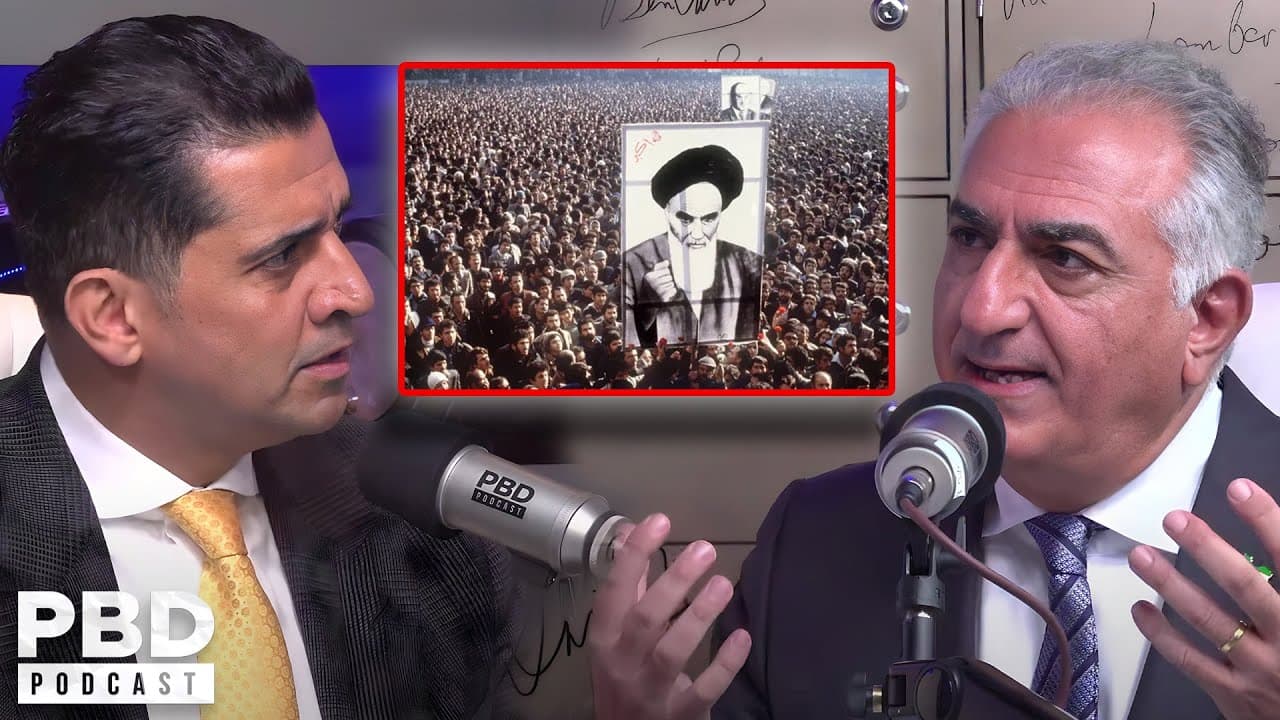
TL;DR
The Crown Prince discusses his role in Iran's democratic transition without seeking power.
Transcript
my question for you is the following there's a clip with Pierce Morgan if you want to bring up Rob the clip with Pierce Morgan your you're interviewing with him this is I I think a week ago maybe two weeks ago and at the end of the clip he asked you question and I want to kind of ask the question in a different way to see what your thoughts are but... Read More
Key Insights
- 🇮🇷 The Crown Prince emphasizes the importance of civil society as the backbone of a sustainable democracy in Iran.
- ❓ He distinguishes between the roles of governance and nurturing a civil society, favoring the latter in his contributions to the transition.
- 👻 His experiences abroad allow him to connect with various international perspectives, enriching his approach to Iranian governance.
- 🗯️ Awareness and education about citizens’ rights are crucial in fostering a democratic culture among Iranians.
- 🇮🇷 He advocates for unity among diverse political ideologies within Iran to effectively address the challenges posed by the current regime.
- 🧍 His commitment to supporting change in Iran is rooted in a long-standing approach, driven by a desire to improve the lives of his compatriots.
- 😒 The use of social media and connectivity with younger generations is seen as a powerful tool to inspire change and foster solidarity.
Install to Summarize YouTube Videos and Get Transcripts
Explore YouTube Video Summarizer or Get YouTube Transcript Extractor
Questions & Answers
Q: What does the Crown Prince envision for his role in Iran's transition?
The Crown Prince sees himself as a facilitator of change rather than a traditional leader. He aims to support the development of strong institutions that promote civil society and democracy, rather than taking on an executive position that limits his ability to connect with the people of Iran. He believes that helping advise on a transitional government could be more impactful than holding an office himself.
Q: How does he view his experiences outside of Iran?
He believes his time in exile has provided him with valuable insights into different cultures and political systems, which he can leverage to assist in Iran’s transition. His travels and engagements have equipped him with knowledge about citizen expectations, the importance of governance, and how to foster an environment where democracy can thrive.
Q: What does he believe is lacking among the Iranian populace regarding awareness of their rights?
The Crown Prince asserts that less than 10% of Iranian women are aware of their rights as outlined in legal documents. He emphasizes that simply having laws on paper is insufficient; there must be efforts to educate citizens about their rights and empower them to advocate for themselves within society.
Q: What is his stance on political factions within the Iranian opposition?
He calls for a coalition among various Iranian political factions, arguing that while they may have differing views, there should be a minimum agreement on a secular democratic process and human rights. He believes in building a “coalition of the willing” focused on achieving democracy and uniting against the current regime by identifying shared goals.
Q: How does he respond to the idea of moving back to Iran?
While he expresses a strong desire to be able to roam Iran freely, he indicates hesitation about relocating his family due to their familiarity and ties to life in America. He prefers to remain an advocate and supporter from abroad, believing he can still make significant contributions without holding an administrative position.
Q: Why does he reject the notion of running for office?
He believes that holding office would restrict his freedom to express opinions and effectively engage with the citizens of Iran. Instead, he wants to be a resource for those working towards democratic change and provide counsel without the limitations of formal political roles.
Summary & Key Takeaways
-
The Crown Prince of Iran emphasizes the need for a civil society to support democracy, stating he is more interested in aiding a transition than seeking power.
-
He expresses a willingness to help Iran achieve governance reform but rejects direct leadership roles, focusing instead on networking and empowering citizens.
-
The dialogue highlights the urgency of unifying diverse political factions in Iran to form a cohesive democratic front and to ensure citizen rights and awareness.
Read in Other Languages (beta)
Share This Summary 📚
Summarize YouTube Videos and Get Video Transcripts with 1-Click
Try YouTube Summary with ChatGPT & Claude or YouTube Transcript Generator