Computational Media: Research Toward the Future of Games
TL;DR
Games are transforming our culture, and universities need to respond by taking interdisciplinary risks in computational media research.
Transcript
I associate professor of computational media which is a new thing at the University of California Santa Cruz I know if you're going to talk about that about the computational media and he co-directs the expressive intelligence studio which is one of the world's largest technical research focus centers looking at games he also directs the playable m... Read More
Key Insights
- 👨🔬 Games are evolving and becoming more influential in our culture, requiring universities to respond with interdisciplinary research.
- 👾 Stereotypes about games research in universities are not accurate and need to be challenged.
- 👾 Universities have a proud history of game development and can contribute significantly to games research.
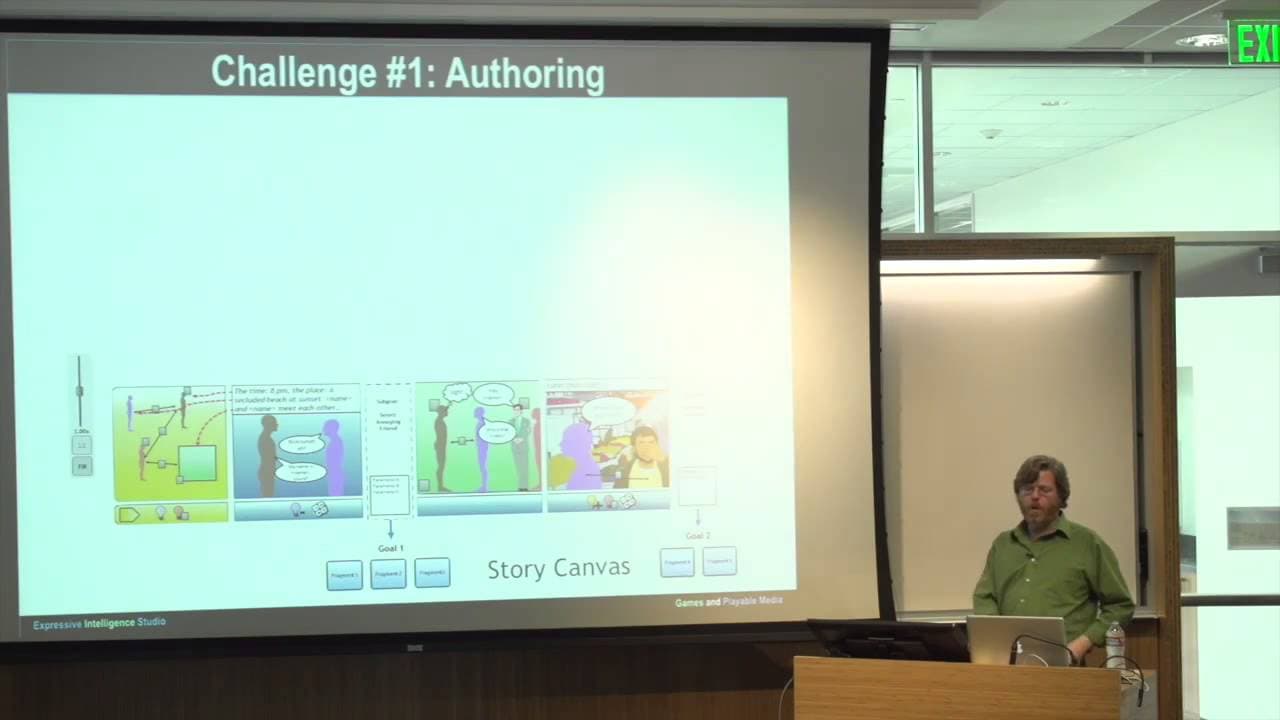
- 👾 Computational media research can address challenges in game authoring, generativity, social interaction, and complex game mechanics.
- 🥺 Basic research in games can lead to significant applied successes.
- 👾 Interdisciplinary collaboration is essential for successful games research.
Install to Summarize YouTube Videos and Get Transcripts
Explore YouTube Video Summarizer or Get YouTube Transcript Extractor
Questions & Answers
Q: How are games changing and becoming more influential in our lives?
Games are no longer limited to traditional platforms and are now available on devices like smartphones, social networks, and virtual reality headsets. This expansion has made games more accessible and integrated into our daily lives.
Q: How can universities respond to the changing landscape of games?
Universities can challenge stereotypes about games research and invest in interdisciplinary programs that combine computer science, arts, humanities, and social sciences. They can also take risks, develop new methods, and tackle new research questions to push the boundaries of games research.
Q: How can computational media research contribute to games?
Computational media research aims to address challenges in game authoring tools, generativity, social interaction, and complex game mechanics. By combining the knowledge and methods of various disciplines, researchers can create new and innovative approaches to games.
Q: What are some examples of interdisciplinary games research projects?
Game ematic allows journalists and citizens to create news games quickly and affordably, promoting diversity in game expression. Prom Week explores dynamic social interaction and player responsibility in shaping game narratives. Tanara combines natural language processing and game design to create adaptive quest systems. Binary Fission focuses on learner-customized level generation using formal game representation. Spy Feat uses game mechanics to motivate physical activity, combining gameplay with real-world exploration and quests.
Summary & Key Takeaways
-
Games are evolving and changing, becoming more influential in our lives and culture.
-
Stereotypes about games research in universities are not accurate and need to be challenged.
-
Universities have a proud history of game development and can play a crucial role in pushing the boundaries of games research.
-
The University of California Santa Cruz has been investing in interdisciplinary degrees, research centers, and departments to explore computational media and its impact on games.
Read in Other Languages (beta)
Share This Summary 📚
Summarize YouTube Videos and Get Video Transcripts with 1-Click
Try YouTube Summary with ChatGPT & Claude or YouTube Transcript Generator
Explore More Summaries from Stanford 📚





Summarize YouTube Videos and Get Video Transcripts with 1-Click
Try YouTube Summary with ChatGPT & Claude or YouTube Transcript Generator